.png)
Blogs
Ecstasy Test Kit Usage: Essential Guide for Safe MDMA Testing
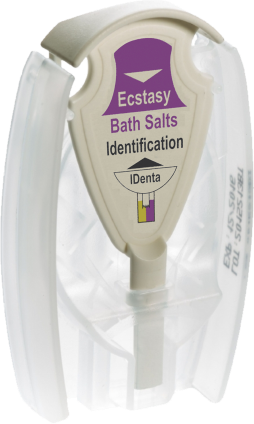
Ecstasy Test Kit Usage
A field-ready ecstasy test kit helps screen unknown tablets, powders, or residues for possible MDMA-type reactions before decisions are made. This page explains practical ecstasy test kit usage for personal harm-reduction settings, workplace or safety programs, and active patrol operations where officers need a quick presumptive drug testing kit result. The kit does not prove a substance is safe, pure, legal, or fully identified; it supports better first-step decisions and should be followed by qualified laboratory confirmation when results matter legally or medically.
What does an ecstasy test kit help you do?
An ecstasy test kit helps you perform presumptive ecstasy testing by using a small sample and a test method that produces an observable result, commonly a color change or other field-readable indicator. In plain terms, it gives you a fast screening signal that may suggest whether MDMA or a related substance could be present, depending on the kit type and the compounds it is designed to detect. It is useful when you need an early warning, a documentation step, or a safer basis for deciding what to do next, but it should never be treated as a guarantee of contents or safety.
For individuals and harm-reduction teams, an mdma testing kit can support more informed conversations about unknown substances. For organizations, it can help create a more consistent intake or safety process. For patrol officers, it can support active field screening during traffic stops, calls for service, foot patrols, or suspicious-person investigations when an unknown pill or powder is encountered and department policy allows presumptive testing.
Built for clear, controlled field screening
Good ecstasy test kit usage starts with control. The purpose of a drug testing kit is not to make dramatic claims; it is to reduce uncertainty at the first point of contact. A practical kit should make the process simple enough to follow under real conditions while still encouraging careful handling, clean sampling, and cautious interpretation.
The most useful setup is one that keeps the sample small, the instructions visible, and the result easy to document. If the test involves reagents, the user should work with only a tiny amount of material and compare the reaction to the manufacturer’s guide within the stated observation window. If the test is a single-use pouch, ampoule, strip, or swab format, the process should still prioritize contamination control, personal protective equipment, and secure disposal.
A reliable product page cannot promise that one test will identify every substance in a tablet. Many tablets sold as ecstasy can contain mixtures, substitutes, or unexpected compounds. That is why an ecstasy test kit is best understood as a first-line screening tool, not a full chemical analysis.
Practical uses for the kit
This product is intended for settings where a quick presumptive screen can guide the next responsible step. The exact use must follow local laws, organizational policy, and the instructions supplied with the kit.
Common use cases include:
- Harm-reduction screening: Supporting safer conversations when someone wants to know whether a substance shows an MDMA-type reaction before making a decision.
- Event safety programs: Helping trained staff or outreach teams identify possible red flags and advise people to seek medical support when needed.
- Patrol field checks: Allowing law enforcement officers on active patrol to conduct a presumptive screen on suspected ecstasy tablets, capsule contents, powder residue, or paraphernalia residue when permitted by agency policy.
- Evidence triage: Helping officers or safety personnel decide whether a suspected substance should be packaged, logged, and submitted for confirmatory laboratory testing.
- Training environments: Demonstrating the limitations of presumptive testing, including false positives, false negatives, contamination risks, and the need for confirmation.
In every case, the value of the kit is the same: it creates a structured process. Instead of guessing based on appearance, markings, packaging, or a person’s statement, the user follows a defined test method and records a result in context.
How patrol officers use presumptive tests during active duty
During patrol, officers often encounter suspected controlled substances in fast-moving, low-information situations. A patrol officer may find tablets during a lawful vehicle search after a traffic stop, locate powder residue while responding to a disorderly conduct call, or discover capsules during a foot patrol contact near an entertainment district. When department rules, safety conditions, and local law allow, an officer may use a field drug testing kit to conduct a presumptive test before deciding how to document, package, or escalate the incident.
In a patrol setting, the test is typically part of a broader safety and evidence process. The officer may first secure the scene, use gloves, avoid inhalation or direct contact, separate the suspected item from personal property, and ensure that any field test does not consume more sample than policy permits. The kit can then be used to screen a very small amount of material while the officer remains mindful that the result is only presumptive.
Examples of patrol-related use include:
- Traffic stop with suspected tablets: An officer finds several pressed pills during a lawful search and uses an ecstasy test kit to screen one small sample before logging the pills as suspected MDMA-related evidence.
- Call for service at a public venue: Patrol officers respond to a medical or disturbance call and locate an unknown capsule nearby. A presumptive test may help document what was suspected at the scene while emergency care remains the priority.
- Foot patrol in a nightlife area: Officers recover discarded baggies or pill fragments and use a field test, if policy allows, to support a report and determine whether the material should be submitted to the lab.
- Search incident to arrest: If suspected ecstasy is recovered during an arrest, a patrol officer may perform a quick screen, photograph the result according to policy, and preserve the remaining material for evidence submission.
The result should not replace good police work. Field tests can be affected by contamination, lighting, user error, mixtures, expired components, or substances that react similarly. For legal proceedings, laboratory confirmation and proper chain-of-custody practices remain essential.
What the kit supports in day-to-day use
A well-designed ecstasy testing process should make each step easier to repeat. That matters because the user may be working in a crowded environment, a mobile patrol unit, a workplace safety setting, or a temporary outreach station. The simpler the process is to follow, the less room there is for confusion.
Key benefits include:
- Fast first indication: Get an initial result without waiting for full laboratory analysis, while still recognizing the limits of a presumptive screen.
- Small-sample testing: Use only a minimal amount of material, helping preserve the rest for further testing, evidence handling, or disposal according to policy.
- Clearer documentation: Create a recordable test event, including date, time, sample description, kit type, lot information if available, and observed result.
- Better decision support: Decide whether to stop, escalate, seek medical help, submit to a lab, or dispose of materials safely depending on your setting.
- Portable operation: Use the kit in field environments such as patrol vehicles, temporary safety stations, or controlled intake areas.
- Training value: Teach users that visual identification alone is unreliable and that presumptive results must be interpreted cautiously.
These benefits are practical rather than absolute. The kit helps organize information, but it does not remove uncertainty. That honest distinction is what makes responsible ecstasy test kit usage more useful than guesswork.
Suggested usage workflow
Always follow the instructions included with the specific kit you purchase. Different drug testing kit formats can require different sample amounts, timing, disposal steps, and result interpretation methods. The workflow below is a general structure, not a replacement for the manufacturer’s instructions or your organization’s policy.
- Prepare the area. Choose a stable, well-lit surface where the sample can be handled without distraction. Put on appropriate gloves and keep food, drinks, phones, and unrelated items away from the test area.
- Review the instructions first. Read the full test procedure before opening components or handling the sample. Confirm any stated time window for observing results.
- Use a very small sample. A presumptive test generally does not require a large amount of material. Using less helps reduce exposure and preserves material for confirmation if needed.
- Avoid cross-contamination. Use clean tools, do not touch the test area directly, and keep separate samples separate. If testing more than one item, treat each one as its own test event.
- Run the test exactly as directed. Apply the sample, reagent, swab, pouch action, or strip step according to the kit format. Do not improvise, overfill, or mix steps from different products.
- Observe within the stated window. Compare the result to the supplied guide only during the appropriate time period. Late color changes or unclear reactions may not be reliable.
- Record the result carefully. Note the observed reaction, the kit used, the date and time, and any conditions that could affect interpretation.
- Dispose or preserve properly. Dispose of used components according to the instructions, or preserve remaining material according to agency, workplace, or local evidence requirements.
This workflow keeps the focus on safe handling and repeatable practice. It also makes the final result easier to explain, whether the setting is a harm-reduction conversation, an internal report, or a patrol incident file.
Product details to confirm before ordering
Because ecstasy test kits can vary, confirm the exact specifications of the product option you select before purchase. The right choice depends on who will use it, where it will be used, and whether you need a single-use field format, a multi-test reagent kit, or a broader drug testing kit panel.
Important details to review include:
- Test type: Reagent, pouch, ampoule, swab, strip, or another field-screening format.
- Target substances: Whether the kit is designed for MDMA-type screening only or includes additional indicators for related or commonly encountered substances.
- Number of tests: The total usable tests included and whether components are single-use or multi-use.
- Included materials: Instructions, result guide, sample tools, disposal guidance, and any accessories supplied with the kit.
- Storage requirements: Temperature, light exposure, shelf-life, and packaging needs.
- User environment: Suitability for stationary use, patrol vehicle storage, outreach kits, workplace programs, or training rooms.
- Documentation support: Whether the packaging includes lot information, result cards, or space for notes.
- Safety information: Required personal protective equipment, spill precautions, and disposal instructions.
If a specification is not listed, do not assume it. Choose the kit based on the published product details, not on appearance or general category wording.
Pricing and buying options
Pricing should be selected based on actual use volume, not just the lowest unit cost. Someone purchasing for occasional personal screening may need a smaller kit, while a patrol unit, event safety team, or outreach program may need enough tests for repeated use, training, and backup stock. If multiple formats are available, consider whether portability, documentation, storage life, or ease of disposal matters most.
Before checkout, review:
- The number of tests included in the package
- Whether replacement components are available
- Any storage or expiration information
- Shipping restrictions or legal limitations in your location
- Whether the kit is intended for professional, personal, educational, or law enforcement use
- The return policy for unopened or unused products, if offered
For departments and organizations, bulk ordering may be more practical than buying one kit at a time. A consistent supply helps ensure that patrol officers, safety teams, or trained staff are using the same instructions and result guides rather than mixing unrelated products.
Responsible interpretation of results
The most important part of ecstasy test kit usage happens after the visible result appears. A reaction is information, not certainty. It should be interpreted alongside the test instructions, the condition of the sample, the possibility of mixtures, and the reason the test is being performed.
A positive or expected MDMA-type reaction does not mean the substance is safe to consume. It also does not confirm purity, dosage, or the absence of other compounds. A negative or unexpected reaction does not prove that no dangerous substance is present. The correct next step may be to avoid use, seek medical care, preserve evidence, request confirmatory lab testing, or consult a qualified professional depending on the situation.
For law enforcement patrol duties, the distinction is especially important. A field test may support probable cause decisions, report writing, or evidence classification under department policy, but it should be treated as presumptive. Officers should follow agency rules for photographs, body-worn camera narration, witness presence, packaging, evidence labels, and submission to a forensic laboratory when required.
Safety practices that improve every test
Testing unknown substances carries exposure and contamination risks. Even when the sample appears small or harmless, treat it as unknown material. Careful setup protects the user and improves the quality of the result.
Use this checklist before each test:
- Wear appropriate gloves and avoid direct skin contact.
- Work in a ventilated area when the kit instructions require it.
- Keep the sample away from eyes, mouth, cuts, and personal items.
- Do not smell, taste, or handle unknown substances casually.
- Use only the sample amount directed by the kit.
- Keep children, pets, bystanders, and untrained users away from the test area.
- Do not mix chemicals or components from different kits unless the manufacturer specifically instructs it.
- Treat unclear, delayed, or contaminated results as inconclusive.
- Dispose of used materials according to the kit instructions and local rules.
- Wash hands after testing, even if gloves were worn.
These practices matter in every setting, but they are especially important during mobile patrol operations. Patrol officers may be testing under poor lighting, in a parking lot, in a patrol vehicle, or near a scene that has not fully stabilized. If conditions are not safe, the better choice may be to secure the item and delay testing until a controlled environment is available.
Who this product is suited for
This kit is suited for users who need a structured first screen and understand the limitations of presumptive testing. It is not for anyone looking for a guarantee that a substance is safe or legal. The strongest users are those who value clear instructions, careful handling, and responsible next steps.
It may be a good fit for:
- Individuals seeking a harm-reduction tool for unknown substances
- Outreach teams that provide education around safer decision-making
- Event safety programs that want an organized screening process
- Law enforcement patrol units conducting permitted presumptive field tests
- Training coordinators teaching field-screening limitations
- Workplace or institutional safety teams operating under written policy
It may not be the right fit if you need full identification, purity analysis, dosage information, or legally definitive results. For those needs, a qualified laboratory is the appropriate route.
Why choose a purpose-made mdma testing kit
A purpose-made mdma testing kit gives the user a defined method, a result guide, and a safer process than improvising with unverified materials. The kit’s value is not just the reaction itself; it is the repeatable procedure around the reaction. That includes sample control, timing, comparison guidance, documentation, storage, and disposal.
For patrol officers, that repeatability can matter during a long shift. One officer on evening patrol and another on weekend foot patrol should be able to follow the same basic field-screening process if they are using the same approved kit. For harm-reduction workers, consistency helps conversations stay focused on caution rather than speculation. For organizations, it supports training and reduces confusion when multiple people may use the product.
Order your ecstasy testing kit with confidence
If you need a practical first-step screening tool, choose an ecstasy test kit that matches your setting, your training level, and your documentation needs. Review our CUSPER Model Drug Testing Kit Series, confirm the included tests and instructions, and make sure the kit is legal and appropriate for use where you live or work.
Add the kit to your order today if you are ready to bring more structure to ecstasy testing, patrol field screening, or safety-focused substance identification. Use it carefully, document results honestly, and rely on laboratory confirmation whenever the outcome carries legal, medical, workplace, or safety consequences.