.png)
Blogs
Common Date Rape Drugs: Awareness & Support
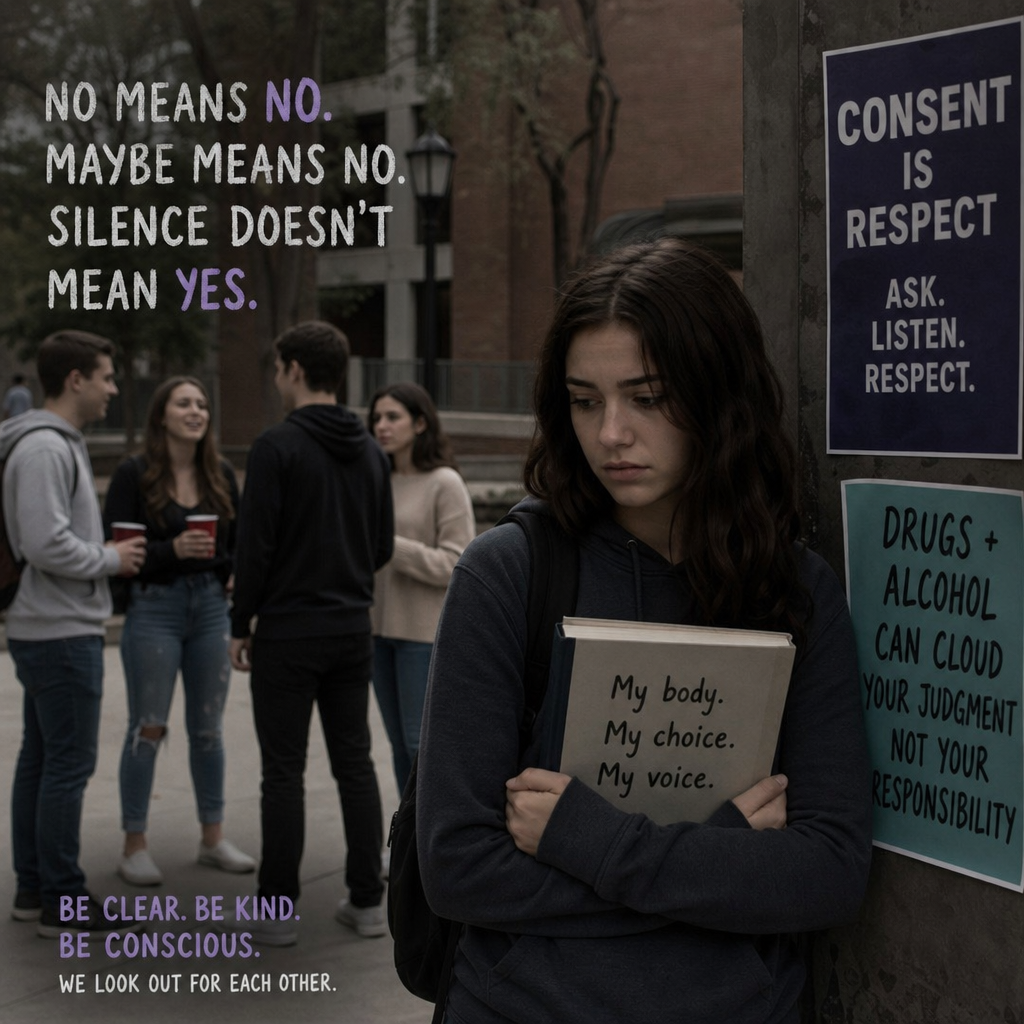
What are common date rape drugs
Drug-facilitated sexual assault can involve alcohol, prescription medications, illegal drugs, or a combination of substances used to impair someone’s ability to consent, resist, leave, or remember what happened. This FAQ explains common date rape drugs, warning signs, emergency response steps, testing windows, and victim support options without blaming survivors or giving harmful misuse instructions.
What are date rape drugs?
“Date rape drugs” is a common phrase for substances used to make sexual assault easier, but the more accurate term is drug-facilitated sexual assault. The person responsible is always the perpetrator—not the person who drank, used a substance voluntarily, trusted someone, or cannot remember details. RAINN defines drug-facilitated sexual assault as occurring when someone uses alcohol or drugs to make another person unable to consent to sexual activity. (rainn.org)
The word “date” can be misleading. The offender may be a date, friend, acquaintance, partner, coworker, host, or stranger. Alcohol is frequently involved, and other drugs may be added to a drink, offered deceptively, or used to intensify impairment. (womenshealth.gov)
What are the most common date rape drugs?
The most commonly discussed date rape drugs include alcohol, GHB, GBL, Rohypnol, other benzodiazepines, ketamine, cannabis, sleep medications, tranquilizers, opioids, and some recreational drugs. Alcohol is often the most common substance involved, either alone or combined with other substances. (rainn.org)
A practical list of date rape drugs and drug classes includes:
- Alcohol
- GHB, also called gamma-hydroxybutyrate
- GBL, also called gamma-butyrolactone
- Flunitrazepam, commonly known as Rohypnol
- Alprazolam and other benzodiazepines
- Diazepam
- Clonazepam
- Lorazepam
- Ketamine
- Zolpidem and other sleep aids
- Barbiturates
- Opioids
- Cannabis products, including high-dose edibles
- MDMA/ecstasy
- Cocaine, especially when combined with alcohol or sedatives
- Antihistamines with sedating effects
- Muscle relaxants
- Prescription tranquilizers
- Antidepressants when misused or combined with other depressants
- Unknown powders, pills, liquids, or altered drinks
This list of 20 date rape drugs and substance categories is for awareness, not diagnosis. Many substances can impair memory, judgment, coordination, breathing, or consciousness, especially when mixed with alcohol.
We have tests for many of these substances which you can view by clicking here.
What do these drugs look, smell, or taste like?
You usually cannot reliably identify drugged food or drink by sight, smell, or taste. Some substances may look like clear liquids, powders, tablets, capsules, or ordinary drinks. Some may change the appearance of a drink, but many do not, and lighting, mixers, or dark containers can make changes impossible to notice. (womenshealth.gov)
That uncertainty is why awareness campaigns should avoid “just watch your drink” messaging as the only prevention message. Watching a drink may reduce risk in some settings, but responsibility belongs to the person who drugs or assaults someone. Community safety also depends on bystanders, venues, schools, event organizers, and friends taking concerns seriously.
What are possible signs that someone may have been drugged?
Warning signs can appear suddenly or feel far stronger than expected. A person may feel extremely drunk after little or no alcohol, become confused, dizzy, nauseated, unusually sleepy, unable to speak clearly, unable to move normally, or unable to remember parts of the night. Trouble breathing, passing out, loss of body control, a very fast or very slow heartbeat, or sudden severe disorientation should be treated as an emergency. (rainn.org)
Possible signs include:
- Feeling “out of it” much faster than expected
- Gaps in memory or waking up with no clear timeline
- Unexplained injuries, pain, torn clothing, or missing belongings
- Vomiting, fainting, or difficulty staying awake
- Feeling unable to speak, walk, resist, or ask for help
- A sense that something happened but details are unclear
Symptoms alone cannot prove which substance was involved. They are still a valid reason to seek medical care, preserve evidence if possible, and contact victim support.
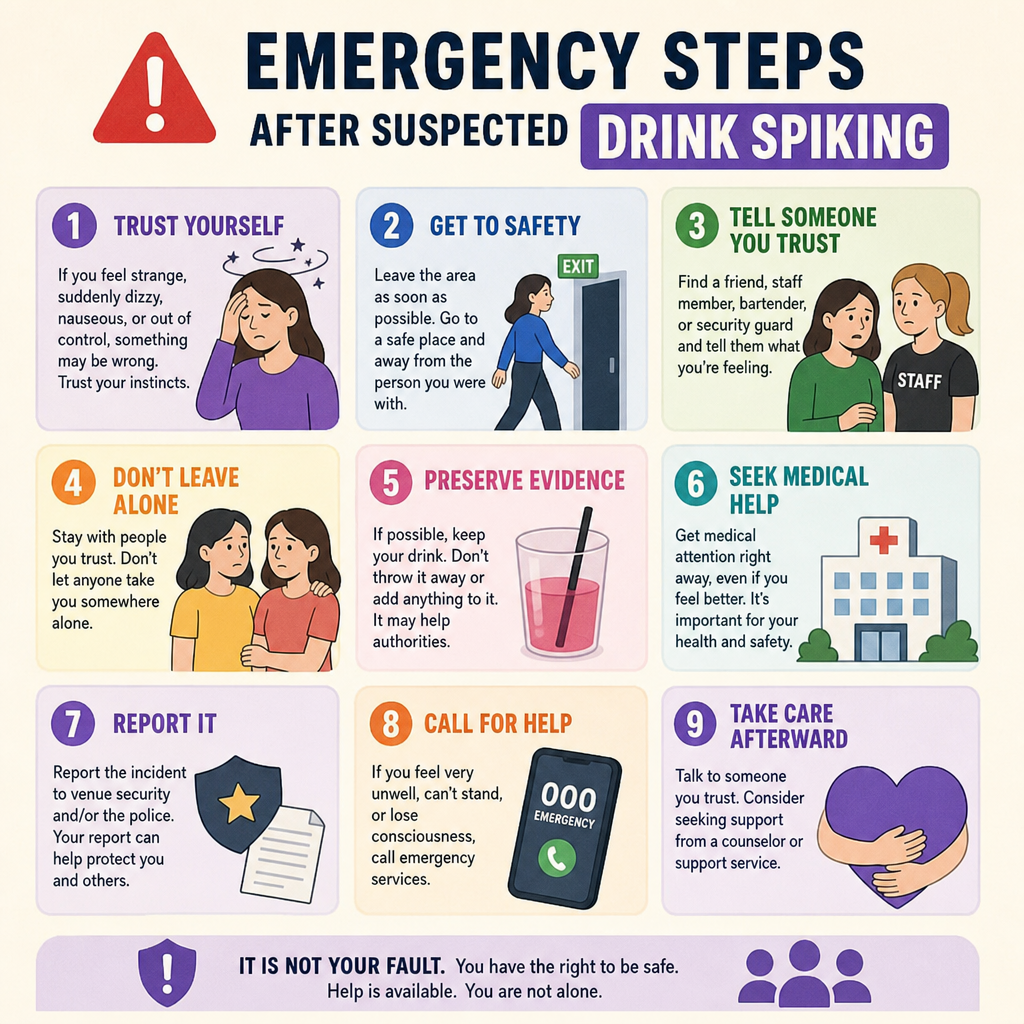
What should I do right away if I think I was drugged or assaulted?
If you are in immediate danger, call 911 or ask someone nearby to call for you. Try to get to a safe place with a trusted person, venue staff member, rideshare driver, campus safety officer, medical professional, or advocate. If possible, tell medical staff clearly: “I think I may have been drugged,” because routine testing may not look for the right substances. (womenshealth.gov)
If you can, take these steps:
- Get medical help quickly. Your health and safety come first.
- Avoid showering, changing clothes, brushing teeth, eating, or drinking if you want evidence collected, but still seek help even if you already did these things.
- Save the first urine sample if you cannot get to an exam site before urinating; use a clean, sealable container if available and keep it cold.
- Keep clothing, cups, bottles, receipts, texts, ride records, and location history if you can do so safely.
- Contact a sexual assault advocate for confidential guidance before, during, or after medical care.
How long do date rape drugs stay in your system?
There is no single answer to “how long do date rape drugs stay in your system” because detection depends on the substance, amount, timing, metabolism, whether alcohol or other drugs were involved, and the type of test. In general, urine gives a longer detection window than blood for many substances used in drug-facilitated assault. The U.S. national medical forensic protocol says toxicology samples are ideally collected within 120 hours for urine and within 24 hours for blood. (justice.gov)
Some drugs leave the body quickly, so delayed testing can come back negative even when drugging occurred. A negative result does not mean you are lying, mistaken, or responsible. If you suspect drugging, seek care as soon as you can and ask whether forensic toxicology testing is available.
Can a hospital test for every date rape drug?
Not always. Emergency departments may run tests needed for immediate medical treatment, while forensic toxicology testing may require specialized labs that can detect small quantities and preserve chain of custody. The national protocol notes that suspected drug-facilitated assault samples should be handled through appropriate forensic processes when evidence is needed. (justice.gov)
When you arrive, ask for a sexual assault nurse examiner, forensic exam, or local sexual assault response team if one is available. You can also ask what substances the test covers, how samples will be stored, who can access results, and whether you can receive medical care even if you are unsure about reporting to police.
Can someone consent if they are drunk, high, asleep, or unconscious?
Consent must be clear, informed, and freely given. Someone who is asleep, unconscious, severely intoxicated, incapacitated, or unable to understand what is happening cannot consent to sex. RAINN emphasizes that being drunk or high never gives another person the right to violate someone’s boundaries. (rainn.org)
This matters because perpetrators may exploit confusion, memory loss, fear, or shame afterward. If you were impaired, pressured, unable to say no, unable to leave, or unable to remember, you still deserve care, support, and options.
How can friends or bystanders help safely?
Bystanders can make a real difference by treating sudden impairment as a safety concern, not as embarrassment or drama. If a friend seems far more intoxicated than expected, is drifting in and out of awareness, is being isolated by someone, or says something feels wrong, stay with them and help them leave safely. OWH recommends getting help right away if someone feels unexpectedly drunk or drugged. (womenshealth.gov)
Helpful actions include:
- Stay with the person; do not leave them alone with someone pressuring them.
- Call emergency services if breathing, consciousness, or safety is in question.
- Ask what they want and respect their choices when they are able to decide.
- Help preserve possible evidence without forcing decisions.
- Offer to contact a hotline, advocate, medical provider, or trusted support person.
What victim support is available after suspected drug-facilitated assault?
Victim support can include emergency medical care, forensic exams, STI and pregnancy-related care when relevant, safety planning, counseling referrals, campus or workplace accommodations, reporting options, and legal advocacy. You do not have to know exactly what happened before asking for help.
In the United States, the National Sexual Assault Hotline is available at 1-800-656-HOPE (4673), with online chat support also available through RAINN. The Office on Women’s Health also lists the National Domestic Violence Hotline at 1-800-799-SAFE (7233) for situations involving a partner, household member, or ongoing abuse. (womenshealth.gov)
How should awareness campaigns talk about date rape drugs?
Effective awareness campaigns should combine practical safety information with survivor-centered language. Campaigns should name common substances, explain emergency response steps, encourage fast medical care, and clearly state that assault is never the victim’s fault. They should also avoid implying that survivors failed to protect themselves.
Strong campaign messages include: believe people who report sudden impairment; intervene when someone is being isolated; ask venues and schools for clear response protocols; and make hotline, medical, and advocacy resources easy to find. The goal is not fear—it is faster recognition, safer communities, and better support when someone needs help.