.png)
Blogs
TATP Safety in Inventory Storage: Risks & Guidelines
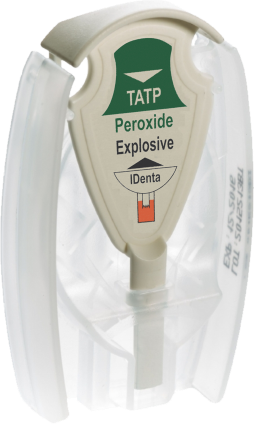
The dangers of TATP for inventory storage and transportation
Since, we spend all our time at IDenta working with chemicals and drugs, we thought we'd share what we've learned regarding how to handle them if need be. TATP is not a routine stock item, a typical laboratory reagent, or a material that should be managed with ordinary warehouse controls. It is a highly hazardous explosive associated with severe sensitivity, security risk, and strict regulatory concern, so any discussion of tatp safety in inventory storage must begin with a simple principle: do not handle, store, move, or investigate suspected TATP unless you are legally authorized and professionally trained to do so. This article explains the risks at a practical, non-operational level so safety leaders, inventory managers, facilities teams, and logistics personnel know how to think about prevention, escalation, and safer decision-making.
Why is TATP so dangerous in inventory storage?
TATP is dangerous in inventory storage because it is an explosive material that can present extreme sensitivity and unpredictable risk when mishandled, disturbed, mislabeled, degraded, contaminated, or moved by unqualified personnel. Unlike many commercial hazardous materials that can be managed through standard packaging, segregation, labeling, and routine warehouse procedures, suspected TATP should be treated as an emergency and security issue rather than a normal inventory-control problem. The practical goal is not to “make storage work”; it is to prevent unauthorized possession, recognize red flags, isolate people from danger, and bring in qualified authorities.
That distinction matters. Warehouses, laboratories, distributors, maintenance shops, school facilities, public venues, and industrial sites often have written chemical storage guidelines for flammables, corrosives, oxidizers, compressed gases, and other regulated materials. Those programs are essential, but they are not a license to manage explosives outside the law or outside specialist competence. OSHA’s explosives standard covers the manufacture, keeping, storage, sale, transportation, and use of explosives, blasting agents, and pyrotechnics, while ATF materials emphasize that regulated explosive materials must be stored under prescribed federal requirements when not being manufactured, handled in an operating process, used, or lawfully transported to storage or use. (osha.gov)
TATP also creates a communication problem. A container may not look dramatic, and the person who discovers it may not know whether the substance is actually TATP, a contaminated chemical, a mislabeled sample, or something else entirely. That uncertainty should lead to caution, not curiosity. Opening, shaking, smelling, sampling, moving, repackaging, or transporting an unknown suspected explosive can increase risk and can also compromise evidence in a security or law-enforcement matter.
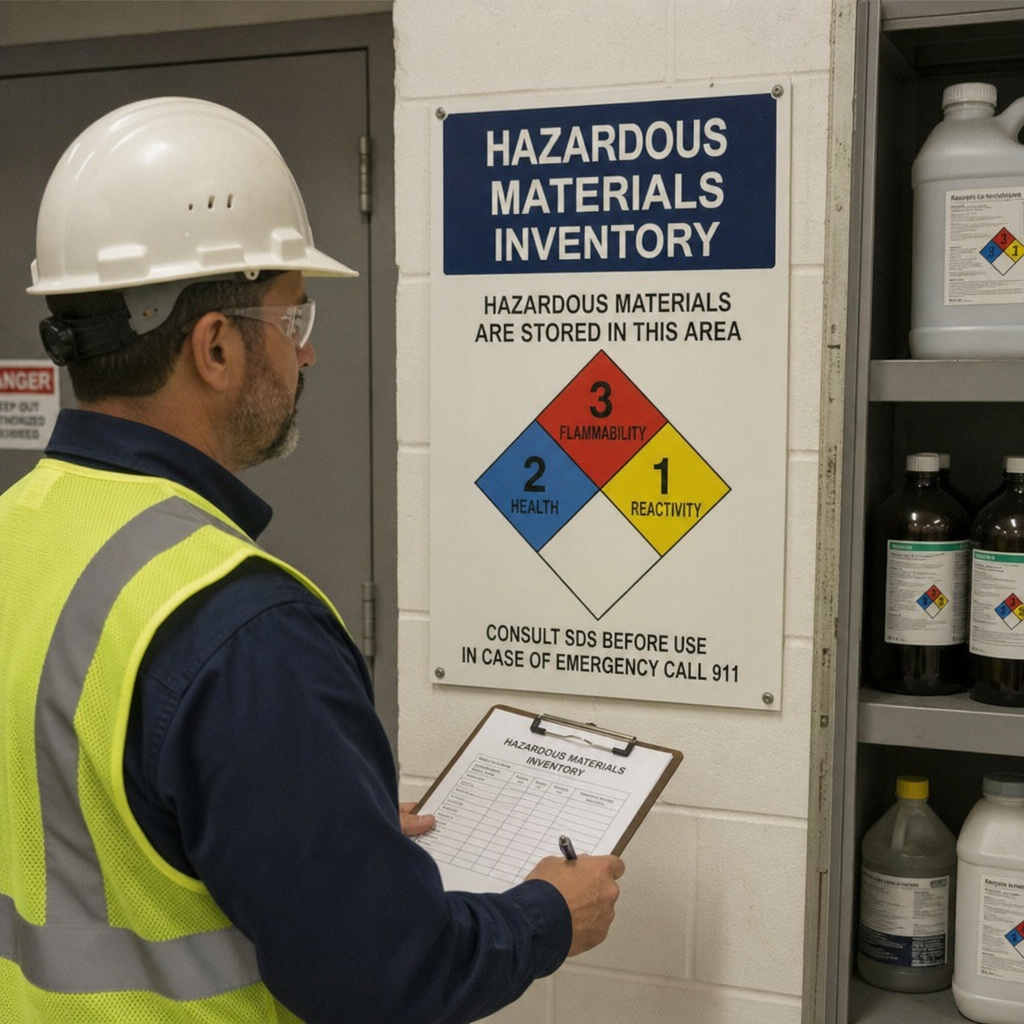
TATP belongs outside ordinary inventory thinking
Traditional inventory management is built around accuracy, accessibility, traceability, and efficient movement. Hazardous materials inventory adds more controls: compatibility groups, secondary containment, labels, safety data sheets, access restrictions, inspections, and emergency planning. Explosive materials require a different level of legal authorization, physical security, emergency coordination, and specialist oversight.
For that reason, a facility should not create internal procedures that imply suspected TATP can be routinely logged, shelved, transferred, or “made safe” by general staff. Even well-intentioned workers may try to solve the problem the way they would solve a damaged container of solvent or an unlabeled bottle in a storeroom. With suspected explosive material, that instinct can be dangerous. The safer policy is to stop work, increase distance, restrict access, preserve the scene from a safe location, and contact the appropriate emergency and regulatory authorities.
The phrase hazardous materials storage covers a broad category, but TATP sits at the most serious end of the risk spectrum. It may involve workplace safety, fire code, environmental concerns, transportation rules, criminal misuse risk, and law-enforcement response. A strong program makes clear that general hazmat training is not bomb-technician training and that storage staff should never be expected to identify or stabilize suspected explosives on their own.
The main risk factors are sensitivity, uncertainty, and unauthorized access
The danger of TATP is not only the energy it can release. The surrounding conditions—who has access, how the material was discovered, whether records are trustworthy, whether containers are degraded, and whether the location is populated—shape the overall risk. Inventory teams should understand these factors at a policy level so they can prevent hazardous situations from developing.
Sensitivity changes the consequences of normal handling
In routine inventory work, people lift boxes, open cabinets, print labels, count containers, adjust shelving, move pallets, sweep floors, and inspect packaging. Those ordinary actions can be inappropriate around suspected explosive material. The issue is not whether an employee is careful; the issue is that the task itself may be outside the employee’s competence and authorization.
This is why training should avoid heroic language. Staff should not be praised for personally “taking care of” a suspicious container. They should be praised for recognizing danger, backing away, warning others, and following escalation procedures. A mature safety culture defines success as preventing exposure, not improvising a fix.
Uncertainty makes identification risky
Unknown materials are common in poorly maintained inventories: faded labels, abandoned containers, legacy samples, unapproved purchases, residues in secondary containers, and items left behind after tenant turnover or research changes. Most unknowns are not TATP. However, uncertainty is itself a hazard when a substance could be explosive.
A strong chemical-management system reduces this uncertainty long before an emergency occurs. It keeps procurement controlled, labels current, stock quantities justified, and obsolete materials removed through qualified channels. It also teaches workers that identification is not always a hands-on task. Sometimes the safest identification step is to provide records, photographs taken from a safe distance if directed by authorities, and location information to trained responders.
Unauthorized access turns storage into a security issue
TATP and explosive precursor concerns are not only workplace hazards. They can also involve intentional misuse. CISA’s Bomb-Making Materials Awareness Program is designed to help private-sector and public-safety stakeholders recognize and voluntarily report suspicious activity related to explosive precursor chemicals. (cisa.gov)
For inventory managers, that means security cannot be an afterthought. Access controls, receiving procedures, visitor management, purchasing review, discrepancy reporting, and inventory reconciliation all contribute to risk reduction. The safest facility is not simply the one with the strongest cabinet; it is the one where unusual acquisition patterns, missing stock, abandoned materials, and suspicious behavior are noticed early and escalated appropriately.
Storage programs should prevent the scenario, not normalize it
The best safe storage solutions for TATP are prevention, legal compliance, and professional response—not improvised internal storage. A facility that is not licensed, equipped, and authorized for explosive materials should not be trying to determine how to keep suspected TATP on site. Instead, policies should reduce the chance that such a material enters inventory, remains undiscovered, or is moved by unqualified personnel.
This prevention-first mindset can be built into everyday operations. It begins with procurement discipline. Employees should not be able to buy high-risk chemicals, unusual quantities, or off-catalog materials without review. Receiving teams should know how to stop and escalate packages that do not match purchase orders, labels, or expected suppliers. Laboratory and maintenance teams should be required to label every transfer container immediately and dispose of unneeded chemicals through approved channels.
Good storage programs also avoid “orphan chemicals.” These are containers that remain after projects end, employees leave, departments move, or contractors finish work. Orphan materials are dangerous because no one feels ownership over them, and records may be missing. Routine cleanouts, management-of-change reviews, and periodic inventory reconciliation help prevent unknowns from accumulating.
A practical prevention program includes:
- Controlled purchasing: Limit who can order hazardous or security-sensitive chemicals, and require review before unusual materials or quantities are approved.
- Accurate inventory records: Keep current records of what is onsite, where it is located, who owns it, and why it is needed.
- Clear labeling expectations: Require durable labels on primary and secondary containers, with no exceptions for “temporary” use that becomes permanent.
- Routine removal of obsolete stock: Do not allow expired, abandoned, damaged, or unneeded chemicals to remain in cabinets, closets, vehicles, or remote storage areas.
- Access restrictions: Limit hazardous materials areas to trained and authorized people, and review access when roles change.
- Suspicious-activity reporting: Teach employees how to report theft, diversion, unusual requests, unexplained losses, or attempted unauthorized access.
- Emergency escalation: Make it clear that suspected explosive material requires immediate isolation from a safe distance and notification of appropriate authorities.
None of these steps requires employees to know how to handle TATP. In fact, the point is the opposite: build a system that keeps unqualified people from ever reaching that decision point.
How should teams respond if suspected TATP is found?
If suspected TATP is found, personnel should not touch, move, open, smell, sample, photograph at close range, repackage, or transport it. They should withdraw from the area, keep others away, follow the facility emergency plan, and contact qualified emergency responders or the appropriate authority according to local procedures. The response should prioritize life safety, distance, access control, and accurate communication from a safe location.
A simple internal rule helps: if there is a credible possibility that a material is an explosive, stop treating it like inventory. Do not assign a stock number, do not move it to a “better” cabinet, and do not send it to another site for evaluation. Normal inventory tools can wait; life safety comes first.
The first person who notices the issue should avoid spreading panic, but they should act decisively. Calmly leave the immediate area, alert nearby personnel, and prevent others from entering. Supervisors should initiate the site’s emergency procedure and provide responders with information such as the location, visible labels, known inventory records, access routes, nearby hazards, and whether anyone may have been exposed or injured.
A non-operational response checklist can help teams prepare without teaching dangerous handling:
- Stop work immediately. Suspend nearby operations and avoid creating vibration, heat, sparks, or unnecessary movement in the area.
- Leave the area safely. Move away without touching the item or disturbing surrounding materials.
- Warn others. Keep coworkers, contractors, visitors, and the public away from the suspected hazard.
- Notify responsible personnel. Contact site security, EHS, management, or emergency coordinators according to the facility plan.
- Call qualified responders. Use the emergency reporting pathway required by your organization and jurisdiction.
- Share information from records. Provide inventory documents, purchase records, room maps, access logs, and known context from a safe location.
- Preserve the scene. Do not clean, move, relabel, or discard anything unless directed by qualified authorities.
- Document after the response. Once the incident is controlled, capture lessons learned and update prevention measures.
This checklist is intentionally conservative. It does not tell employees how to confirm TATP, stabilize it, package it, or move it. Those tasks belong to properly trained and authorized professionals.
Transportation risk is greater than paperwork alone suggests
Transportation can turn a contained site issue into a public-safety problem. Movement introduces vibration, temperature variation, route exposure, vehicle access, loading and unloading risks, documentation errors, and emergency-response complexity. For suspected TATP, unqualified transport is not a practical workaround; it can be a severe escalation of danger.
In the United States, PHMSA regulates the safe and secure movement of hazardous materials by all transportation modes and develops regulations for classifying, handling, and packaging large numbers of daily hazardous-material shipments. (phmsa.dot.gov) That broad transportation framework is important, but it should not be misunderstood as permission for ordinary staff to move suspected explosive material. Classification, packaging, marking, documentation, carrier selection, and emergency planning for explosive materials are specialist functions governed by law.
A common mistake is thinking, “We just need to get it offsite.” That may sound reasonable during a stressful discovery, especially if leaders worry about business interruption. But moving a suspected explosive without the right authority and controls can endanger employees, drivers, responders, bystanders, and the destination facility. It may also create legal exposure for the organization and individuals involved.
Transportation decisions should be made only through qualified channels. If a facility discovers a suspected explosive, the safer question is not “Who can drive it away?” but “Which authority or qualified response partner must be contacted, and how do we protect people until they arrive?”
Chemical storage guidelines still matter for prevention
Although suspected TATP requires emergency escalation, everyday chemical storage guidelines remain one of the best ways to prevent high-risk situations. Strong chemical management lowers the likelihood of incompatible storage, unauthorized synthesis, misidentified residues, abandoned containers, and security gaps. It also gives responders better information if something goes wrong.
A well-run chemical storage program should be clear enough for frontline workers to follow and strong enough to satisfy safety, security, and compliance expectations. It should cover who may purchase chemicals, where materials may be stored, how containers are labeled, how incompatibilities are managed, how inspections are performed, and how unwanted materials are removed. It should also specify what employees must not do when they encounter unknown or suspicious substances.
Segregation prevents routine hazards from compounding
Chemical segregation is usually discussed in terms of flammables, oxidizers, acids, bases, toxics, water-reactives, and other hazard classes. The purpose is to prevent incompatible materials from reacting during storage, leaks, spills, fires, or container failure. While this article does not provide explosive-handling instructions, the broader lesson is important: poor segregation creates surprises, and surprises are dangerous.
For inventory teams, segregation should not be a one-time setup. It requires ongoing review because people move containers, receive new stock, finish projects, and create temporary work areas. Inspection programs should look for unlabeled bottles, overcrowded cabinets, damaged containers, chemical residues, blocked exits, unauthorized storage locations, and materials stored in break rooms, offices, vehicles, or general closets.
Records help responders and reduce guesswork
Accurate records are not just an administrative requirement. They help supervisors and responders understand what should be present, what is missing, and what might be nearby. When records are poor, every unknown container takes longer to assess and can create more disruption.
Inventory records should be easy to retrieve during an incident. If only one person knows the password, only one department maintains the spreadsheet, or records are stored inside the affected area, the system is fragile. Facilities should consider how emergency coordinators will access safety data sheets, floor plans, cabinet contents, supplier information, and responsible-person contacts when the normal work area is unavailable.
Disposal practices prevent legacy hazards
Many serious chemical-storage problems begin as procrastination. A team keeps old material “just in case.” A project ends, but the remaining stock stays in a cabinet. A label becomes unreadable, but no one wants to pay for disposal. Over time, the facility accumulates unknowns and outdated materials that are harder and riskier to manage.
Disposal should be planned and budgeted, not treated as an occasional cleanup. Qualified hazardous-waste vendors, environmental health and safety professionals, and regulatory advisors can help organizations remove unwanted chemicals properly. The exact route depends on the material and jurisdiction, so facilities should avoid ad hoc disposal decisions.
Safe storage solutions are systems, not containers
The phrase safe storage solutions often brings to mind cabinets, lockers, cages, rooms, sensors, and signs. Those tools can be valuable for many hazardous materials, but physical equipment is only one part of safety. A storage solution is truly safe only when it fits the material, the legal requirements, the user training, the emergency plan, and the organization’s security needs.
For ordinary hazardous materials, that may mean rated cabinets, ventilation where appropriate, compatible shelving, spill containment, clear labeling, fire protection, and controlled access. For regulated explosive materials, ATF points to specific federal storage requirements in 27 CFR Part 555, Subpart K, including the use of compliant magazines for explosive materials unless a listed exception applies. (atf.gov) The important practical takeaway is that explosive storage is a specialized regulated activity, not a matter of buying a generic cabinet online.
A system-based approach asks better questions:
- Is the material legally allowed onsite?
- Who is authorized to possess it, access it, or supervise it?
- What regulation, permit, license, or authority applies?
- What storage standard applies to this exact material and use case?
- What happens if the primary responsible person is absent?
- How are inventory discrepancies detected and escalated?
- How are emergency responders informed before an incident occurs?
- How are contractors, cleaners, and temporary employees kept away from restricted hazards?
These questions shift attention from equipment to governance. A locked door may slow access, but it does not fix poor purchasing controls, weak training, missing records, or an unclear emergency plan.
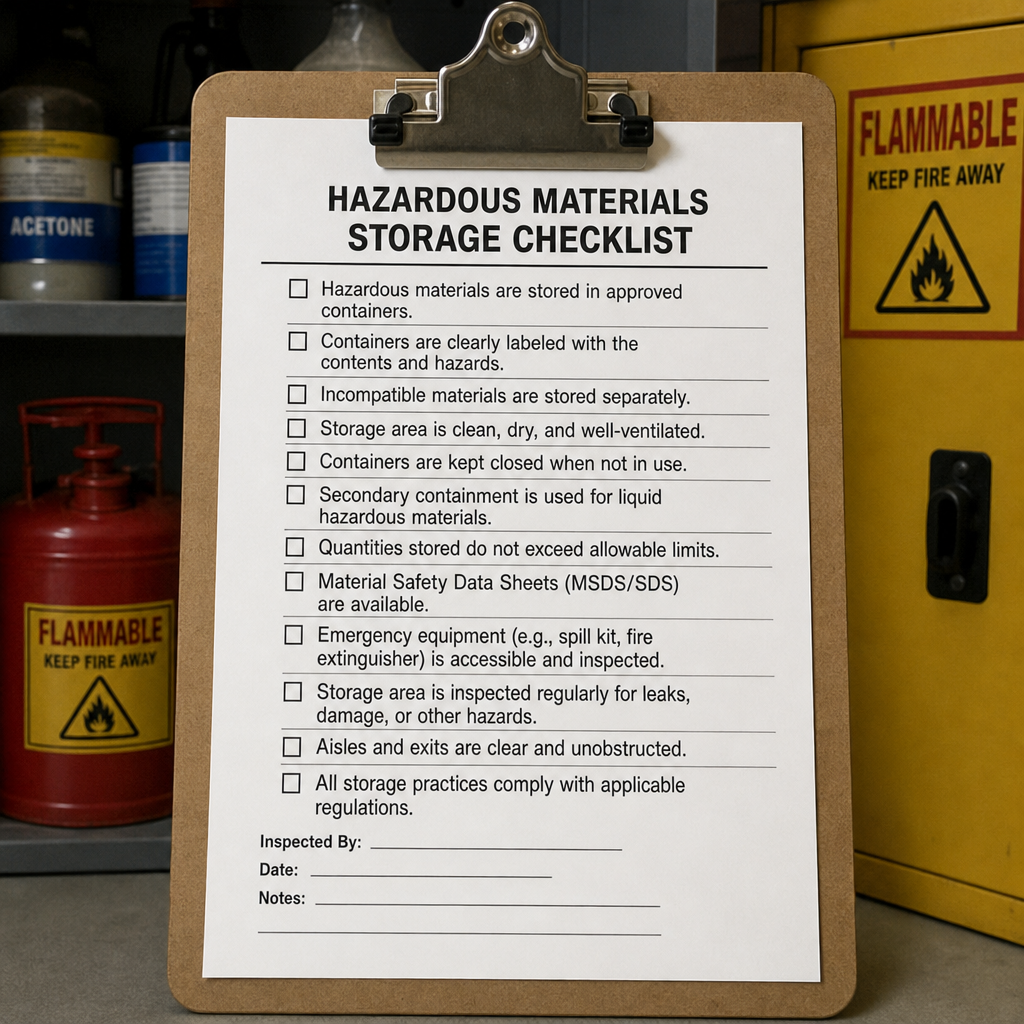
Warning signs in inventory programs deserve attention
Most facilities will never encounter TATP. However, the management weaknesses that create TATP-related concern are often visible long before a major incident. Leaders should treat warning signs as opportunities to improve systems rather than as minor housekeeping issues.
One warning sign is informal purchasing. If employees can buy chemicals outside approved systems, managers lose visibility into what enters the site. Another is uncontrolled storage space. Closets, sheds, personal lockers, vehicles, and unused rooms can become unofficial storage areas where materials escape inspection. A third is a culture of workaround behavior: relabeling later, storing temporarily, borrowing chemicals without records, or moving suspicious items to avoid paperwork.
Security-related warning signs also matter. Missing inventory, unexplained container damage, unusual requests for restricted areas, attempts to bypass sign-in procedures, or interest in chemicals unrelated to a person’s role should be reported through established channels. CISA’s chemical-security resources emphasize the importance of knowing chemicals and improving security around dangerous materials. (cisa.gov)
A healthy safety culture does not accuse people without evidence, but it does take anomalies seriously. The goal is early intervention: clarify a purchase, correct a storage issue, update access permissions, or involve security before uncertainty becomes an emergency.
Training should be practical, limited, and role-specific
Training is essential, but the wrong training can create false confidence. General employees do not need technical details about TATP chemistry or handling. They need to know what is prohibited, what looks out of place in their work area, how to leave safely, whom to notify, and why they should not investigate.
Role-specific training may look different across a facility. Procurement staff need to recognize unusual orders and approval requirements. Receiving personnel need to identify mismatched shipments and damaged packages without opening questionable items. Laboratory managers need to maintain current inventories and remove abandoned chemicals. Security teams need to respond to access-control concerns. Executives need to understand that safe response may require shutdowns, evacuations, outside authorities, and business interruption.
Training should also be refreshed after changes. New suppliers, new processes, reorganized storage rooms, facility moves, contractor work, and staff turnover can all introduce gaps. A short annual presentation is rarely enough if daily practices do not reinforce the message.
Effective training messages include:
- Do not touch or move unknown suspicious materials.
- Do not rely on smell, appearance, or informal internet research to identify hazards.
- Do not transport suspected explosive materials internally or externally.
- Do not clean up residues from suspicious containers without direction.
- Do report missing stock, unauthorized access, unusual purchases, and abandoned chemicals.
- Do keep records current so responders have reliable information.
- Do follow the emergency plan even if the situation seems inconvenient or embarrassing.
The most important training outcome is hesitation before action. In many workplace tasks, initiative is valuable. Around suspected explosive materials, restraint is often the safer choice.
Incident planning protects people before decisions become urgent
An emergency plan is most useful when it has been built before the emergency. For TATP-related concern, planning should define authority, communication, evacuation decision-making, responder coordination, and business-continuity expectations. It should also remove ambiguity from the first few minutes, when stress is high and information is incomplete.
Plans should identify who can order area isolation or evacuation, who contacts emergency services, who meets responders, who provides inventory records, and who communicates with employees. They should include after-hours scenarios because discoveries may occur during cleaning, maintenance, security patrols, deliveries, or alarms. They should also account for visitors, contractors, neighboring tenants, and shared buildings.
The plan should avoid technical instructions for handling suspected explosives. Instead, it should focus on protective actions and communications. If the organization has legitimate operations involving explosive materials, its plan must be developed with qualified professionals and aligned with applicable law. If the organization does not, the plan should make clear that suspected explosive material is outside normal operations and triggers external response.
A useful tabletop exercise can walk leaders through a fictional discovery without discussing chemistry or methods. The exercise might ask: Who is called first? Where do employees assemble? How are access points controlled? How are records retrieved? What if the discovery is in a delivery area? What if media arrive? What if a manager wants to move the item to reduce disruption? These questions reveal gaps while there is still time to fix them.
Compliance is a floor, not the full safety program
Regulations provide essential requirements, but compliance alone does not guarantee good judgment in every situation. A facility may follow general hazardous-material rules and still have weak inventory visibility. A company may own appropriate cabinets for routine chemicals and still lack a plan for suspicious materials. A site may train workers on labels and safety data sheets but fail to teach them what to do when a material is unknown.
For explosives, the regulatory landscape can involve multiple authorities depending on the material, activity, location, and mode of transportation. OSHA addresses workplace safety requirements for explosives and related materials, ATF regulates explosive materials storage under federal explosives regulations, and PHMSA oversees hazardous-material transportation safety. (osha.gov) State, local, fire-code, environmental, and law-enforcement requirements may also apply.
Because rules change and situations vary, organizations should not rely on generic articles as legal guidance. They should consult qualified EHS professionals, legal counsel, regulatory agencies, and emergency-response partners. The value of a blog post like this is awareness: it helps leaders ask better questions and avoid unsafe assumptions.
Practical takeaways for safer inventory and transportation decisions
TATP safety is not about finding a clever storage method. It is about recognizing that suspected explosive materials do not belong in ordinary inventory workflows. The safest organizations build layers of prevention, detection, escalation, and professional response.
Key takeaways include:
- Do not normalize the hazard. Suspected TATP is not a routine chemical-storage issue.
- Do not handle or move it. Unqualified touching, opening, sampling, repackaging, or transport can increase danger.
- Strengthen everyday controls. Purchasing, labeling, access control, inventory accuracy, and disposal reduce the chance of unknown hazardous materials accumulating.
- Train for restraint. Employees should know when to stop, leave, warn others, and call for help.
- Plan before discovery. Emergency roles, communication pathways, and record access should be defined before a crisis.
- Use qualified authorities. Explosive materials storage and transportation are regulated specialist areas, not general warehouse tasks.
- Treat security as part of safety. Theft, diversion, suspicious activity, and unexplained inventory gaps deserve prompt attention.
These principles also support broader hazardous materials storage performance. A site that can prevent and escalate suspected explosive concerns is usually better at managing routine chemical risk as well.
A safer approach starts with saying no to improvisation
The dangers of TATP for inventory storage and transportation come from more than the substance itself. They come from uncertainty, unauthorized access, poor records, normal handling habits, and the pressure to “do something” quickly. The safest response is often to do less physically and communicate more effectively: move people away, secure the area from a safe distance, provide accurate information, and involve qualified responders.
For organizations reviewing tatp safety in inventory storage, the most responsible position is clear. Prevent suspicious or unauthorized materials from entering the facility, maintain strong chemical controls, train staff to recognize when a situation is beyond their role, and never substitute improvised handling for professional explosive-response procedures. Good safety leadership is not measured by how confidently a team handles the unhandleable; it is measured by how well the team avoids unnecessary exposure in the first place.