.png)
Blogs
Polysubstance Opioids: Law Enforcement's Evolving Role

The implications of polysubstance opioids for law enforcement
Polysubstance opioid use is changing how law enforcement, first responders, courts, and community partners understand drug-related risk. Instead of encountering one substance in isolation, officers may respond to situations involving opioids mixed with stimulants, benzodiazepines, alcohol, xylazine-like sedatives, or other unknown compounds. This creates practical challenges around scene safety, medical response, investigation, evidence handling, and the path from enforcement to addiction recovery.
For law enforcement agencies, the issue is not only the presence of opioids. It is the unpredictable nature of drug interactions, the rising complexity of substance use patterns, and the need to balance public safety with humane, evidence-informed responses to opioid addiction and polysubstance abuse.
What makes polysubstance opioids different for law enforcement?
Polysubstance opioids are different because the risk profile is less predictable than single-substance opioid use. A person may appear sedated, agitated, confused, medically unstable, or impaired in ways that do not fit a familiar pattern. For officers, that means every call involving suspected opioid use should be treated as both a public safety event and a potential medical emergency.
Traditional drug enforcement often categorized substances by type: opioids, stimulants, depressants, hallucinogens, or alcohol-related impairment. Polysubstance use blurs those categories. Someone using opioids with stimulants may move between alertness and respiratory distress. Someone using opioids with alcohol or sedatives may deteriorate quickly. Someone using an unknown combination may not respond as expected to basic verbal commands, standard field observations, or even initial medical interventions.
This matters because law enforcement is often first on scene. Officers may arrive before emergency medical services, before family members can explain what was taken, and before there is any clear information about what substances are involved. The implications of polysubstance opioids for law enforcement include better training, stronger coordination with medical responders, careful evidence protocols, and a shift away from assumptions about what opioid impairment “looks like.”
The opioid crisis now involves more complicated patterns of substance use
The opioid crisis is not a single-drug problem. Many communities are dealing with people who use opioids alongside other substances for different reasons: to intensify effects, reduce withdrawal, manage anxiety, stay awake, sleep, self-medicate pain, or cope with unstable living conditions. These patterns are not always intentional. Some people believe they are taking one substance and are exposed to another through contaminated or mislabeled supplies.
For law enforcement, this creates a complicated operating environment. A traffic stop, overdose call, domestic disturbance, theft report, welfare check, or jail intake may involve a person whose behavior is being shaped by multiple substances at once. Officers are then asked to make fast decisions under uncertainty: Is this a crime scene, a medical emergency, a mental health crisis, or all three?
The answer is often “all three.” That is why agencies need policies that do not force officers into a narrow response. A person experiencing opioid addiction may also be involved in illegal activity, may need emergency care, may be carrying dangerous substances, and may still be a candidate for treatment referral. Effective response requires officers to recognize the overlapping realities instead of treating them as mutually exclusive.
Operational risks begin at the scene
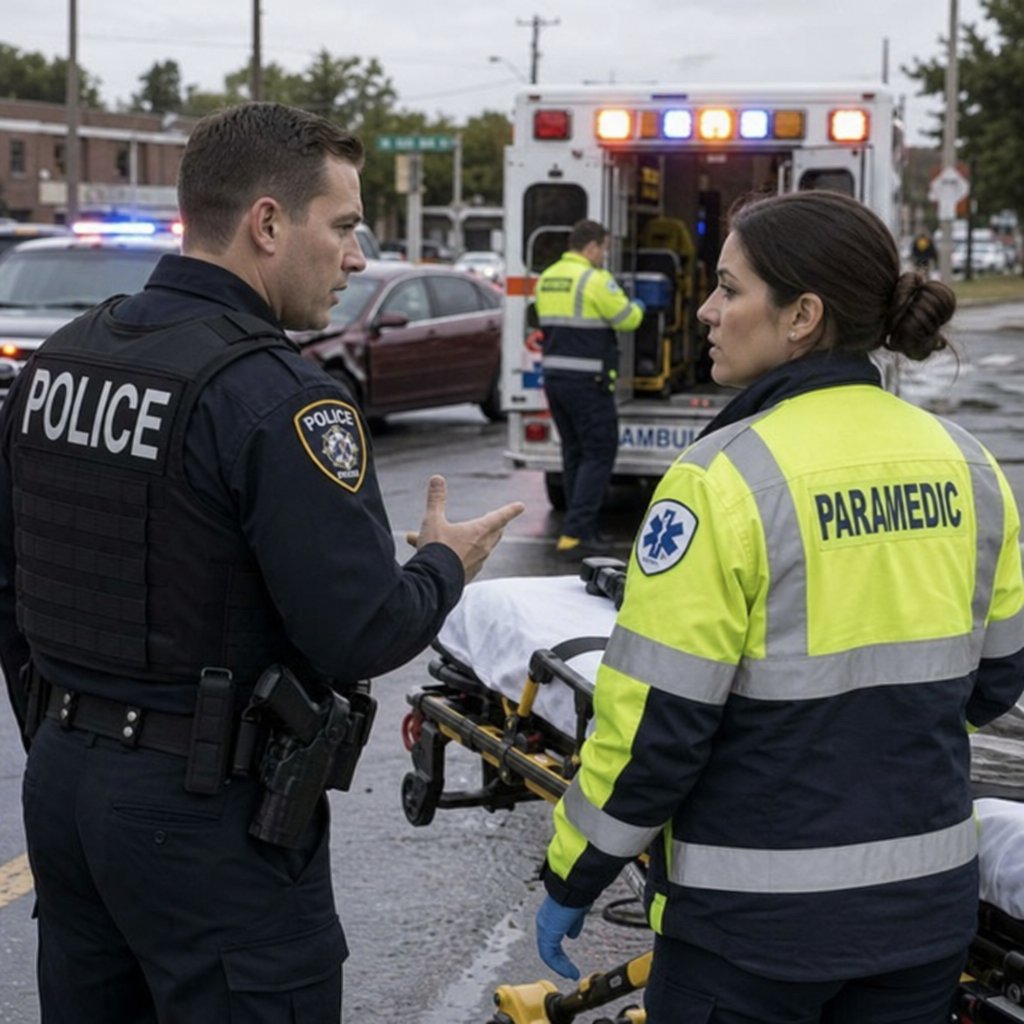
The first minutes of a call often set the tone for safety, evidence preservation, and medical outcomes. In polysubstance cases, the scene can be more volatile because the substances involved may affect breathing, consciousness, pain response, coordination, mood, and decision-making in different ways. A person may seem calm and then become confused or combative. Another may appear intoxicated but actually be experiencing life-threatening respiratory depression.
Officers should approach these scenes with a layered safety mindset. That does not mean assuming every person is violent or every powder is instantly dangerous. It means slowing down when possible, using protective equipment when appropriate, avoiding unnecessary contact with unknown substances, and communicating early with emergency medical responders.
Key scene considerations include:
- Medical uncertainty: Officers may not know whether the person used opioids, alcohol, stimulants, sedatives, or a mixture.
- Behavioral unpredictability: Drug interactions can contribute to agitation, panic, disorientation, or sudden loss of consciousness.
- Environmental hazards: Needles, powders, pills, liquids, paraphernalia, weapons, or contaminated surfaces may be present.
- Bystander information: Friends or family may know what was used, but they may be scared to speak unless officers create enough trust for basic medical facts to emerge.
- Evidence preservation: Medical care must come first, but officers still need to document what is visible, where items were found, and who was present.
A practical approach is to separate urgent priorities from investigative priorities. If someone is not breathing normally, the priority is lifesaving response and EMS activation. Once the immediate threat is addressed, officers can return to questions about possession, supply chains, witness statements, or related crimes.
Drug interactions complicate impairment recognition
Drug interactions can make field observations less reliable. Officers are often trained to notice clues: slowed speech, pinpoint pupils, poor coordination, sweating, paranoia, agitation, nodding off, or unusual alertness. In polysubstance use, those clues can conflict with one another.
For example, opioids are commonly associated with sedation and slowed breathing, while stimulants may be associated with increased energy, anxiety, rapid speech, or elevated alertness. When both are involved, the person may not fit either pattern cleanly. Sedatives, alcohol, or other depressants may deepen respiratory risk. Other adulterants or non-opioid substances may cause symptoms officers are less familiar with.
This is one reason agencies should avoid overconfidence in visual identification alone. Officers do not need to diagnose the exact substances at the roadside or in a residence. They need to recognize signs of medical danger, maintain safety, and document observations accurately without overstating conclusions.
A useful report-writing distinction is the difference between observation and interpretation:
- Observation: “The subject was sweating, speaking rapidly, and appeared unable to stand without support.”
- Interpretation: “The subject was under the influence of a stimulant and an opioid.”
The second statement may ultimately be supported by toxicology or other evidence, but it should not replace careful documentation of what officers actually saw. Clear observation helps prosecutors, defense counsel, treatment providers, and medical staff understand the event without relying on guesswork.
Officer safety depends on training, equipment, and habits
The implications of polysubstance opioids for law enforcement include a stronger focus on officer safety. Unknown substances should be handled with caution, especially when officers encounter loose powders, crushed pills, liquids, or residue. Agencies need practical policies that are calm, realistic, and consistent with current safety guidance rather than fear-driven or improvised.
Officer safety begins before the call. Roll-call training, written protocols, and scenario-based exercises help officers understand what to do when suspected opioids are present with other substances. This preparation is especially important for smaller agencies where officers may work with limited backup or delayed EMS response.
A basic operational checklist may include:
- Assess the scene before entering fully. Look for unconscious people, visible weapons, paraphernalia, powders, chemical odors, children, animals, or signs of violence.
- Use appropriate protective equipment. Gloves, masks, eye protection, or other equipment may be needed depending on agency policy and visible hazards.
- Avoid unnecessary handling. Do not open containers, smell substances, brush powders away with bare hands, or field test unknown substances unless policy and safety conditions allow it.
- Call EMS early when impairment is unclear. Waiting for a condition to worsen can cost valuable time.
- Maintain ventilation when safe. In enclosed spaces, consider airflow and avoid actions that disturb powders or residues.
- Package evidence according to protocol. Use approved containers, labeling, and transport procedures for suspected controlled substances.
- Decontaminate when appropriate. Follow agency procedures for clothing, equipment, vehicles, and exposed skin.
These steps are not meant to slow officers down unnecessarily. They create consistency so officers are not making safety decisions from scratch in stressful moments.
Why does naloxone still matter in polysubstance cases?
Naloxone still matters because it can reverse opioid-related respiratory depression even when other substances are present. It will not reverse every effect of every drug, and it may not solve a complex polysubstance emergency by itself, but it remains an important tool when opioid overdose is suspected. Officers should treat naloxone as part of a broader emergency response, not as a substitute for EMS.
In polysubstance situations, a person may improve after naloxone but remain medically unstable because alcohol, sedatives, stimulants, or other substances are still affecting the body. Officers should be prepared for continued confusion, agitation, vomiting, renewed sedation, or other complications after administration. This is why monitoring, rescue breathing support when trained and appropriate, and rapid medical evaluation remain critical.
Agencies can support better outcomes by training officers on what naloxone can and cannot do. A simple message is often best: if opioid overdose is suspected, follow policy, administer naloxone when indicated, call EMS, and keep observing the person until care is transferred. The goal is not to identify every drug involved at the scene. The goal is to keep the person alive long enough for medical professionals to assess and treat them.
Naloxone also affects community trust. When officers are seen taking lifesaving action, families and bystanders may be more willing to cooperate, share information, or accept referrals. That does not erase accountability for crimes, but it signals that preserving life is a central law enforcement duty.
Investigations require a broader view of supply and harm
Polysubstance opioid cases can reveal more than individual drug possession. They may point to local supply patterns, counterfeit pills, shared dealers, trafficking routes, overdose clusters, or emerging combinations that are harming a community. Investigators need ways to connect street-level observations with broader intelligence without treating every person with substance use disorder as a major trafficker.
The distinction matters. Someone experiencing opioid addiction may possess drugs for personal use, sell small amounts to support dependence, or be exploited by others in the supply chain. Others may be actively distributing dangerous mixtures with little concern for harm. A strong investigative approach recognizes these differences and directs resources accordingly.
Useful investigative questions include:
- Are multiple overdoses connected by location, packaging, markings, or timing?
- Are counterfeit pills being sold as something less dangerous than they are?
- Are people reporting unexpected reactions after using the same source?
- Are vulnerable individuals being pressured to transport or sell substances?
- Are violent offenses, weapons, or exploitation connected to the local drug supply?
- Are treatment providers, hospitals, or public health partners seeing similar patterns?
This broader view helps agencies focus on people and networks causing the greatest harm. It also helps communities avoid an enforcement-only cycle that repeatedly arrests people with opioid addiction without interrupting supply or improving access to care.
Evidence handling and testing need precision
In polysubstance cases, evidence may include pills, powders, syringes, baggies, residue, drinks, vape devices, patches, or unlabeled containers. Visual identification is not enough to establish what a substance is. Field presumptive tests, when used, have limits and may not identify every compound involved. Laboratory testing may be necessary to understand the full picture.
Accurate packaging, labeling, and chain of custody are especially important when multiple substances are present. A disorganized evidence process can create confusion later about what was collected, where it came from, and how it relates to the person, vehicle, residence, or overdose scene. That confusion can weaken prosecutions, complicate defense review, and make public health intelligence less useful.
Officers should document details that may seem minor in the moment, such as pill markings, packaging colors, where items were located, who had access, and what witnesses said the substance was believed to be. If a person thought they were taking one drug but actually encountered another, that information may be relevant to both investigation and prevention.
Clear documentation also protects officers. When reports distinguish facts from assumptions, agencies are better positioned to explain decisions, support charges when appropriate, and identify cases where diversion or treatment referral may be the better path.
Public health partnerships strengthen law enforcement response
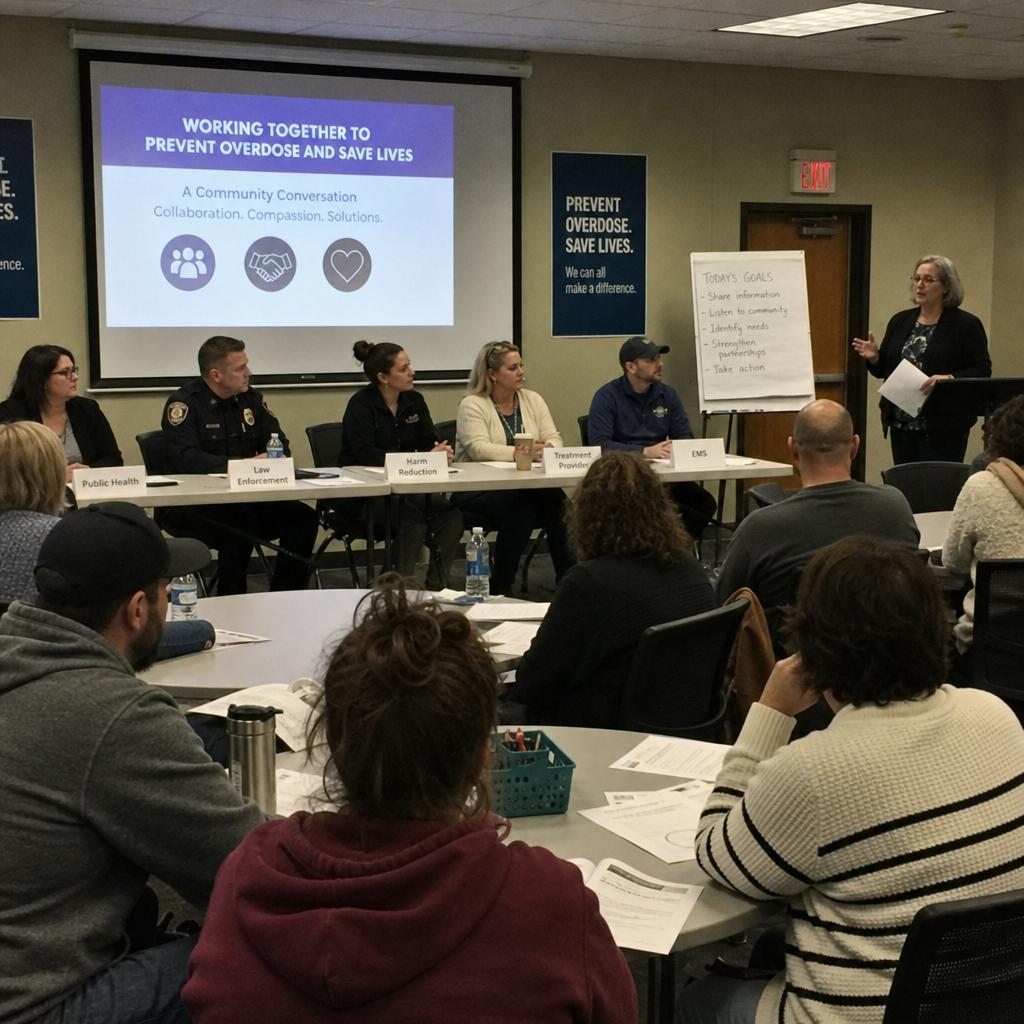
No police agency can solve polysubstance abuse alone. The issue sits at the intersection of public safety, healthcare, housing, mental health, courts, schools, families, and community organizations. Law enforcement may be the first point of contact, but it should not be the only doorway to help.
Partnerships can take many forms. Some communities use co-responder models with clinicians, peer recovery specialists, or crisis teams. Others use post-overdose outreach, deflection programs, pre-arrest diversion, treatment navigation, or jail-based recovery connections. The best model depends on local resources, geography, staffing, and community trust.
What matters is that officers have realistic options. If the only available tool is arrest, every situation starts to look like an enforcement problem. If officers can connect people to addiction recovery services, shelters, crisis care, or harm reduction resources, they can respond with more precision.
Effective partnerships usually include:
- Shared communication channels between law enforcement, EMS, public health, and treatment providers.
- Clear referral pathways so officers know who to call and what information is needed.
- Privacy-aware processes that respect legal boundaries and personal dignity.
- Follow-up capacity because a single conversation rarely resolves opioid addiction.
- Feedback loops so agencies know which referrals are working and where gaps remain.
These efforts do not remove the role of enforcement. Instead, they help officers reserve enforcement for situations where it is necessary while expanding options for people whose primary need is care.
Jail intake is a critical intervention point
Jails often become the front door to withdrawal, crisis stabilization, and treatment for people with substance use disorders. When polysubstance opioids are involved, intake staff may face heightened medical uncertainty. A person may be at risk of opioid withdrawal, alcohol withdrawal, sedative withdrawal, intoxication, overdose complications, mental health crisis, or a combination of these.
Law enforcement agencies that operate or transport to detention facilities should treat intake communication as a safety-critical handoff. Arresting officers may have information that jail medical staff need: what was found at the scene, what the person said they used, whether naloxone was administered, whether EMS evaluated them, and whether witnesses described recent use.
A strong handoff can include:
- Time and location of contact.
- Time and location of contact.
- Observable impairment or medical symptoms.
- Statements about substance use, when legally and ethically appropriate to share.
- Substances or paraphernalia found nearby.
- Naloxone administration, EMS involvement, or hospital clearance.
- Known pregnancy, injury, head trauma, or mental health concerns if observed or reported.
This information can help detention staff monitor for withdrawal or medical decline. It can also create an opportunity to connect the person with addiction recovery support, medication-assisted treatment where available, discharge planning, or community-based follow-up after release.
Community trust shapes information flow
Polysubstance opioid response depends heavily on information from people who may fear police contact. Friends, family members, witnesses, and people who use drugs may hesitate to call 911 if they believe the result will automatically be arrest, humiliation, or loss of housing, custody, or employment. That hesitation can be deadly during overdose events.
Law enforcement agencies can improve information flow by communicating clearly about lifesaving priorities. When officers explain that emergency medical care comes first, bystanders may be more willing to say what was taken, where it came from, and whether other people are at risk. Good Samaritan-style protections, where applicable, should be understood by officers and communicated accurately to the public.
Trust also grows through everyday conduct. Respectful language, calm scene management, and fair treatment do not require officers to ignore crime. They do help separate the person from the disorder. Using terms like “person with opioid addiction” or “person experiencing substance use disorder” can reduce stigma while still allowing direct discussion of illegal behavior and community harm.
This is not soft policing. It is practical policing. People share better information when they believe officers are listening, and better information can lead to faster medical care, stronger investigations, and more effective prevention.
Training should reflect real-world complexity
Officer training on opioids should go beyond basic awareness. Polysubstance cases require scenario-based learning that mirrors the confusion of real calls: incomplete information, emotional bystanders, medical distress, potential weapons, children in the home, evidence in plain view, and uncertainty about what was used.
Training topics should include:
- Recognizing possible overdose and respiratory distress.
- Understanding how drug interactions may affect behavior and impairment signs.
- Using naloxone according to policy while continuing emergency response.
- Coordinating with EMS and fire personnel at shared scenes.
- Handling suspected substances safely.
- Writing reports that distinguish observations from conclusions.
- Applying diversion, referral, or arrest options consistently.
- Managing compassion fatigue and repeated exposure to overdose calls.
Supervisors also need training. They set expectations for scene priorities, report quality, officer wellness, and partnership follow-through. If leadership treats every drug call only as a numbers-driven enforcement event, officers may miss opportunities to reduce harm. If leadership treats every call only as a health issue, officers may miss threats from exploitation, violence, or organized distribution. Balanced training helps agencies hold both truths at once.
Data can guide smarter decisions
Agencies do not need perfect data to make better decisions, but they do need consistent data. Tracking overdose calls, naloxone administrations, suspected substances, locations, repeat contacts, referral outcomes, and related crimes can help leaders see patterns that are invisible from individual reports alone.
Data should be used carefully. A neighborhood with many overdose calls may need more outreach and healthcare access, not simply more arrests. A spike in counterfeit pills may require public alerts, school communication, targeted investigations, or collaboration with pharmacies and medical partners. A pattern of repeated overdoses among recently released individuals may point to gaps in reentry planning.
A practical data review can ask:
- Where are the highest-risk calls occurring? Look for clusters by location, time, and setting.
- What substances are suspected or confirmed? Compare officer observations with lab or medical information when available.
- Who is repeatedly cycling through emergency response? Identify opportunities for follow-up and case management.
- Which referrals are actually completed? A referral that never connects is not the same as access to care.
- What crimes are connected to the supply chain? Separate personal use patterns from distribution, coercion, violence, or exploitation.
The goal is not surveillance for its own sake. The goal is to use information to deploy officers, outreach workers, and treatment resources where they can reduce harm most effectively.
Policy must balance enforcement, discretion, and accountability
Polysubstance opioid response places officers in situations where discretion matters. Policies should give enough structure to promote consistency while allowing room for judgment based on safety, seriousness of the offense, available services, and the person’s medical condition.
A balanced policy framework might address when to call EMS, when to administer naloxone, when to request specialized units, when diversion is available, how to handle evidence after medical emergencies, and how to document referrals. It should also address officer exposure concerns, body-worn camera expectations, supervisor notification, and follow-up after fatal or near-fatal overdoses.
The policy should be realistic. If officers are told to make referrals but no provider answers after hours, the policy will fail in practice. If diversion is available only on paper, officers will revert to arrest or informal release. If supervisors do not review report quality, weak documentation will continue.
Accountability matters on both sides. People who distribute dangerous substances, exploit addiction, or commit violence should face appropriate enforcement. At the same time, agencies should be accountable for using humane, lawful, and effective responses when a person’s primary issue is substance use and medical vulnerability.
Officer wellness cannot be an afterthought
Repeated exposure to overdoses, death scenes, grieving families, and recurring calls involving the same individuals can affect officers deeply. The emotional burden may show up as frustration, numbness, cynicism, anger, sleep problems, or a belief that nothing works. Those reactions can damage decision-making and community relationships if agencies ignore them.
Officer wellness is part of operational readiness. Agencies should normalize peer support, supervisor check-ins, access to confidential counseling, and decompression after difficult calls. Officers also need permission to acknowledge that saving someone today, even if the person struggles again tomorrow, still matters.
Wellness is connected to training and partnerships. When officers have more tools than arrest, they may feel less powerless. When they see treatment providers, outreach workers, and families sharing responsibility, they are less likely to feel that the entire opioid crisis has been placed on their shoulders.
A practical response model for agencies
Every community is different, but agencies can use a simple framework to improve their approach to polysubstance opioids. The model should be easy enough for officers to remember and detailed enough for leaders to build policy around.
A practical response model:
- Protect life first. Treat suspected overdose or severe impairment as a medical emergency. Call EMS, administer naloxone when indicated by policy, and monitor the person until care is transferred.
- Stabilize the scene. Address weapons, traffic, bystanders, children, animals, and environmental hazards without losing sight of the medical priority.
- Document clearly. Record observations, statements, evidence locations, naloxone use, EMS involvement, and witness information without claiming certainty that testing has not confirmed.
- Preserve evidence safely. Use approved protective equipment, packaging, and chain-of-custody procedures.
- Identify the best pathway. Consider arrest, citation, diversion, treatment referral, protective custody, or follow-up based on law, policy, safety, and available resources.
- Share actionable intelligence. Alert supervisors, investigators, public health partners, or outreach teams when patterns suggest broader risk.
- Follow up when possible. Post-overdose outreach, family contact, or referral support can turn a crisis call into a recovery opportunity.
This model does not require officers to become clinicians. It helps them make better public safety decisions in a landscape where substance use, medical risk, and criminal activity often overlap.
The path forward is coordinated, not one-dimensional
The implications of polysubstance opioids for law enforcement are significant because these cases challenge old categories. They are not simply overdose calls, drug arrests, disorder complaints, or mental health crises. They may be all of those at the same time.
A strong response requires preparation before the call, discipline during the call, and coordination after the call. Officers need practical training, reliable safety protocols, accurate reporting habits, and access to partners who can address addiction recovery beyond the immediate scene. Communities need enforcement focused on real harm, not reflexive responses that recycle people through the system without changing risk.
Polysubstance abuse makes the opioid crisis more complicated, but it also clarifies an important point: no single agency can solve it alone. Law enforcement has a vital role in saving lives, protecting neighborhoods, disrupting dangerous supply, and connecting people to help. The most effective agencies will be the ones that treat opioid addiction as both a public safety issue and a human crisis requiring coordinated action.