.png)
Blogs
Perchlorate Ammonium Nitrate Testing: Key for Safety & Environment
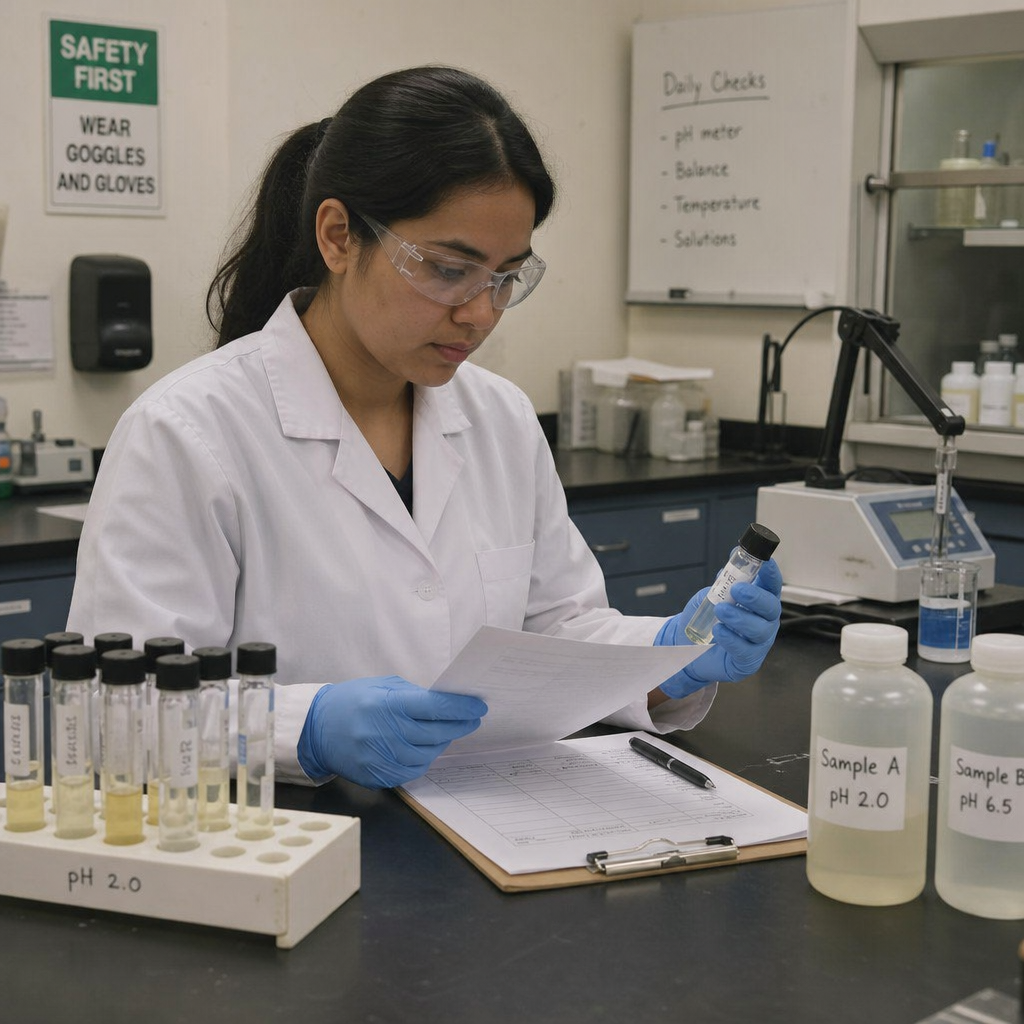
Why it is important to test for Perchlorate, Ammonium Nitrate, and other explosives
Perchlorate, ammonium nitrate testing helps identify chemical residues, explosive precursors, and related contaminants that can affect safety, security, and environmental quality. For public agencies, facility managers, environmental consultants, and industrial operators, testing is not just a technical exercise; it is a practical way to reduce risk, document conditions, and make informed decisions. The same careful approach supports water quality testing, hazardous materials testing, nitrate testing, and broader environmental testing when substances may move through soil, water, dust, or building materials.
Why should perchlorate ammonium nitrate and other explosive-related materials be tested?
Perchlorate, ammonium nitrate, and other explosive-related materials should be tested because they can create safety hazards, security concerns, environmental impacts, and compliance challenges when they are present in the wrong place or at concerning levels. Testing helps determine whether residues, spills, stored materials, or suspected contamination require containment, cleanup, further investigation, or specialist response. Without reliable data, organizations may either underestimate a serious risk or overreact without evidence.
Perchlorate compounds are often discussed in environmental contexts because they can persist and move through water systems. Nitrate and ammonium compounds can also be relevant to water quality testing, agricultural runoff investigations, industrial sites, storage areas, and emergency response work. Ammonium nitrate analysis is especially important where the substance is manufactured, transported, stored, or used in regulated commercial settings.
Explosive-related chemical testing should always be handled by qualified professionals using appropriate safety procedures. The goal is not to create alarm; it is to replace uncertainty with defensible information. When sampling, laboratory analysis, and reporting are done correctly, decision-makers can better protect people, property, and the environment.

Testing protects people in public spaces and storage facilities
Testing for explosive materials is especially important in public spaces and storage facilities because these environments combine exposure risk with operational responsibility. Public spaces may include transit areas, event venues, civic buildings, schools, parking structures, and shared commercial properties. Storage facilities may hold fertilizers, oxidizers, industrial chemicals, fuels, or other materials that require careful segregation, labeling, inventory control, and monitoring.
From a safety perspective, testing can help identify residues, leaks, spills, or cross-contamination before they contribute to a dangerous incident. A small amount of suspicious residue in a high-traffic area may require a different response than a documented material in a controlled storage room, but both situations benefit from accurate identification. Testing helps responsible teams decide whether an area should be isolated, cleaned, resampled, or referred to emergency or regulatory specialists.
From a security perspective, hazardous materials testing helps verify whether materials are present where they should not be. This is particularly important after suspicious activity, unauthorized access, abandoned containers, damage to storage areas, or unexplained chemical odors or deposits. Reliable testing supports incident documentation, law enforcement coordination where appropriate, and post-event clearance decisions.
For storage facilities, the value is also preventative. Routine environmental testing and targeted chemical testing methods can support good housekeeping, inventory verification, spill response, and worker protection. Testing does not replace physical security, training, labeling, or emergency planning, but it strengthens each of those controls by providing evidence about actual site conditions.
The materials of concern are not all the same
A strong testing plan begins with understanding that explosive-related materials vary widely in behavior, risk, and environmental significance. Some substances are finished energetic materials, while others are precursors, oxidizers, degradation products, or residues associated with industrial, agricultural, military, mining, or emergency-response contexts. Treating every chemical as identical can lead to poor sampling decisions and misleading results.
Perchlorate, for example, is commonly evaluated because of its mobility in water and its relevance to certain industrial and defense-related activities. Nitrate testing is often used in water quality testing because nitrate can come from fertilizers, wastewater, industrial sources, natural processes, or site-specific contamination. Ammonium nitrate analysis may be relevant in facilities that store or handle fertilizer or oxidizing materials, as well as in investigations where chemical identity must be confirmed.
Other explosives and related compounds may require different laboratory methods, preservation practices, sample containers, and reporting limits. Some are more likely to be found in residue or dust; others may be more relevant in water or soil. This is why broad assumptions are risky. A qualified laboratory or environmental professional should match the sampling media and analytical method to the suspected substance and the decision the data must support.
A practical way to think about the issue is to group testing objectives by question:
- Is there a potential human exposure concern? This may require water, dust, soil, surface wipe, or air-related assessment depending on the site.
- Is the material properly stored or contained? Storage areas may need residue checks, spill-area sampling, or verification after cleanup.
- Has contamination moved off site? Environmental testing may focus on groundwater, surface water, stormwater pathways, or soil migration.
- Is the substance present, absent, or uncertain? Screening may provide early direction, while confirmatory laboratory analysis supports stronger decisions.
- Is documentation needed for regulators, insurers, tenants, owners, or emergency responders? Chain of custody and defensible reporting become especially important.
How does testing support water quality and environmental protection?
Testing supports water quality and environmental protection by showing whether chemicals have entered water, soil, sediment, or drainage pathways and whether additional action is needed. Perchlorate, nitrate, and related compounds can be relevant because water can transport dissolved substances beyond the original release area. Even when a site appears clean on the surface, sampling may reveal whether contaminants have migrated into stormwater systems, wells, groundwater, or nearby surface water.
Water quality testing is often one of the first concerns when soluble chemicals are involved. A spill, long-term storage problem, damaged container, or historical use area may not remain isolated if rainfall, washdown water, or groundwater flow carries material elsewhere. Testing helps determine whether the issue is limited, spreading, or already affecting a sensitive receptor.
Environmental testing also helps prioritize cleanup. If results show no detectable contamination in relevant pathways, a site may avoid unnecessary excavation or disruption. If results show contamination in a specific area, resources can be directed where they matter most. This targeted approach is more effective than guessing and often more responsible than applying the same response everywhere.
For nitrate testing, context matters. Nitrate can have many sources, so interpretation should consider site history, land use, background conditions, nearby activities, and the sampling location. A laboratory result is valuable, but it becomes more useful when paired with a thoughtful site investigation.
Reliable results depend on the right testing plan
Good data begins before the sample reaches the laboratory. A testing plan should define what is being tested, why the testing is being done, where samples will be collected, how results will be interpreted, and what decisions depend on the findings. Without that structure, even a technically accurate result may fail to answer the real question.
A focused plan for perchlorate ammonium nitrate testing or broader hazardous materials testing should include:
- Clear objectives. Decide whether the goal is screening, confirmation, cleanup verification, exposure assessment, compliance support, or emergency response documentation.
- Site history review. Consider past operations, stored materials, spill records, drainage features, floor conditions, nearby receptors, and previous sampling data.
- Appropriate sample media. Choose water, soil, sediment, dust, wipe samples, product samples, or other media based on where the substance is likely to be found.
- Defensible sampling locations. Select areas that represent likely sources, pathways, background conditions, and potential exposure points.
- Suitable laboratory methods. Match chemical testing methods to the target analytes, reporting limits, and matrix being tested.
- Quality control. Use blanks, duplicates, proper preservation, and chain-of-custody procedures when the results may be scrutinized.
- Action-oriented reporting. Present results in a way that supports decisions, not just as a list of numbers.
This planning step is particularly important when testing is related to public safety, property transactions, industrial operations, or regulatory communication. The more consequential the decision, the more defensible the data must be.
Common chemical testing methods and what they are used for
Chemical testing methods vary depending on the material, sample type, and purpose of the investigation. In general, testing may include field screening, laboratory confirmation, and specialized analysis for trace residues or dissolved contaminants. Field tools can be useful for quick decisions, but laboratory analysis is usually needed when results must support documentation, cleanup decisions, or formal reporting.
For water quality testing, laboratories may use validated methods designed to detect perchlorate, nitrate, ammonium, or related ions at relevant reporting limits. For residue or unknown-material investigations, professionals may rely on methods that identify chemical composition while maintaining appropriate safety controls. For ammonium nitrate analysis, the laboratory may need to distinguish ammonium and nitrate components and interpret them in the context of the sample matrix.
The right method is not always the most complex one. It is the method that answers the decision question with enough reliability for the situation. A low-risk housekeeping check and a public-safety investigation may require very different levels of documentation, sensitivity, and review.
Sampling must be safe, representative, and well documented
Sampling for explosive-related chemicals should never be treated as routine if there is any possibility of immediate danger. Unknown materials, damaged containers, unusual odors, visible crystals, or suspicious residues may require emergency procedures rather than standard environmental sampling. Personnel should follow site safety plans and involve qualified hazardous materials professionals when conditions are uncertain.
Representative sampling is just as important as safety. A sample taken from the wrong location can create false confidence or unnecessary concern. For example, testing only a clean-looking area near a storage room may miss contamination under shelving, near drains, along traffic routes, or where containers were previously staged.
Documentation ties the entire process together. Chain-of-custody forms, sample IDs, photos, location maps, field notes, preservation records, and laboratory reports all help explain what was collected and why. If results are later reviewed by a regulator, property owner, tenant, insurer, or legal team, clear documentation can be as important as the test result itself.
A basic readiness checklist includes:
- A written reason for testing and the decisions the data will support
- A site map showing proposed sampling points and potential migration pathways
- Proper personal protective equipment and safety procedures
- Approved sample containers, labels, and preservation materials
- A qualified laboratory that can perform the requested analysis
- Chain-of-custody forms and secure sample transport procedures
- A plan for responding to unexpected findings or unsafe conditions
- A reporting format that clearly explains results, limitations, and recommended next steps
Interpretation matters as much as detection
Finding a chemical does not automatically answer every question. Results must be interpreted in context, including sample location, background conditions, reporting limits, data quality, site use, and potential exposure pathways. A trace detection in one isolated sample may call for resampling or investigation, while repeated detections across a drainage pathway may point to a larger issue.
This is especially true for nitrate testing because nitrate can come from many sources. Agricultural activity, septic systems, stormwater, industrial operations, and natural processes can all influence results. Interpretation should avoid jumping to conclusions without supporting site evidence.
For perchlorate ammonium nitrate testing, interpretation may also require understanding whether the finding relates to storage, historical use, cross-contamination, runoff, or an unrelated source. The same number can carry different meaning depending on where it was found and what decision is being made. A result from drinking water, a warehouse floor, a storm drain, and a sealed product container should not be interpreted in the same way.
Good reports explain not only what was detected, but what the data can and cannot prove. They should identify limitations, recommend additional sampling where needed, and avoid overstating certainty. This balanced approach helps organizations respond responsibly without creating confusion.
Testing supports compliance, liability management, and trust
Even when testing is not driven by an immediate emergency, it can support responsible management. Facility owners and operators may need documentation to show that materials are being handled properly, that a spill was cleaned effectively, or that a suspected issue was investigated. Public agencies may need evidence to communicate clearly with the community after a concern is raised.
Environmental testing can also reduce liability by creating a record of conditions at a point in time. If a property changes ownership, a tenant moves out, a storage area is decommissioned, or a facility modifies operations, testing may help establish what was present before and after the change. This does not eliminate responsibility, but it can make responsibility easier to understand.
Trust is another practical benefit. Employees, neighbors, tenants, and the public are more likely to accept decisions when those decisions are based on credible testing rather than vague reassurance. Clear communication should avoid technical overload, but it should explain what was tested, why it was tested, what was found, and what happens next.
Warning signs that testing may be needed
Not every facility needs the same level of testing, but some conditions deserve closer attention. The need may arise suddenly after an incident or gradually as part of better risk management. When in doubt, organizations should consult qualified environmental, safety, or hazardous materials professionals before collecting samples themselves.
Testing may be appropriate when there is:
- A known spill, leak, fire, flood, or container failure involving oxidizers, fertilizers, energetic materials, or unknown chemicals
- Staining, crystals, powders, residue, corrosion, or unusual deposits near storage areas, drains, loading docks, or public-contact surfaces
- A change in site use, ownership, tenant occupancy, or storage practices
- Historical operations involving chemicals that may have affected soil, water, or building surfaces
- Unexplained nitrate, ammonium, or perchlorate detections in water quality testing
- Evidence of poor chemical segregation, damaged labels, aging containers, or incomplete inventory records
- A security concern, unauthorized access event, abandoned container, or suspicious material discovery
- A need to verify cleanup before reopening an area or returning it to normal use
These warning signs do not all mean there is a serious hazard. They mean the situation may benefit from evidence. Testing provides that evidence when it is planned and performed correctly.
A practical approach to responsible testing
Organizations can make testing more effective by treating it as part of a larger safety and environmental management system. The process should connect prevention, detection, response, and communication. A one-time sample can be useful, but long-term risk reduction usually comes from better procedures.
A practical approach includes four connected steps. First, identify where chemicals are stored, used, transported, or likely to accumulate. Second, evaluate how those materials could reach people, water, soil, drains, or adjacent properties. Third, select testing methods that match the risk and the decision being made. Fourth, use results to improve storage, training, housekeeping, emergency planning, and communication.
This is also where collaboration matters. Facility managers may understand operations, but environmental consultants may better understand sampling design. Laboratories understand analytical limitations. Safety teams understand worker protection. Public agencies or emergency responders may need to be involved when materials present immediate concern.
Key takeaways for safer decisions
Perchlorate ammonium nitrate testing, nitrate testing, ammonium nitrate analysis, and related hazardous materials testing all serve the same larger purpose: helping people make safer, better-documented decisions. Testing can protect public spaces, strengthen storage facility safety, support water quality testing, and guide environmental testing when contamination is suspected.
The most useful testing programs are planned, safe, and specific. They define the decision first, choose the right sample media and chemical testing methods, maintain documentation, and interpret results in context. When handled this way, testing becomes more than a laboratory report; it becomes a practical risk-management tool.
Explosive-related materials demand care, but they also demand clarity. Reliable testing gives organizations the information they need to respond proportionately, protect people, and maintain confidence in the places where communities live, work, gather, and store important materials.