.png)
Blogs
Methamphetamine's Rise: From Medicine to Street Hazard
How methamphetamine became a popular street drug
Methamphetamine is a powerful central nervous system stimulant that can be prescribed in very limited medical circumstances but is far more widely known as an illegal street drug. Understanding how methamphetamine became a popular street drug means looking at a mix of chemistry, availability, trafficking, intense drug effects, and addiction risk—not one single cause. Today, terms like crystal meth, meth use, meth addiction, meth effects, and meth withdrawal often appear together because the drug’s short-term stimulation can quickly lead to compulsive patterns and serious health harms.
What made methamphetamine become a popular street drug?
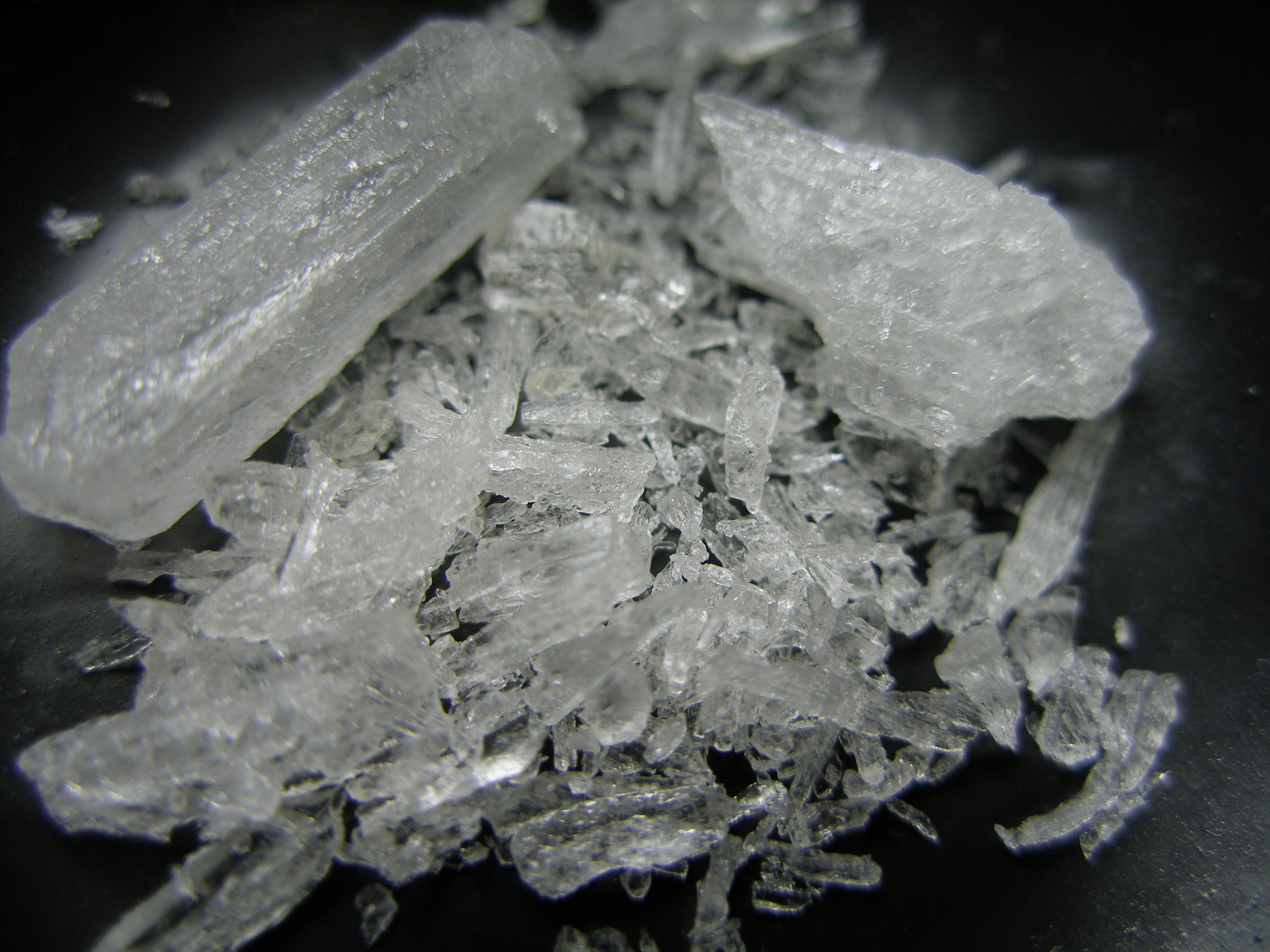
Methamphetamine became a popular street drug because it offered a strong, long-lasting stimulant effect, could be produced outside legal pharmaceutical channels, and became embedded in illegal supply networks. The DEA describes methamphetamine as a highly addictive stimulant; regular meth may appear as a pill or powder, while crystal meth resembles glass fragments or shiny blue-white rocks. It can be swallowed, snorted, smoked, or injected, and people may increase frequency, dose, or route of use to intensify its effects. (dea.gov)
The drug’s popularity also grew because it was not limited to one social setting. In different eras and places, it was marketed or used for wakefulness, work endurance, appetite suppression, nightlife, sexual stimulation, and escape from emotional distress. Those reasons do not make meth use safe; they help explain why a drug with severe risks still found demand. Once a street market forms around a substance that is potent, portable, and addictive, availability and dependence can reinforce each other.
Methamphetamine in plain terms
Methamphetamine is a man-made stimulant in the same broad family as amphetamines. In the United States, it is classified as a Schedule II stimulant, meaning it has accepted but very restricted medical use and a high potential for abuse; the DEA notes that the FDA-approved product Desoxyn is available only by prescription and has very limited use. (dea.gov)
Street meth is different from carefully controlled prescription medication. Illegal meth is produced, distributed, and sold without medical oversight, quality control, accurate dosing, or safety screening. That makes its effects less predictable and increases the risk of overdose, contamination, dependence, and dangerous combinations with other drugs.
Defining characteristics of methamphetamine include:
- It is a central nervous system stimulant, increasing activity in brain and body systems.
- It is highly addictive, especially when use becomes frequent or intense.
- It may appear as powder, pills, or crystal meth.
- It can produce increased wakefulness, reduced appetite, faster heart rate, and elevated blood pressure.
- Long-term use can be associated with anxiety, confusion, insomnia, mood problems, psychotic symptoms, heart and brain harms, and other serious effects. (dea.gov)
The path from medicine to street supply
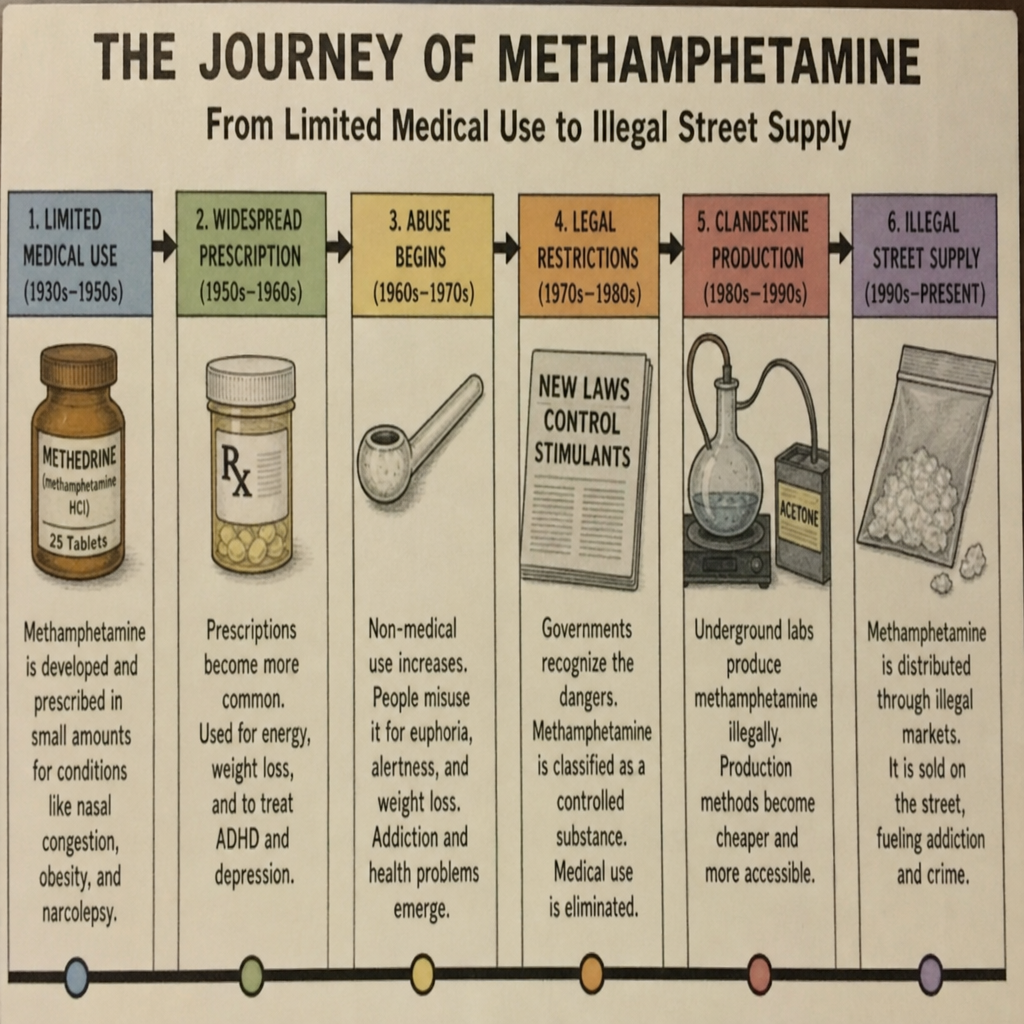
Methamphetamine did not begin as a modern street trend. Like several other drugs of concern, it moved through a complicated path: medical development, wartime and performance-related use, tighter regulation, illegal production, and organized distribution. As legal controls narrowed access, illegal markets found ways to supply people seeking stimulant effects.
That shift matters because it changed both the drug and the context around it. A prescribed medication is dispensed with a known dose and medical boundaries. Street meth is sold in an illegal market where potency, purity, contamination, and user vulnerability are all unpredictable. The result is not simply “the same drug used differently,” but a far riskier environment around the drug.
Several forces helped street meth spread:
- Potent effects: Meth can create a brief rush or a longer-lasting high, depending on how it is used. The DEA links these effects to dopamine activity in brain areas involved in pleasure. (dea.gov)
- Illegal production: Domestic clandestine laboratories historically contributed to supply, though current U.S. supply patterns have shifted heavily toward larger trafficking networks. (dea.gov)
- Adaptable distribution: Meth could move through urban, rural, and regional networks rather than staying confined to one scene.
- Dependence and repeat use: As tolerance, craving, and withdrawal develop, demand may become driven less by recreation and more by avoiding the crash.
Why did crystal meth change public awareness?
Crystal meth changed public awareness because it made methamphetamine more visible, more recognizable, and often more associated with intense use patterns. The crystal form can be smoked, which may produce a rapid, powerful effect and reinforce repeated use. The DEA notes that smoking or injecting meth is associated with a brief, intense rush, while swallowing or snorting tends to produce a longer high rather than the same immediate rush. (dea.gov)
The phrase “crystal meth” also became a cultural shorthand. It appeared in news coverage, public health campaigns, law enforcement reports, and personal recovery stories. That visibility helped the public recognize meth abuse as a serious issue, but it also sometimes oversimplified the problem. Not everyone who uses meth looks or behaves the same way, and harmful meth use can be hidden for a long time behind work, family responsibilities, or social masking.
Meth effects that can drive repeat use
The early appeal of meth often comes from effects that feel useful or rewarding in the moment. People may report wakefulness, energy, confidence, reduced appetite, sexual stimulation, or a sense of focus. Those effects are part of why meth use can start casually, experimentally, or in response to pressure and stress.
The problem is that short-term stimulation can come with a hard rebound. Sleep loss, anxiety, agitation, paranoia, appetite disruption, and emotional crashes can follow. Over time, the brain and body may adapt to the drug, and the person may use more often just to feel “normal” or avoid withdrawal.
Common meth effects and risks include:
- Increased wakefulness and physical activity
- Decreased appetite
- Rapid breathing, increased heart rate, irregular heartbeat, and increased blood pressure
- Overheating, which can become dangerous at high doses
- Anxiety, confusion, insomnia, mood disturbances, paranoia, hallucinations, or aggression
- Memory problems, severe dental issues, and cardiovascular risks with ongoing use (dea.gov)
How does meth addiction develop?
Meth addiction develops when repeated meth use changes motivation, reward, stress, and decision-making patterns enough that stopping becomes difficult despite harm. This is not simply a lack of willpower. Meth can strongly affect dopamine pathways involved in reward, and repeated use may train the brain to prioritize the drug over health, relationships, work, safety, or long-term goals. (dea.gov)
Addiction risk increases when meth is used frequently, in higher amounts, by faster-acting routes, or during periods of stress, trauma, isolation, or untreated mental health symptoms. Social environment matters too. If the drug is easy to obtain, normalized by peers, or tied to income, housing, sex, or survival, stopping can become more complicated.
Warning signs of meth addiction may include:
- Using more meth or using longer than intended
- Failed attempts to cut down or stop
- Strong cravings or preoccupation with obtaining meth
- Neglecting sleep, food, hygiene, work, school, or family responsibilities
- Continuing use despite health, legal, financial, or relationship problems
- Needing meth to function, stay awake, socialize, or avoid emotional collapse
- Experiencing meth withdrawal symptoms when use stops
Meth withdrawal and the cycle of return
Meth withdrawal can make quitting difficult because the body and brain must adjust after repeated stimulant exposure. People may experience exhaustion, long sleep, low mood, anxiety, irritability, increased appetite, vivid dreams, poor concentration, and strong cravings. Severe depression, paranoia, or thoughts of self-harm can also occur, which is why medical and mental health support is important.
Withdrawal helps explain why meth addiction can feel like a trap. A person may want to stop after a frightening binge or health scare, then feel emotionally flat, restless, ashamed, or unable to function. Returning to meth may seem like a quick escape from that discomfort, but it restarts the same cycle.
Practical examples of how the cycle can show up:
- Someone uses meth to stay awake for work, then needs more because sleep debt keeps building.
- Someone smokes crystal meth socially, then starts using alone to manage cravings.
- Someone stops for a few days, feels depressed and exhausted, then uses again to “get through the day.”
- Someone wants help but avoids treatment because of stigma, fear of withdrawal, or unstable housing.
Street popularity was also shaped by supply
Demand alone does not explain meth’s spread. Supply changed dramatically as illegal production and trafficking became more organized. The DEA reports that Mexican drug trafficking organizations have become the primary manufacturers and distributors of methamphetamine throughout the United States, while domestic clandestine operators produce and distribute much smaller amounts. (dea.gov)
Policy also shaped the market. Restrictions on certain retail products used in domestic meth production made small-scale production harder, but illegal supply chains adapted. That is a key lesson in drug history: reducing one source of supply can help, but addiction, demand, organized trafficking, poverty, untreated mental illness, and social disconnection also need attention.
Common misconceptions about meth use
Misconceptions make meth abuse harder to recognize and harder to treat. A more accurate view does not minimize harm; it makes prevention and recovery more realistic.
- Misconception: Meth addiction only affects one “type” of person. In reality, meth use can affect people across regions, incomes, jobs, and family situations.
- Misconception: Crystal meth is separate from methamphetamine. Crystal meth is a form of methamphetamine, not a completely different drug.
- Misconception: Someone must hit “rock bottom” before help works. Earlier support can reduce harm and create more chances for recovery.
- Misconception: Withdrawal is just being tired. Meth withdrawal can include emotional, cognitive, and mental health symptoms, not only fatigue.
- Misconception: Stimulants are less risky than opioids because they are different. Stimulants carry serious risks, and CDC data show stimulant-involved overdose deaths have risen in recent years. (cdc.gov)
What this history means for prevention and recovery
Meth became a popular street drug through a combination of powerful effects, illegal supply, social demand, and addiction biology. That same history points toward better responses: prevention that is honest, treatment that is accessible, and support that reduces shame instead of pushing people further into secrecy.
If you or someone you care about is struggling with meth use, professional help is appropriate and available. SAMHSA’s National Helpline offers free, confidential, 24/7 treatment referral and information for people and families facing mental health or substance use disorders; the service can be reached at 1-800-662-HELP (4357), and FindTreatment.gov can help locate care. (samhsa.gov)
Methamphetamine’s street popularity is not a mystery when viewed through the right lens. It is the result of a drug that can feel powerful at first, an illegal market that keeps it available, and an addiction process that can make stopping painful. The clearest takeaway is also the most practical: meth addiction is serious, but it is treatable, and early support is safer than waiting for the damage to become impossible to ignore.
Get the Meth/Amphetamine Confirmation Test here.