.png)
Blogs
Mecke Reagent Test Guide: Insights & Limitations
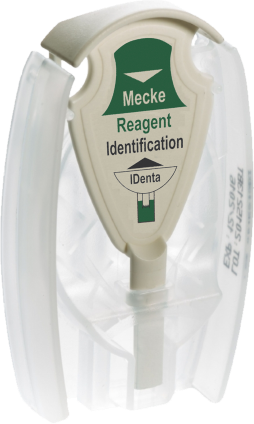
What is the Mecke Reagent test
The Mecke reagent test is a presumptive spot test that uses a reactive liquid to produce color changes when it contacts a very small sample of an unknown substance. It is commonly used in drug checking to help screen for certain compounds, especially MDMA-like substances and some opioids, but it cannot prove purity, dose, or safety. A Mecke result is best read alongside other reagents, a current color chart, and—when possible—professional lab testing.
What does the Mecke reagent test show?
The Mecke reagent test shows whether a sample produces a color reaction that is consistent with known reference reactions. In practical terms, the test can raise or lower confidence about what a substance may contain, but it does not “confirm” a drug the way laboratory analysis can. DanceSafe notes that reagent tests increase confidence but do not guarantee identity, and Know Harm describes reagent testing as educational harm reduction rather than a lab result. (dancesafe.org)
A typical mecke reagent test chart lists expected color changes for substances such as MDMA, MDA, some opioids, and other compounds. The timing matters: an immediate flash of one color followed by a darker final color may mean something different from a slow, weak, or delayed reaction. Because charts can be updated, the safest interpretation comes from the chart supplied by the kit maker or a current harm reduction source, not from an old image saved online. DanceSafe has specifically warned that some historical reagent chart entries have required updates as real-world drug markets and observations changed. (dancesafe.org)
Key features of a Mecke test
A Mecke test is useful because it is fast, inexpensive, and simple, but its simplicity is also its main limitation. The result is a color clue, not a full chemical profile. A strong reaction from one ingredient can also hide another ingredient in the same sample.
Defining characteristics include:
- Presumptive result: it suggests possibilities; it does not identify every compound present.
- Color-based interpretation: the user compares the reaction to a Mecke test results chart.
- Small sample size: only a tiny scraping is normally used, preserving most of the material for other tests or disposal.
- Short observation window: many guides recommend watching the reaction over roughly 30–60 seconds rather than judging only the final stain. (knowharm.org)
- Single-reagent limitation: Mecke is stronger when paired with Marquis, Mandelin, Simon’s, Froehde, Liebermann, or other appropriate reagents.
- Safety concern: reagents are corrosive chemicals and should not touch skin, eyes, clothing, or surfaces that are not meant for testing.
How does a Mecke test kit work?
A mecke test kit usually contains a bottle of reagent, a color chart, and instructions. The general process is to place a tiny amount of the sample on a clean testing surface, add one drop of reagent, and watch the color change against a white background. The reaction is then compared with the kit’s chart and considered alongside results from other reagents.
Good technique matters. Cross-contamination, too much sample, old reagent, colored tablets, binders, or poor lighting can all make mecke test results harder to read. The dropper tip should never touch the sample, because that can contaminate the entire bottle. If the reagent has darkened, crystallized, leaked, or is past the supplier’s recommended life, results may be unreliable.
A practical workflow looks like this:
- Read the kit instructions first. Different suppliers may use different chart layouts or timing notes.
- Use a tiny scraping. More material does not make the test more accurate and can make colors too dark to interpret.
- Test on a white ceramic or glass surface. This makes subtle color changes easier to see.
- Record the timing. Note both the first color and the final color.
- Use multiple reagents. Compare Mecke with Marquis, Mandelin, Simon’s, or others recommended for the suspected substance.
- Treat uncertainty as meaningful. Unexpected, weak, or mixed colors should not be ignored.
Common color-chart uses and limits
People often search for phrases like marquis mecke mandelin reagent colors for cocaine drug test kit because they want one simple chart for every substance. In reality, different reagents answer different screening questions. Marquis, Mecke, and Mandelin may overlap, but they are not interchangeable.
For MDMA-like substances, Mecke is often used with Marquis and Simon’s to look for a pattern rather than a single color. Older charts commonly show MDMA-type reactions becoming dark with Mecke, but related substances can overlap. For a search such as 6apb succinate reagent test marquis mandelin mecke, the key point is that 6-APB and related benzofurans may require comparison across several reagents and a current chart; one Mecke reaction alone is not enough to distinguish them confidently from MDMA-like results.
For cocaine checking, Mecke is not usually the primary test. Cocaine screening often uses other reagents or multi-step methods, while Marquis, Mecke, and Mandelin may be used to look for certain adulterants or unexpected reactions. UN guidance for cocaine analysis describes more specific laboratory-style procedures, reinforcing the point that field color tests are limited compared with confirmatory analysis. (digitallibrary.un.org)
Can Mecke reagent test for meth?
Mecke reagent is not the best stand-alone choice for methamphetamine. If someone asks, can Mecke reagent test for meth, the accurate answer is: it may produce information in some contexts, but it should not be relied on by itself to identify or rule out meth. Other reagents, such as Marquis, Mandelin, and Simon’s, are more commonly used in combination when screening for amphetamine-type substances, and even then the result remains presumptive.
This matters because a false sense of certainty can be dangerous. A sample may contain multiple active compounds, inactive fillers, or substances that do not react clearly with the chosen reagent. Reagent testing also does not detect fentanyl reliably; harm reduction groups commonly recommend separate fentanyl test strips when fentanyl contamination is a concern. DanceSafe explicitly notes that reagents should not be used to test for fentanyl. (dancesafe.org)
Practical examples and misconceptions
A Mecke test is most useful when it is treated as one piece of a larger checking process. It can help someone notice an unexpected reaction before assuming a substance is what it was sold as. It can also help decide whether a sample should be sent to a drug-checking lab where that option is available.
Common examples and misconceptions include:
- “The color matched, so it is pure.” False. A matching color does not measure purity, dose, or hidden ingredients.
- “No reaction means safe.” False. Some substances react weakly or not at all with a given reagent.
- “One chart is universal.” False. Charts can differ by supplier and may be updated.
- “Mecke replaces Marquis or Mandelin.” False. A stronger approach uses multiple reagents because each one reacts differently.
- “Reagent testing is the same as lab testing.” False. Lab testing can identify compounds with far more specificity.
The bottom line
The Mecke reagent test is a quick color-change screening tool used in harm reduction and preliminary drug checking. It is valuable because it can reveal expected or unexpected reactions, but it should be read cautiously, with a current chart and other reagents. For the most reliable understanding of a sample, combine careful reagent use with fentanyl-specific testing where relevant and professional lab analysis whenever available.