.png)
Blogs
Mandrax Street Drug: Abuse, Symptoms & Dangers
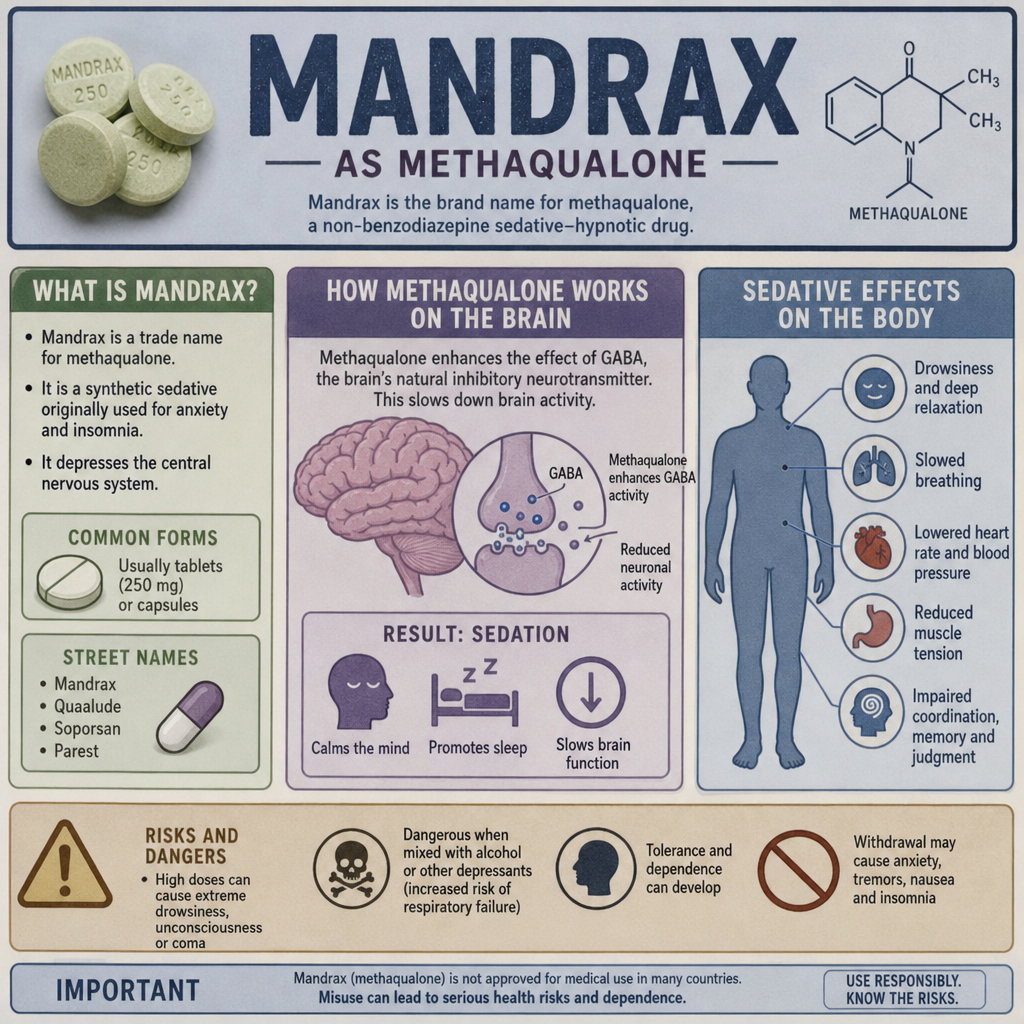
Mandrax as a street drug
Mandrax is the street name most often linked to methaqualone, a sedative-hypnotic drug that depresses the central nervous system and can be highly addictive. Once sold in some countries as a prescription sleep or anxiety medication, it is now illegal in many places, including the United States, where methaqualone is listed as a Schedule I controlled substance. This guide explains Mandrax effects, Mandrax symptoms, overdose warning signs, and what to do if Mandrax abuse or Mandrax addiction is affecting someone’s life. (deadiversion.usdoj.gov)
What is Mandrax as a street drug?
Mandrax as a street drug usually refers to illicit methaqualone tablets or powders sold outside medical supervision. Methaqualone belongs to a class of sedative drugs that slow brain and body activity; historically, it was used for sleep and anxiety, but abuse, dependence, and overdose concerns led to strict control. The World Health Organization’s drug dependence review described methaqualone as having high dependence potential and abuse liability, especially because of its diversion and non-medical use. (ecddrepository.org)
The phrase “Mandrax drug street name” can be confusing because Mandrax itself began as a brand name in some markets, while “Quaalude” became the better-known name in the United States. On the street, people may also refer to methaqualone with local slang such as “ludes,” “buttons,” or other regional terms. Slang changes quickly, so the safest approach is not to rely on a name alone; unknown tablets or powders can contain unexpected ingredients, different strengths, or other drugs.
Mandrax is especially discussed in connection with illicit drug markets in South Africa and surrounding regions, where methaqualone trafficking and seizures have been documented. A South African government release, for example, described a clandestine laboratory seizure involving methaqualone powder intended for Mandrax tablet production. Older UNODC materials have also identified methaqualone, known as Mandrax, as a significant drug of abuse in South Africa. (gov.za)
The main Mandrax effects on the body and mind
Mandrax effects come from its depressant action on the central nervous system. In plain terms, the drug can make a person feel slowed down, less coordinated, drowsy, emotionally disinhibited, or detached from risk. That combination is dangerous because the person may feel relaxed or euphoric while their judgment, breathing, balance, and reaction time are impaired.
People may seek out the drug because they expect sedation, intoxication, or escape from distress. However, illicit Mandrax is not a controlled medication with a predictable dose or known contents. A tablet sold as a Mandrax street drug may contain methaqualone, diphenhydramine, another sedative, an analog, contaminants, or a mixture of drugs that changes the risk profile.
Commonly discussed short-term effects can include:
- Drowsiness and slowed thinking, which can make it hard to follow conversations, make decisions, or stay awake.
- Poor coordination, increasing the chance of falls, injuries, and accidents.
- Slurred speech, confusion, or appearing “drunk” without alcohol.
- Reduced inhibition, which may lead to unsafe sex, aggression, impulsive decisions, or driving under the influence.
- Nausea, dizziness, or blurred awareness, especially when mixed with alcohol or other drugs.
- Mood changes, including calmness at first but agitation, panic, or unusual behavior in some people.
Severe intoxication can look very different from mild sedation. WHO’s methaqualone review notes that severe overdose, especially in combination with diphenhydramine, can involve restlessness, delirium, increased muscle tone, overactive reflexes, convulsions, coma, and death. That matters because someone may not simply “sleep it off”; worsening symptoms can become life-threatening. (ecddrepository.org)
Why Mandrax abuse can escalate quickly
Mandrax abuse does not always start with daily use. It may begin as weekend use, use in a group setting, or use to come down from stress or other substances. The risk is that sedative drugs can create a cycle: the person uses them to feel calm, sleep, numb emotions, or escape withdrawal from another drug, and then gradually needs more help to function without them.
Substance use disorder signs include loss of control, cravings, tolerance, withdrawal, neglecting responsibilities, and continuing to use despite harm. MedlinePlus describes substance use disorder as a pattern in which drug or alcohol use leads to problems with health, work, school, home, or relationships. That definition is useful because it shifts the focus from moral judgment to observable impact. (medlineplus.gov)
Mandrax abuse may be more likely to escalate when someone is already dealing with trauma, anxiety, depression, chronic stress, homelessness, unemployment, peer pressure, or access to other drugs. None of those factors mean addiction is inevitable. They do mean the person may need practical support, medical care, and nonjudgmental help rather than shame or threats.
Signs that use is becoming harmful
Watch for patterns rather than one isolated incident. A person may be developing a serious problem if several of these signs appear together:
- Using Mandrax more often, in larger amounts, or in riskier settings.
- Being unable to cut down despite promises or attempts.
- Spending significant time seeking, using, or recovering from the drug.
- Missing school, work, family duties, or financial responsibilities.
- Becoming secretive, defensive, or withdrawn around drug use.
- Mixing Mandrax with alcohol, cannabis, opioids, benzodiazepines, stimulants, or unknown pills.
- Driving, working, swimming, or caring for children while intoxicated.
- Having blackouts, falls, fights, risky sex, or police contact linked to use.
- Showing withdrawal-like distress when not using.
These signs do not prove exactly what substance someone is taking, but they do point to a need for help. If the person is willing, a medical or behavioral health professional can assess substance use, mental health, physical safety, and treatment options.

Mandrax symptoms that should not be ignored
Mandrax symptoms can include both intoxication symptoms and longer-term changes in behavior. During intoxication, the person may look heavily sedated, clumsy, confused, emotionally flat, unusually talkative, reckless, or hard to wake. In more serious cases, they may become agitated, delirious, have a seizure, or lose consciousness. (ecddrepository.org)
Longer-term symptoms may show up as declining performance, personality changes, disrupted sleep, money problems, isolation, and repeated risky situations. Loved ones often notice a pattern before the person using the drug is ready to name it. That does not mean confrontation will work; MedlinePlus notes that people with addiction often respond better to empathy and treatment support than to being harshly confronted. (medlineplus.gov)
What makes a Mandrax overdose so dangerous?
A Mandrax overdose is dangerous because sedative drugs can impair consciousness, breathing, coordination, and the ability to respond to danger. Methaqualone overdose has been associated with coma, convulsions, and death, and the risk becomes even more unpredictable when the drug is combined with antihistamines, alcohol, opioids, benzodiazepines, stimulants, or unknown substances. (ecddrepository.org)
The danger is not only the drug’s direct effect. Someone who is heavily intoxicated may vomit, fall, choke, drive, drown, get assaulted, or make unsafe decisions. Sedatives can also hide how impaired a person really is until symptoms suddenly worsen.
Emergency warning signs
Treat these symptoms as an emergency:
- The person is unconscious or cannot be awakened.
- Breathing is slow, irregular, noisy, or absent.
- The person has a seizure.
- Lips, fingernails, or skin look blue, gray, or very pale.
- The person has severe confusion, delirium, or extreme agitation.
- The person collapses, hits their head, or cannot stand.
- You suspect they used Mandrax with alcohol, opioids, benzodiazepines, or other unknown drugs.
If someone collapses, has a seizure, has trouble breathing, or cannot be awakened, Poison Control advises calling 911 immediately. In the United States, Poison Help at 1-800-222-1222 can connect callers to a local poison center for expert guidance, but life-threatening symptoms require emergency services first. (poison.org)
Mixing Mandrax with other substances raises the risk
Polysubstance use means exposure to more than one drug, whether intentional or accidental. This is a major concern with Mandrax because illicit pills and powders may be mislabeled, contaminated, or used alongside other substances. The CDC warns that mixing depressants can slow breathing and increase the risk of overdose and death, while mixing stimulants and depressants does not reliably balance them out; it can mask effects and make overdose more likely. (cdc.gov)
Alcohol is especially risky because it is also a depressant. Combining alcohol with sedatives can deepen sedation, worsen coordination, increase vomiting and choking risk, and make it harder for others to tell when someone needs medical help. Opioids and benzodiazepines are also dangerous combinations because they can further suppress breathing.
A person may believe they are reducing harm by using a stimulant to “wake up” from Mandrax or by taking Mandrax to “come down” from a stimulant. That belief is unsafe. Stimulants can strain the heart and raise blood pressure, while depressants can still impair breathing and consciousness; the body does not process the combination in a neat or predictable way. (cdc.gov)

Mandrax addiction is treatable
Mandrax addiction can feel isolating, but substance use disorders are treatable health conditions. Treatment is not one-size-fits-all. Depending on the person’s situation, care may include medical evaluation, supervised withdrawal support, counseling, mental health treatment, recovery groups, family support, relapse-prevention planning, and help with housing or social needs.
Because sedative withdrawal can be uncomfortable and sometimes medically risky, people should not assume they must stop alone or suddenly. A healthcare professional can assess the person’s substance use pattern, physical health, mental health, and risk of withdrawal complications. If multiple substances are involved, professional support becomes even more important.
SAMHSA’s National Helpline provides free, confidential treatment referral and information for mental health and substance use concerns 24/7. SAMHSA also lists 988 as support for mental health, suicide, and substance use-related crises, while medical emergencies should go to 911 or the nearest emergency room. (samhsa.gov)
What support can look like
Helpful support is practical, calm, and specific. Instead of saying “just stop,” try steps that make care easier to access:
- Start with safety. If the person is intoxicated, do not argue, let them drive, or leave them alone if they may be at risk.
- Use nonjudgmental language. Say what you have noticed: “I’m worried because you passed out and couldn’t remember what happened.”
- Offer choices. Suggest calling a helpline, booking a clinic appointment, speaking with a counselor, or going to urgent care.
- Plan for cravings and triggers. Identify people, places, stressors, and routines that make use more likely.
- Reduce access where possible. Avoid keeping unknown pills, alcohol, or other substances around someone trying to stop.
- Get support for yourself. Family members and friends may need counseling, peer groups, or crisis support too.
Prevention and harm reduction start with honest information
The safest choice is not to use Mandrax or any unknown street drug. For people already using, honest information can still reduce immediate danger and create a path toward treatment. Fear-based messaging often fails because it ignores why people use drugs in the first place: stress, trauma, social pressure, boredom, pain, dependence, or the belief that they are in control.
A practical prevention approach focuses on risks people can recognize. Unknown tablets are not trustworthy because appearance does not confirm contents. Combining drugs is never predictable. Using alone increases the chance that no one can call for help. Driving or operating equipment while intoxicated puts everyone nearby at risk.
A safety-focused checklist for families and communities
Use this checklist if Mandrax abuse is present in your household, school, workplace, or community:
- Save emergency numbers where people can find them quickly.
- Learn overdose warning signs before a crisis happens.
- Encourage people not to mix sedatives with alcohol, opioids, benzodiazepines, or other drugs.
- Do not rely on slang names or tablet appearance to identify a substance.
- Keep conversations calm and private when possible.
- Offer transportation to care rather than expecting someone in crisis to arrange it alone.
- Remove immediate hazards such as car keys, swimming access, weapons, or unsupervised childcare responsibilities during intoxication.
- Connect the person with professional treatment rather than trying to manage addiction alone.
For workplaces, schools, and community groups, prevention also means reducing stigma. People are more likely to ask for help when they believe they will be treated with dignity. Clear policies, confidential referral pathways, and basic overdose education can make a real difference.
Talking to someone about Mandrax use
Conversations about drug use can become emotional quickly, especially if there has been lying, financial harm, unsafe behavior, or repeated broken trust. Still, the goal should be safety and connection, not winning an argument. Choose a time when the person is sober or as clear-headed as possible, and focus on specific events rather than labels.
You might say, “I’m worried about what happened last night. You were difficult to wake, and I didn’t know whether to call an ambulance.” That is more useful than “You’re ruining your life,” even if you feel angry or scared. A clear observation gives the person less to deny and more room to accept help.
If the person refuses treatment, set boundaries around safety. You cannot force recovery through willpower alone, but you can refuse to provide money for drugs, refuse to let someone drive intoxicated, and call emergency services when symptoms are dangerous. Boundaries work best when they are calm, consistent, and paired with a real offer of help.
The key takeaway
Mandrax is not a harmless party drug or a nostalgic reference to old sedatives. As an illicit methaqualone-related street drug, it carries serious risks: impaired judgment, accidents, dependence, dangerous withdrawal concerns, unpredictable contents, and potentially fatal overdose. The risk rises sharply when Mandrax is mixed with alcohol or other drugs.
If you are worried about Mandrax symptoms, Mandrax abuse, or possible Mandrax addiction, take the concern seriously and seek professional help early. If someone may be overdosing, call emergency services immediately; fast action can save a life.