.png)
Blogs
Forensics' Crucial Role in Modern Law Enforcement
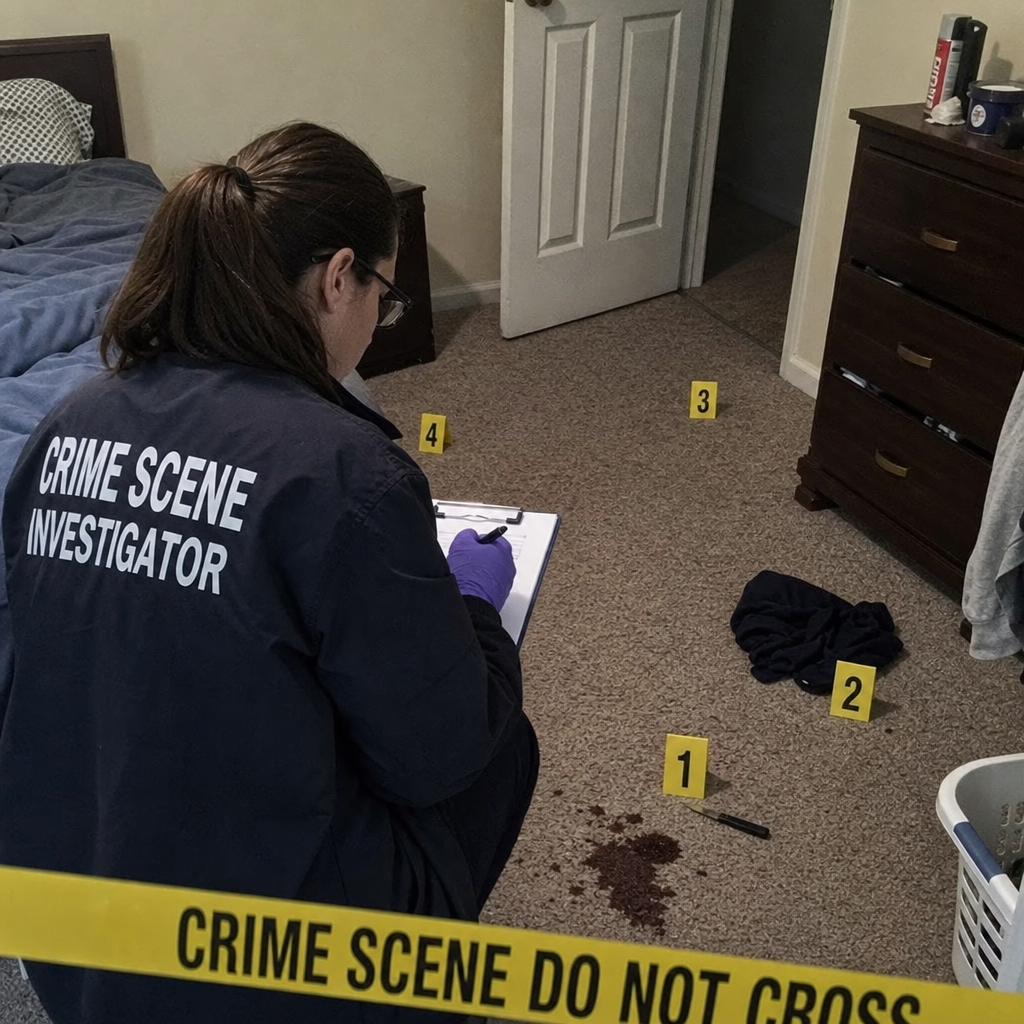
The role of forensics in law enforcement
Forensics gives law enforcement a scientific way to understand what happened, connect evidence to people or places, and test investigative theories against physical facts. In modern policing, the role of forensics in law enforcement extends from crime scene investigation to laboratory analysis, digital evidence review, courtroom testimony, and post-conviction review. This guide explains how forensic evidence analysis supports investigations, where it fits among other law enforcement techniques, and why careful procedures matter as much as advanced tools.
What does forensics do for law enforcement?
Forensics helps law enforcement identify, collect, preserve, analyze, and interpret evidence so investigators can make better decisions. It does not replace interviews, patrol work, intelligence gathering, or legal judgment, but it strengthens those efforts by grounding them in criminal justice science. When used properly, forensic work can support probable cause, eliminate suspects, reveal timelines, corroborate statements, and help prosecutors or defense teams evaluate what the evidence actually shows.
Forensics is often associated with dramatic laboratory breakthroughs, but its most important contribution is discipline. A fingerprint, shell casing, phone record, bloodstain, tool mark, fiber, or damaged document only becomes useful when it is handled in a way that protects its integrity. That means the science begins before evidence reaches a lab. It begins with officers securing a scene, documenting conditions, choosing the right packaging, and maintaining a clear chain of custody.
Forensics connects the scene, the suspect, and the story
Most investigations begin with uncertainty. Officers may know that a crime was reported, but not who committed it, when it happened, how events unfolded, or whether a witness account is complete. Forensic evidence analysis helps convert that uncertainty into testable questions.
A crime scene may hold several kinds of information at once. Some evidence can identify a person, such as DNA or fingerprints. Some can show movement or sequence, such as bloodstain patterns, footwear impressions, or broken glass distribution. Other evidence can link objects or locations, such as paint transfer, gunshot residue, digital logs, or fibers. Together, these details help investigators build, challenge, or refine a case theory.
Forensic work is strongest when it is treated as part of a larger investigative process. A lab result may suggest that a person touched an object, but investigators still need context: when the contact happened, whether it was expected, and whether there are innocent explanations. The science can answer specific questions, but law enforcement must ask the right questions.
The core stages of forensic work
Forensic support usually follows a sequence. The details vary by jurisdiction, crime type, and available law enforcement tools, but the basic workflow is consistent.
- Scene security and safety Officers first protect people, prevent contamination, and preserve the location. This can include establishing a perimeter, limiting access, separating witnesses, and noting who enters or exits.
- Observation and documentation Investigators document the scene before items are moved. Notes, photographs, video, sketches, measurements, and environmental details can become crucial later, especially if the physical scene changes.
- Evidence recognition Trained personnel identify what may have evidentiary value. Obvious items matter, but so do trace materials, digital devices, discarded packaging, stains, impressions, and damaged surfaces.
- Collection and packaging Evidence must be collected in a way that minimizes loss, contamination, or alteration. Wet biological material, sharp objects, electronics, firearms, documents, and trace evidence all require different handling.
- Chain of custody Every transfer of evidence should be recorded. A clear chain of custody helps show that the item analyzed in the lab is the same item collected at the scene and that it was not improperly altered.
- Laboratory or specialist analysis Forensic scientists and qualified examiners use validated methods, comparison standards, instruments, and peer review procedures where applicable.
- Reporting and interpretation Results must be communicated accurately, including limitations. A useful forensic report explains what was tested, what was found, and what the result can and cannot support.
- Court presentation If a case proceeds, forensic professionals may testify. Their role is to explain methods and findings, not to overstate certainty or decide guilt.
Crime scene investigation is the foundation
Crime scene investigation is where many forensic successes or failures begin. A well-managed scene protects both the investigation and the rights of people involved. A poorly managed scene can create confusion that no laboratory can fully repair.
Good scene work depends on patience and method. Investigators must resist the urge to focus only on the most obvious item. A weapon in plain view may matter, but so may the path of entry, a partial shoe impression, a wiped surface, a displaced object, or a phone charging nearby. The best scene processing asks, “What could explain this scene, and what evidence would help test those explanations?”
Documentation gives evidence context
Evidence without context is easy to misunderstand. A photograph showing where a cartridge casing was found may be as important as the casing itself. A note about whether a door was locked, a window was open, lights were on, or weather affected an outdoor scene can influence interpretation.
Documentation also helps when investigators, attorneys, jurors, or reviewers revisit the case months or years later. The scene will not exist in its original condition, so the record becomes the shared reference point.
Contamination control protects reliability
Contamination can occur through touch, movement, poor packaging, shared tools, or unnecessary access. Law enforcement agencies reduce that risk with gloves, protective clothing, clean collection materials, separate packaging, and access logs. These practices may seem routine, but they are central to reliable criminal justice science.
Contamination control is not only about avoiding false links. It is also about preserving public confidence. When evidence is handled carefully, conclusions are easier to explain and defend.
Major types of forensic evidence analysis
Forensics is not one science. It is a collection of disciplines that apply scientific, technical, and comparative methods to legal questions. Different cases require different combinations of expertise.
Biological evidence
Biological evidence may include blood, saliva, semen, skin cells, hair with roots, or other bodily materials. DNA analysis can be powerful because it may associate biological material with a person or exclude someone as a contributor. However, DNA results still require careful interpretation. Transfer, mixture, degradation, and the location of the sample can affect what the result means.
Fingerprints and pattern evidence
Fingerprints can help identify contact with a surface when ridge detail is sufficient for comparison. Other pattern evidence may include footwear impressions, tire marks, tool marks, and certain firearm-related comparisons. These areas require trained examiners, quality documentation, and cautious language because the strength of conclusions can vary with the quality of the mark or impression.
Digital and electronic evidence
Digital evidence now appears in many investigations, not only cybercrime. Phones, vehicles, cameras, smart devices, cloud accounts, access systems, and location data can all contain useful information. Digital forensics may help establish communication, movement, file activity, searches, or device use.
This area also raises privacy, legal, and technical issues. Warrants, consent, data retention, encryption, and platform changes can all shape what investigators may access and how useful it will be.
Trace and transfer evidence
Trace evidence includes small materials such as fibers, paint, glass, soil, gunshot residue, or particles transferred through contact. These items can help link people, objects, and locations. Trace evidence is often most valuable when it supports or challenges a broader pattern rather than standing alone.
Forensic toxicology and chemistry
Forensic toxicology may examine drugs, alcohol, poisons, or other substances in biological samples. Forensic chemistry may identify controlled substances, accelerants, explosives, or unknown materials. These analyses can clarify impairment, cause, exposure, or the nature of seized substances.
How do law enforcement techniques and forensic science work together?
Law enforcement techniques and forensic science work best when each informs the other. Investigative interviews, surveillance, records checks, patrol observations, and intelligence may point investigators toward evidence, while forensic results can confirm, contradict, or redirect investigative leads. The strongest cases usually come from convergence, where independent sources of information support the same conclusion.
For example, a witness may describe a suspect vehicle, surveillance may show a similar vehicle near the scene, and trace paint may connect that vehicle to damaged property. Each piece has limits. Together, they may form a more coherent picture.
This is why investigators should avoid tunnel vision. If forensics is used only to confirm an early assumption, important contradictory evidence can be missed. A disciplined approach asks not only, “What supports this theory?” but also, “What would disprove it?”
Practical ways forensics supports investigations
Forensic work can help law enforcement by:
- Identifying suspects through fingerprints, DNA, digital accounts, vehicle data, or object associations.
- Eliminating people when evidence does not match or when timelines make involvement unlikely.
- Establishing timelines through phone activity, video, call records, injuries, decomposition, or electronic logs.
- Reconstructing events by examining bloodstains, bullet paths, broken objects, entry points, or movement patterns.
- Corroborating statements when physical evidence aligns with witness, victim, or suspect accounts.
- Challenging false accounts when evidence shows that events could not have happened as described.
- Locating additional evidence by suggesting where a suspect went, what item was used, or what device may contain data.
Law enforcement tools used in forensic work
Forensic practice uses both simple and advanced tools. A measuring scale, evidence bag, swab, flashlight, and camera can be just as important as specialized laboratory equipment. The value of law enforcement tools depends on proper use, documentation, and interpretation.
Common tools include:
- Photography and video equipment for documenting scenes, injuries, objects, and spatial relationships.
- Alternate light sources to help locate certain stains, fibers, or latent evidence.
- Fingerprint powders, lifters, and chemical processes for developing latent prints on different surfaces.
- DNA collection kits for swabbing and preserving biological material.
- Evidence packaging materials designed for paper, biological samples, firearms, trace materials, and electronics.
- 3D scanners or mapping tools for documenting complex scenes or collision sites where available.
- Digital forensic hardware and software for imaging, preserving, searching, and analyzing electronic data.
- Laboratory instruments used for chemistry, toxicology, microscopy, DNA analysis, and materials comparison.
Tools do not make conclusions by themselves. They extend human observation and allow specialists to detect, preserve, or analyze information that might otherwise be missed. Training, policies, quality control, and ethical judgment determine whether those tools serve justice.
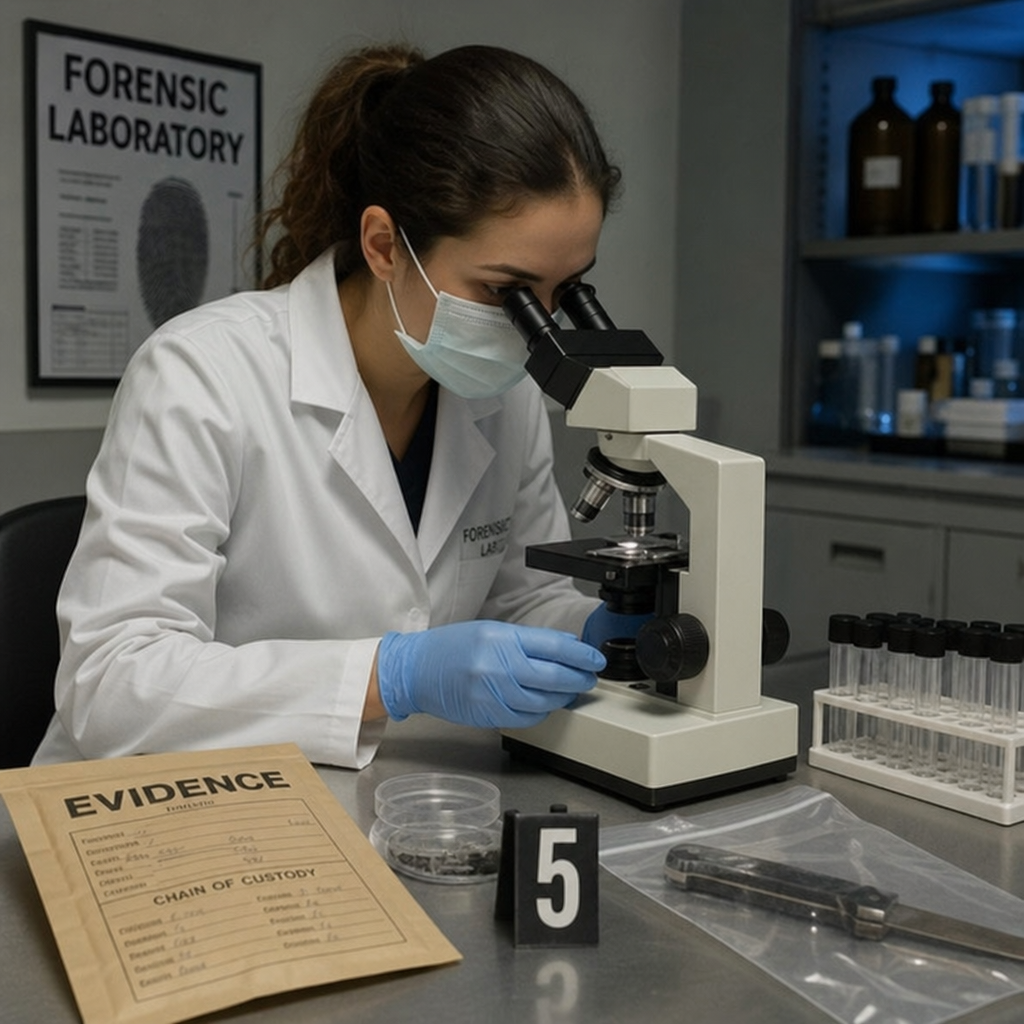
Forensic case studies show both value and caution
Forensic case studies are useful because they show how evidence operates in real investigations. They also show that forensic findings must be interpreted carefully. A single item rarely tells the whole story; it gains meaning from context, corroboration, and method.
Consider a burglary investigation. A partial fingerprint on a broken window might identify someone who touched the glass, but investigators still need to know whether that person had lawful access earlier. If digital access logs, shoe impressions, recovered property, and witness accounts align, the fingerprint becomes part of a stronger pattern.
In a shooting investigation, cartridge casings, bullet paths, gunshot residue, surveillance footage, and phone records may all contribute. Firearm-related evidence can help reconstruct positions or connect evidence to a weapon, but investigators must also account for scene movement, multiple shooters, or later handling of objects.
In a suspicious death case, forensic pathology, toxicology, bloodstain interpretation, scene documentation, and digital communications may each answer different questions. The goal is not simply to find evidence, but to understand cause, manner, opportunity, and sequence.
These examples highlight a core lesson: forensic evidence is most reliable when it is tested against alternative explanations.
Limits, risks, and responsibilities
Forensics is powerful, but it is not infallible. Evidence can be degraded, contaminated, incomplete, or misinterpreted. Some methods produce stronger conclusions than others. Human error can occur during collection, analysis, reporting, or testimony.
Responsible forensic practice requires clear communication about limitations. Saying that evidence is “consistent with” a source may not mean it uniquely identifies that source. Saying that DNA was found on an item does not automatically prove when or how it got there. Saying that a phone was near a location may not prove who was holding it.
Law enforcement agencies, forensic laboratories, prosecutors, and courts all share responsibility for using science carefully. Good practice includes training, written procedures, peer review, proficiency testing, documentation, and a willingness to revise conclusions when new evidence appears.
Best practices for stronger forensic investigations
A reliable forensic investigation is built through many small decisions. Agencies that emphasize process reduce the chance that important evidence will be lost, misunderstood, or challenged later.
Key best practices include:
- Secure the scene early and limit access to essential personnel.
- Document before disturbing evidence whenever safety permits.
- Use appropriate packaging for each evidence type to avoid degradation or cross-contamination.
- Separate items that could transfer material to one another.
- Maintain a complete chain of custody from collection through storage, analysis, and court.
- Ask focused forensic questions rather than requesting broad testing without purpose.
- Share necessary context with analysts while avoiding pressure toward a preferred conclusion.
- Review results alongside all evidence instead of treating a lab report as the entire case.
- Use cautious language in reports, affidavits, and testimony.
- Preserve evidence for later review when policy and law require or allow it.
These habits improve both investigative efficiency and fairness. They help law enforcement use science as a tool for truth-seeking rather than as a shortcut.
The future of forensics in criminal justice science
Forensic science continues to evolve as technology, legal standards, and public expectations change. Digital evidence is expanding quickly because daily life leaves more electronic traces than ever before. At the same time, agencies must manage concerns about privacy, data security, algorithmic tools, and unequal access to advanced resources.
The future of forensics will likely depend less on any single breakthrough and more on integration. Investigators, analysts, prosecutors, defense attorneys, judges, and policymakers all need a clear understanding of what forensic methods can support. Stronger training and transparent reporting will remain essential as tools become more complex.
Forensics also has an important role beyond identifying suspects. It can help correct errors, review old cases, identify unknown victims, and bring clarity to families and communities. In that sense, the role of forensics in law enforcement is not only investigative. It is also a safeguard that helps the justice system test its own conclusions.
A balanced view of forensic evidence
Forensics gives law enforcement a structured way to move from suspicion to evidence-based understanding. It supports crime scene investigation, strengthens investigative decisions, and helps courts evaluate facts through criminal justice science. Its value comes from the combination of careful scene work, reliable analysis, honest interpretation, and ethical use.
The most effective agencies treat forensic evidence as one part of a complete investigation. They use law enforcement tools with discipline, compare results against alternative explanations, and communicate findings without exaggeration. When that balance is maintained, forensic science becomes one of the most important bridges between investigation and justice.
To see all of our forensic detection solutions, click here.