.png)
Blogs
Forensic Scientist's Role in Justice System
The Impact of Forensic Science on Justice
Forensic science helps the justice system turn physical evidence into reliable information. It can connect a suspect to a scene, clear an innocent person, reconstruct what happened, and give courts a scientific basis for evaluating claims. This guide explains how forensic science supports justice, what limits it has, and how forensic science careers fit into the larger legal process.
What does forensic science contribute to justice?
Forensic science contributes evidence-based answers to questions that witnesses, investigators, attorneys, and judges cannot resolve through testimony alone. It examines traces left behind by people, objects, chemicals, digital devices, or biological material and interprets them within the facts of a case. When done carefully, it strengthens investigations by reducing guesswork and helping the legal system focus on what the evidence can actually support.
Its impact is not limited to convictions. Strong forensic work can also exclude suspects, reveal investigative mistakes, support appeals, and help families understand what happened. In that sense, forensic science serves justice best when it is treated as a disciplined method of inquiry rather than a shortcut to certainty.
The role of forensic evidence in an investigation
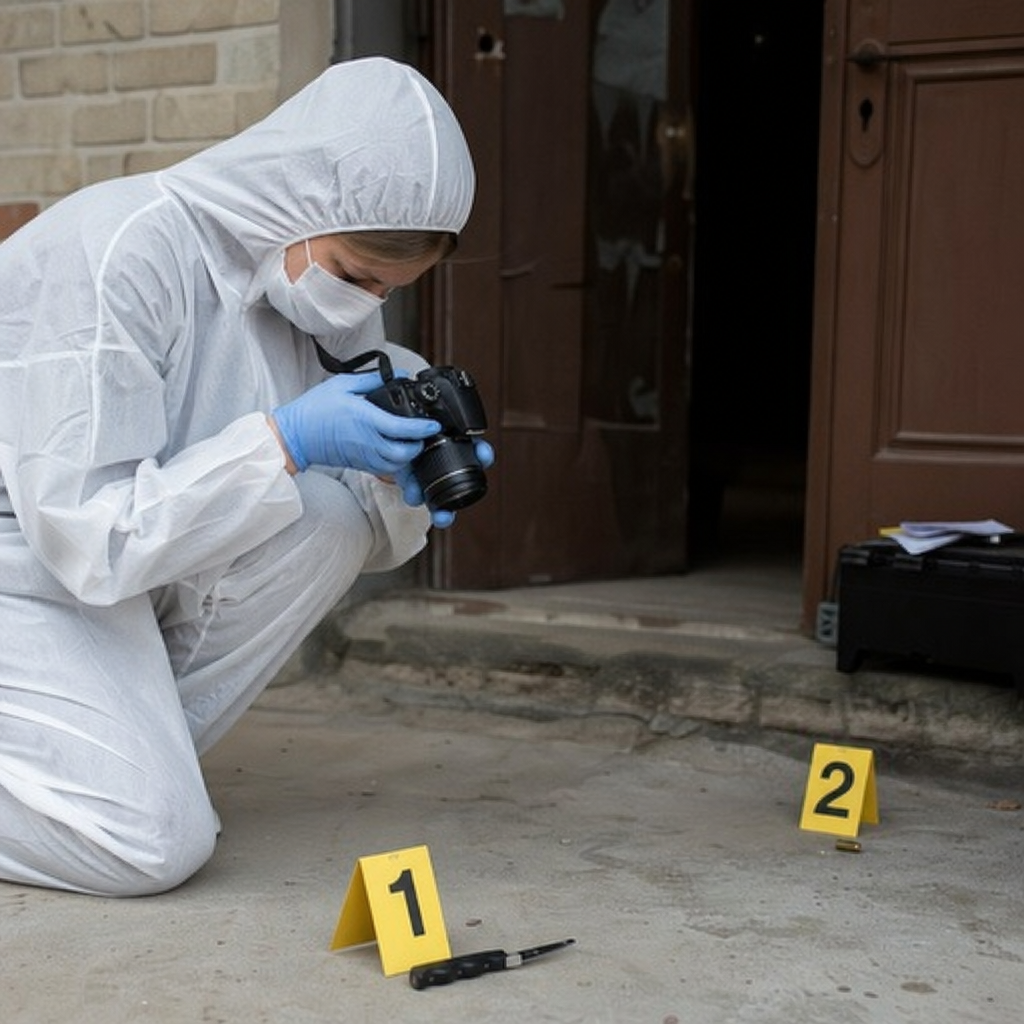
Forensic evidence often begins at the scene. Investigators may collect fingerprints, fibers, blood, hair, glass, soil, tool marks, firearms evidence, electronic devices, or documents. Each item must be documented, packaged, labeled, and preserved so it can be tested without contamination or confusion.
The chain of custody matters because evidence must be traceable from collection to courtroom. If a sample cannot be reliably linked to where it came from, who handled it, and how it was stored, its value may be challenged. Justice depends not only on finding evidence but also on proving that the evidence remained trustworthy.
Common types of forensic evidence include:
- Biological evidence: blood, saliva, skin cells, hair roots, and other material that may support DNA analysis.
- Pattern evidence: fingerprints, footwear impressions, tire tracks, tool marks, and fracture patterns.
- Chemical evidence: controlled substances, accelerants, toxins, paints, residues, and unknown substances.
- Digital evidence: phones, computers, cloud records, messages, metadata, and device activity.
- Trace evidence: fibers, glass fragments, soil, pollen, gunshot residue, and small particles transferred through contact.
- Document evidence: handwriting, ink, paper, alterations, printed materials, and questioned signatures.
Each category can answer different questions. A DNA profile may help identify who contributed biological material, while a digital timeline may show movement, communication, or device use. A single test rarely tells the whole story, but multiple findings can build a clearer picture when interpreted responsibly.
What does a forensic scientist do?
A forensic scientist examines evidence using scientific methods, records findings, writes reports, and may explain conclusions in court. The phrase “what does a forensic scientist do” covers many specialties, so the daily work can vary widely depending on whether the scientist studies DNA, toxicology, firearms, trace materials, digital evidence, or crime scene evidence. In every area, the job requires accuracy, documentation, and the ability to communicate findings without overstating them.
A practical job description forensic scientist overview often includes receiving evidence, reviewing case information, choosing appropriate tests, performing analyses, comparing results, maintaining lab notes, preparing reports, and testifying when needed. The job description of a forensic scientist also includes quality control, equipment maintenance, peer review, and following laboratory procedures.
A forensic scientist technician job description may emphasize hands-on evidence processing, lab support, sample preparation, photography, data entry, and assistance with testing workflows. In some agencies, technicians work mostly in laboratories; in others, they may help with scene response or evidence intake. The exact duties depend on the employer, jurisdiction, and specialty.
How forensic science supports fair outcomes
Forensic science supports fair outcomes by giving decision-makers information that can be tested, reviewed, and challenged. A scientific result can confirm a lead, contradict a statement, or show that an assumption was wrong. This is especially important in cases where witness memory is uncertain, accounts conflict, or there is little direct evidence.
Forensic findings can help justice in several ways:
- Identifying people or objects connected to an event. DNA, fingerprints, digital records, or trace materials may link evidence to a person, place, or item.
- Excluding innocent individuals. A reliable exclusion can prevent investigators from focusing on the wrong person and may support post-conviction review.
- Reconstructing events. Bloodstain patterns, trajectories, injuries, timelines, and scene evidence may help explain how an event unfolded.
- Corroborating or challenging testimony. Physical evidence may support a witness account or reveal inconsistencies.
- Providing objective context. Scientific testing can clarify facts when emotion, pressure, or assumption might otherwise dominate a case.
The strongest contribution occurs when forensic science is integrated with ethical investigation. Evidence should not be used merely to confirm a theory. It should be used to test that theory against the physical record.
Limits, uncertainty, and the danger of overstatement
Forensic science is powerful, but it is not magic. Results may be limited by sample quality, contamination, incomplete data, human interpretation, instrument sensitivity, or the way evidence was collected. Some disciplines can provide highly individualized findings in the right conditions, while others are better suited to showing consistency, association, or exclusion.
A fair justice system must recognize these limits. A forensic report should state what was tested, what methods were used, what the results mean, and what they do not prove. Overconfident language can mislead juries and distort the role of science in court.
Best practices include peer review, validated methods, clear standards, proficiency testing, proper documentation, and transparent reporting. When uncertainty exists, it should be explained plainly rather than hidden behind technical language. Good forensic work is careful enough to be useful and honest enough to be limited.
Forensic science positions and career paths
Forensic science positions exist in public crime laboratories, medical examiner or coroner offices, law enforcement agencies, private laboratories, universities, consulting firms, and digital investigation units. Some roles are laboratory-based, while others involve fieldwork, analysis, instruction, or expert testimony. Because the field is broad, forensic science careers can suit people with interests in biology, chemistry, computers, anthropology, psychology, criminal justice, or engineering.
Common career areas include:
- Forensic biology and DNA analysis: testing biological samples and interpreting genetic profiles.
- Forensic chemistry: analyzing drugs, residues, fire debris, paints, and unknown substances.
- Toxicology: identifying alcohol, drugs, poisons, or chemicals in biological samples.
- Firearms and tool marks: examining weapons, ammunition components, impressions, and related evidence.
- Latent print examination: developing, comparing, and evaluating fingerprints or palm prints.
- Digital forensics: recovering and analyzing data from devices, networks, cloud systems, and applications.
- Forensic anthropology: examining human remains to help identify individuals and interpret trauma or context.
- Crime scene investigation: documenting scenes, collecting evidence, photographing conditions, and preserving context.
These roles share a common purpose: helping the justice system understand evidence. However, the skills, training, and work environment can differ significantly from one specialty to another.
What are the typical forensic job requirements?
Forensic job requirements usually include relevant education, strong scientific reasoning, careful documentation habits, and the ability to follow formal procedures. Many laboratory roles require a degree in a natural science such as biology, chemistry, forensic science, or a related field, while digital roles may require computer science, cybersecurity, or information technology knowledge. Crime scene roles may combine scientific training with investigative procedure and evidence handling.
Employers often look for candidates who can work accurately under pressure, maintain objectivity, and explain technical findings to nontechnical audiences. Background checks, courtroom readiness, continuing education, and agency-specific training may also be part of the process. Because requirements vary, applicants should read each posting carefully rather than assuming one universal path.
A strong candidate typically develops:
- Laboratory or technical skills relevant to the specialty.
- Knowledge of evidence handling and chain of custody.
- Clear writing for reports, notes, and case documentation.
- Critical thinking and awareness of bias.
- Comfort with quality assurance and standard operating procedures.
- Communication skills for testimony and collaboration.
- Ethical judgment and respect for the consequences of forensic conclusions.
For students exploring forensic science careers, it helps to choose coursework that builds both science and communication skills. Internships, lab experience, research projects, or evidence-related volunteer opportunities may also make the career path more practical and informed.
The courtroom impact of forensic testimony
Forensic findings often become most visible in court. A scientist may be asked to explain methods, results, limitations, and conclusions to a judge or jury. This requires more than technical expertise; it requires clear communication, neutrality, and patience.
Good testimony avoids drama. The expert should not act as an advocate for either side. Instead, the role is to help the court understand the evidence, including whether the evidence supports, weakens, or does not address a particular claim.
Attorneys may challenge qualifications, methods, assumptions, chain of custody, or interpretation. That challenge is part of the legal process. When forensic science is well documented and responsibly presented, it can withstand scrutiny and help the court reach a more informed decision.
Technology is changing forensic practice
Modern forensic science continues to evolve as technology improves. DNA methods, digital tools, chemical instruments, imaging systems, databases, and statistical approaches have expanded what investigators can examine. At the same time, new technology creates new responsibilities because complex tools can be misunderstood if users or courts do not understand their limits.
Digital evidence is a clear example. Phones, vehicles, wearable devices, smart home systems, and online accounts can produce large amounts of data. That data may help reconstruct timelines, but it must be collected lawfully, interpreted carefully, and placed in context. A timestamp, location record, or message thread may be important, yet it rarely explains everything by itself.
The future of forensic science depends on balancing innovation with caution. Better tools can improve justice only when methods are validated, analysts are trained, and conclusions remain transparent.
Best practices for a justice-focused forensic system
A justice-focused forensic system treats evidence as a public trust. It values accuracy over speed, transparency over certainty, and objectivity over winning. This approach protects the accused, supports victims, and helps courts make better decisions.
Key practices include:
- Separate science from pressure. Analysts should be protected from pressure to reach a preferred outcome.
- Document every step. Notes, photographs, data, and reports should allow another qualified person to understand the work.
- Use validated methods. Testing should rely on methods shown to be appropriate for the evidence and question.
- Report limitations. Conclusions should include uncertainty, alternative explanations, and the scope of the test.
- Encourage review. Peer review and independent examination help catch mistakes.
- Invest in training. Science, technology, law, and standards change, so continuing education matters.
- Communicate clearly. Courts need plain explanations, not exaggerated certainty or unnecessary jargon.
These practices make forensic science more credible and more useful. They also remind everyone involved that evidence affects real lives.
A more accurate path to justice
Forensic science has transformed justice by making physical evidence central to investigation and trial practice. It can identify, exclude, reconstruct, and clarify, but it must be handled with discipline from the crime scene to the courtroom. Its greatest value comes from careful methods, honest interpretation, and respect for what science can and cannot prove.
For people considering forensic science positions, the field offers meaningful work with serious responsibility. Whether the role is analyst, technician, investigator, or specialist, the goal is the same: help the justice system make decisions based on reliable evidence rather than assumption.