.png)
Blogs
Drug Test Kit Insights: Busting Common Myths

Common Misconceptions About Drug Test Kits
Drug test kits are practical screening tools, but they are often misunderstood in terms of function, results, and limitations. A drug test kit can help individuals, workplaces, parents, and organizations collect initial results more conveniently, yet it is not the same thing as a full laboratory testing program. Understanding what these kits can and cannot do helps people choose the right option, read results responsibly, and avoid costly mistakes.
What does a drug test kit actually tell you?
A drug test kit provides a screening result based on the sample type, substances included on the panel, and instructions used during collection. In most cases, it tells you whether a specific drug or drug class is detected above a set cutoff level at the time of testing. It does not automatically reveal every substance, prove impairment, or replace professional confirmation when the result has legal, workplace, medical, or disciplinary consequences.
This distinction matters because many people expect one kit to answer every question. In reality, a urine test kit, hair follicle drug test kit, saliva test, or instant drug test may each serve a different purpose. The best choice depends on what you need to screen for, how quickly you need results, and whether follow-up confirmation may be required.
Misconception 1: All drug test kits work the same way
One of the biggest misconceptions is that every drug testing kit offers the same detection window, accuracy, sample process, and result format. Kits may look similar on the surface, but they can vary widely in design. Some use urine cups, some use dip cards, some rely on drug test strips, and others collect hair or saliva samples.
Each sample type has different practical strengths. Urine testing is commonly used because it is familiar, affordable, and suitable for many routine screening situations. Hair testing may offer a longer lookback period, but it is not usually chosen when someone needs to understand very recent use. Oral fluid testing can be useful when recent exposure is the main concern, though detection windows and collection requirements differ from urine and hair.
Before buying or using a drug test kit, check:
- The sample type required, such as urine, hair, or saliva
- The substances or drug classes included on the panel
- Whether the result is instant or must be sent to a lab
- The cutoff levels listed by the manufacturer
- Storage, timing, and reading instructions
- Whether confirmatory testing is available or recommended
Choosing based only on price or speed can lead to the wrong tool for the situation.
Misconception 2: An instant drug test is always final
An instant drug test is designed to provide a fast screening result, often within minutes. That speed is helpful, especially when someone needs a quick preliminary answer. However, “instant” does not mean “final,” and it does not remove the need for careful interpretation.
A non-negative or presumptive positive result should often be treated as a signal for follow-up, not as a complete conclusion. This is especially important in workplace, probation, custody, treatment, or school-related settings where the outcome may affect someone’s job, record, or rights. In those cases, laboratory confirmation can provide a more formal analysis.
Instant kits are best viewed as a first step. They can help identify when further testing may be needed, but they should not be used casually to make serious decisions without a clear process.
Misconception 3: A home drug test is too simple to be useful
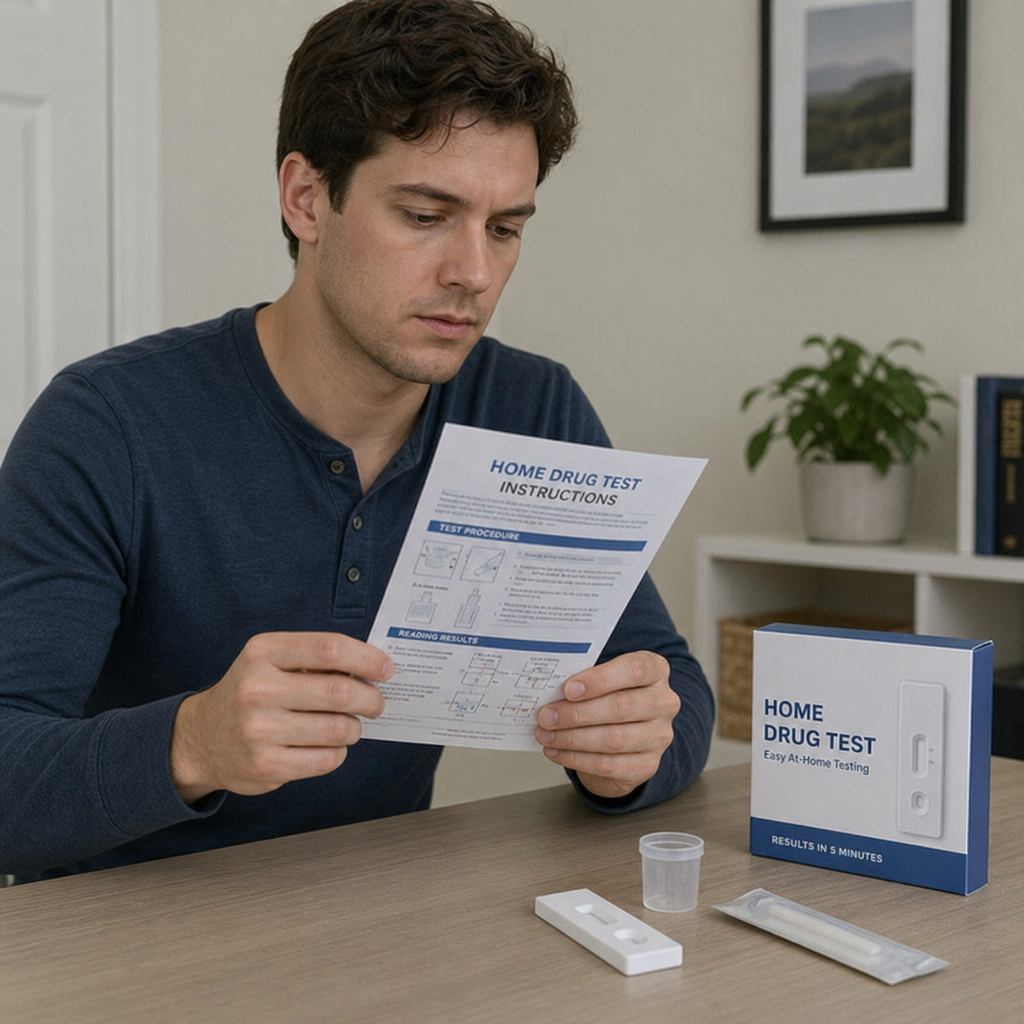
Some people assume a home drug test is unreliable just because it is easy to use. Ease of use is not automatically a weakness. Many home testing products are designed for straightforward collection and reading, making them useful for personal awareness, family conversations, or preliminary screening.
The real issue is whether the user follows the instructions correctly. Reading the result too early or too late, using an expired kit, storing it in poor conditions, or misunderstanding faint lines can all create confusion. A home test can be useful, but only when the person using it treats the instructions as part of the test, not as optional packaging.
For best results:
- Read the full insert before collecting the sample.
- Confirm the kit has not expired.
- Use the correct amount and type of sample.
- Wait the exact amount of time specified.
- Interpret lines, colors, or digital indicators exactly as directed.
- Seek confirmation if the result has serious consequences.
Used carefully, a home drug test can provide helpful information without pretending to be more than it is.
Misconception 4: A negative result means no drug use ever happened
A negative result means the tested substance was not detected above the kit’s cutoff in that sample at that time. It does not prove that a person has never used drugs, that use did not occur outside the detection window, or that a substance not included on the panel was absent.
This is where expectations often go wrong. A urine test kit may detect certain substances for a limited period, while a hair follicle drug test kit may reflect a longer period depending on the test design and sample. If the wrong test type is used, the result may not answer the actual question.
The practical takeaway is simple: define the testing goal before choosing the kit. Are you screening for recent use? Looking for a broader historical pattern? Checking a specific substance? The answer changes which kit makes sense.
Misconception 5: Drug test strips are less legitimate than cups or cassettes
Drug test strips can look basic, so people sometimes assume they are less useful than cups, cards, or cassettes. In many cases, the format is mainly about convenience, handling, and how the sample is applied. A strip can still be part of a valid screening process when it is used correctly and designed for the intended panel.
That said, strips may require more attention during handling. The user may need to dip the strip to the proper level, avoid over-soaking, and place it on a clean surface while the result develops. Cup-style tests may feel simpler because collection and testing are integrated, but simplicity depends on the user and setting.
A good decision is not “strips versus cups” in general. It is whether the format fits the environment, training level, privacy needs, and result process.
Misconception 6: More panels always mean a better test
A larger panel can screen for more substances, but more is not always better. If the goal is narrow and specific, a broad panel may add cost or complexity without adding useful insight. On the other hand, a limited panel may miss substances that matter in a workplace, treatment, or safety-sensitive context.
The better question is relevance. A drug testing kit should match the substances of concern, the testing policy, and the setting. If there is a written policy, the kit should support that policy rather than forcing the policy to fit the kit.
How to use drug test kits more responsibly
Responsible testing starts before the package is opened. The person or organization using the kit should know why the test is being done, what substances are included, how results will be handled, and when confirmation is needed. Clear expectations reduce conflict and help prevent overinterpreting a screening result.
A practical approach includes:
- Selecting the right sample type for the detection goal
- Using kits from a source that provides clear product information
- Training anyone who will collect or read results
- Documenting collection time, result time, and any follow-up steps
- Protecting privacy and handling results consistently
- Confirming non-negative results when the stakes are high
This approach is especially important when testing involves employees, clients, students, or family members. The kit is only one part of the process; the process around it determines how fair and useful the result will be.
The main takeaway
Drug test kits are valuable screening tools, but they are not magic answers in a box. A drug test kit works best when the user understands the sample type, detection limits, panel coverage, instructions, and need for confirmation. Whether you choose a urine test kit, hair follicle drug test kit, instant drug test, home drug test, drug test strips, or another drug testing kit, the smartest choice is the one that matches your real testing goal.
Used thoughtfully, these tools can support clearer decisions, faster preliminary answers, and more informed conversations. Used carelessly, they can create confusion. The difference usually comes down to choosing the right kit and respecting what the result can—and cannot—tell you.
For Drug Substance Testing Kits, click here.
For Urine Testing Kits, click here.
For Saliva Testing Kits, click here.