.png)
Blogs
Combatting the Fentanyl Epidemic: Law Enforcement Challenges
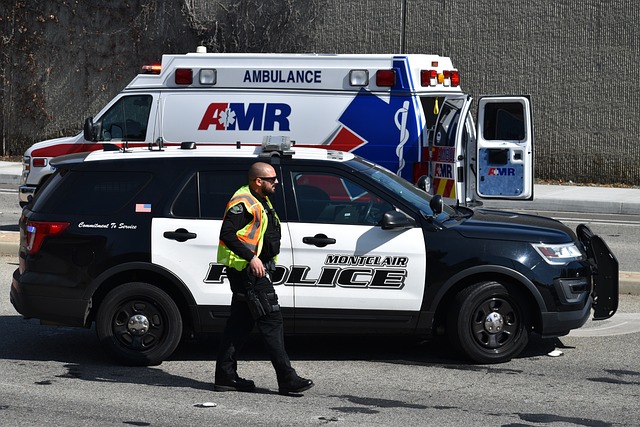
The challenges of combatting the fentanyl epidemic for law enforcement
At IDenta, we've seen several epidemics based on the various drug tests that police departments around the globe have been requesting . The Fentanyl Epidemic has been on another level altogether. It has been an unprecedented challenge for law enforcement.
The challenges of combatting the fentanyl epidemic for law enforcement are not limited to arrests, seizures, or border interdiction. Fentanyl has changed the speed, scale, and risk profile of drug enforcement while also placing officers closer to overdose response, behavioral health needs, grieving families, and complex community expectations. A practical opioid epidemic response now requires law enforcement agencies to combine focused investigations with officer safety, public health partnerships, data sharing, and trust-building strategies.
Why is fentanyl different from earlier drug threats?
Fentanyl is different because it is synthetic, highly potent, easy to move in small quantities, and frequently mixed into counterfeit pills or other drugs without the user’s knowledge. CDC describes pharmaceutical fentanyl as a synthetic opioid used for severe pain in medical settings, while illegally made fentanyl has become a major driver of overdose deaths in the United States. In 2024, CDC’s National Center for Health Statistics reported an estimated 80,391 drug overdose deaths, down from 110,037 in 2023, but overdose mortality remained a serious national problem, with synthetic opioids such as fentanyl still central to the crisis. (cdc.gov)
For opioid law enforcement, that means old assumptions can fail quickly. A case involving a few pills, a small package, or a routine traffic stop may carry greater public safety consequences than the weight of the evidence suggests. Fentanyl can appear in powder, pressed pills, and mixtures with other substances, making it harder for officers, users, families, and even street-level sellers to know what is actually present. DEA has warned that counterfeit pills may be made to resemble prescription medications, which complicates prevention messaging and increases risk for people who do not believe they are taking an opioid. (dea.gov)
The challenge is also emotional. Officers are not only investigating crimes; they are often arriving first when someone has stopped breathing, when a parent has found a child unresponsive, or when a person revived with naloxone is scared, confused, or in withdrawal. The enforcement mission remains important, but the daily work now overlaps with emergency medicine, harm reduction, addiction treatment, and community trauma.
The illicit supply changes faster than traditional enforcement cycles
Fentanyl has accelerated the drug market. Unlike plant-based drug supply chains that depend on cultivation, synthetic drug production can shift with chemical availability, trafficking pressure, and market demand. DEA has described the modern threat as involving synthetic, chemical-based drugs, including fentanyl and methamphetamine, and has also warned about mixtures that include xylazine, nitazenes, medetomidine, and other emerging substances. (content.govdelivery.com)
That creates several operational problems at once:
- Small shipments can matter. Fentanyl’s potency means traffickers may move meaningful quantities in compact forms, which can make interdiction more difficult and intelligence more important.
- Counterfeit pills blur the risk. A pill may look like oxycodone, Xanax, or Adderall while containing fentanyl, methamphetamine, or other drugs. (dea.gov)
- Mixtures change the medical response. Naloxone can reverse opioid overdose, including fentanyl overdose, but it does not reverse non-opioids such as xylazine. (cdc.gov)
- Local patterns vary. A substance that is rare in one county may be common in another, so local seizure data, toxicology, emergency department signals, and overdose mapping matter.
- Digital sales expand reach. Online marketplaces, encrypted messaging, social platforms, and shipping networks can connect suppliers and buyers across jurisdictions.
The practical implication is clear: fentanyl enforcement cannot rely on a single playbook. Agencies need current intelligence, strong lab relationships, regional task force coordination, and feedback loops with public health partners. Without those connections, law enforcement may be reacting to last month’s drug supply while the street market has already changed.
Officer safety is real, but misinformation makes it harder
Officer safety should be taken seriously, but it must be based on evidence rather than fear. NIOSH advises emergency responders to use safe operating procedures and appropriate personal protective equipment when incidents may involve illicit drugs, including fentanyl, because responders may not know the contents of a drug mixture at the scene. The best approach is calm, consistent training: recognize likely exposure routes, avoid unnecessary handling, use PPE appropriate to the task, prevent aerosolization, and follow agency evidence-handling protocols. (cdc.gov)
Misinformation creates its own hazard. If officers believe any brief proximity to fentanyl will inevitably cause overdose, they may panic, misread stress symptoms, or delay lifesaving care. If they dismiss the risk entirely, they may skip gloves, masks, eye protection, or safe packaging practices when those precautions are warranted. Professional training should hold both ideas together: fentanyl scenes deserve respect, but fear should not drive decision-making.
A practical scene-safety checklist may include:
- Pause before handling unknown substances. Slow down enough to identify powders, pills, packaging, residue, sharps, or airborne hazards.
- Use PPE matched to the task. Gloves may be enough for some low-risk tasks, while higher-risk situations may require respiratory or eye protection under agency policy.
- Avoid actions that create dust. Do not brush, sweep, shake, or field-test powders in ways that may increase exposure risk.
- Secure and label evidence carefully. Packaging and documentation protect officers, lab personnel, prosecutors, and the integrity of the case.
- Keep naloxone accessible. Officers should know where it is, how to use it, and when additional medical support is needed.
- Decontaminate correctly. Follow agency and public health guidance for washing, disposal, and equipment cleaning.
- Document possible exposure. Clear reporting helps supervisors, medical providers, and safety officers respond appropriately.
Officer safety also includes mental health. Repeated overdose calls, child endangerment cases, death notifications, and contact with grieving families can wear down even experienced personnel. Agencies that treat wellness as an operational need, not a side benefit, are better positioned to retain officers and sustain a long-term opioid epidemic response.
Overdose response has become part of modern policing
Many officers now carry naloxone, respond to overdose calls, and coordinate with EMS as part of routine patrol work. CDC notes that naloxone can reverse an overdose from opioids, including fentanyl, and public health agencies continue to emphasize overdose prevention, rapid response, and access to care. (cdc.gov)
This shift can be lifesaving, but it also changes the identity of the work. Officers may revive the same person more than once. They may face frustration from residents who want visible enforcement and from advocates who fear that police presence will discourage people from calling 911. They may need to preserve evidence while also helping EMS, calming bystanders, and making sure children or vulnerable adults at the scene are safe.
The best agencies make the overdose role explicit. They train officers on naloxone, post-overdose procedures, report writing, trauma-informed communication, and referral options. They clarify when enforcement action is appropriate and when the priority is medical stabilization or connection to services. This reduces confusion in the field and helps officers act consistently under pressure.
What makes fentanyl investigations so difficult?
Fentanyl investigations are difficult because the supply chain can involve local dealers, regional distributors, international chemical sources, online communications, shipping services, pill presses, money movement, and fast-changing drug mixtures. A single overdose death may be connected to a neighborhood seller, but the broader public safety impact often depends on identifying higher-level networks and the tools that allow those networks to produce or distribute dangerous products. DOJ has described federal efforts that target multiple links in the fentanyl supply chain, including precursor chemicals, darknet and online trafficking, and pill press equipment. (justice.gov)
Local agencies often sit at the center of this complexity. Patrol officers generate the initial reports, detectives identify patterns, crime analysts connect incidents, and task forces pursue broader conspiracies. Yet many departments face staffing shortages, lab delays, limited digital forensic capacity, and competing priorities such as violent crime, property crime, traffic safety, and calls for service.
Several recurring investigation challenges stand out:
- Speed versus scope. Officers may want to remove dangerous drugs immediately, while investigators may seek a larger case that identifies suppliers. That balance requires clear supervision, legal guidance, and risk assessment.
- Digital evidence volume. Phones, apps, payment platforms, location data, and social media can produce large amounts of evidence that require specialized review.
- Toxicology and lab timing. Overdose death investigations may depend on medical examiner findings, drug chemistry, and chain-of-custody details that take time.
- Jurisdictional boundaries. A local overdose may involve a supplier in another city, state, or country, requiring coordination beyond one agency.
- Witness vulnerability. People with substance use disorder may fear arrest, retaliation, loss of housing, child welfare consequences, or stigma.
These challenges do not mean enforcement is ineffective. They mean fentanyl investigations must be focused, intelligence-led, and connected to prevention goals. An arrest that disrupts a high-risk supply line, removes pill-press capacity, or identifies a lethal batch can matter. But arrests alone cannot carry the full burden of the crisis.
Public health partnerships make enforcement more effective
Strong public health partnerships do not weaken law enforcement; they help agencies use enforcement more precisely. The Police Executive Research Forum and the COPS Office have described the need for police departments and sheriffs’ offices to manage the tension between enforcement, overdose prevention, and longer-term assistance for people affected by opioid use. (portal.cops.usdoj.gov)
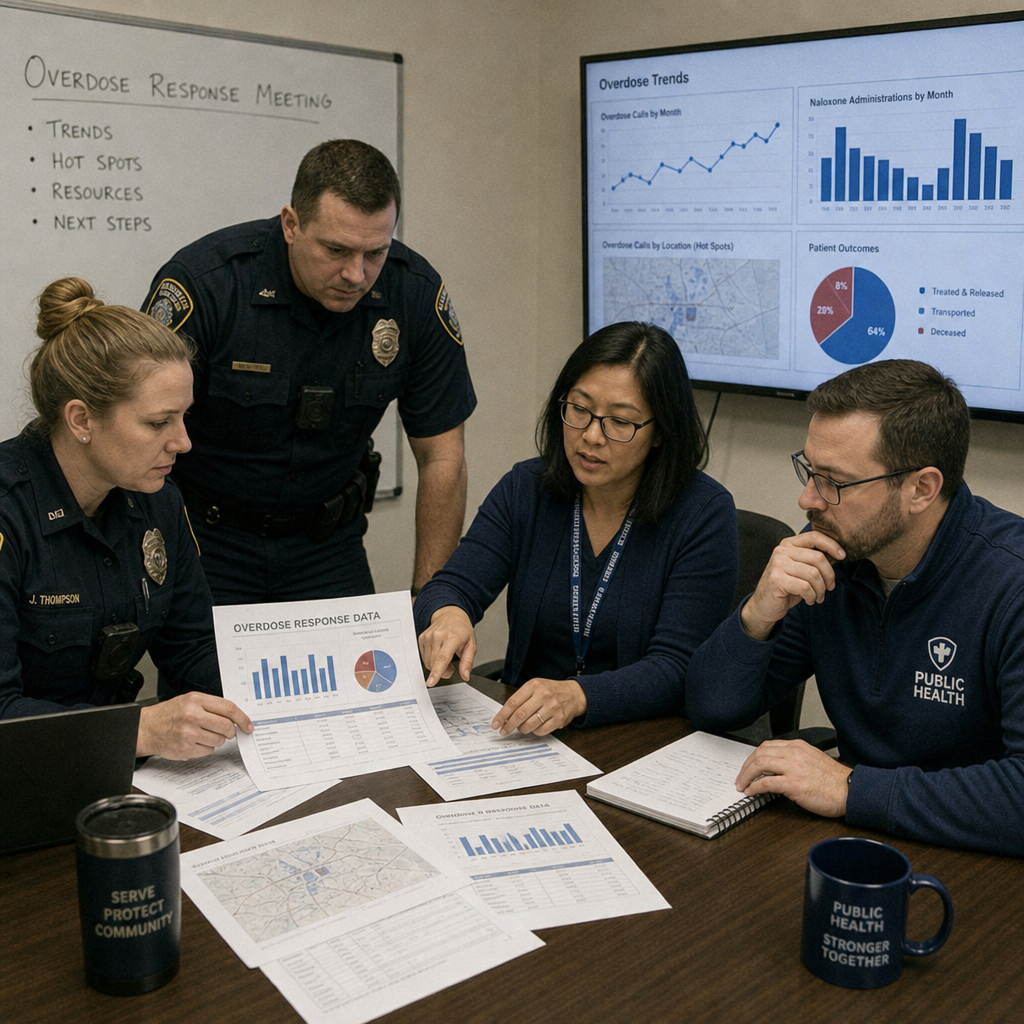
When agencies share appropriate data with health departments, EMS, hospitals, medical examiners, and treatment providers, they can see patterns sooner. A cluster of nonfatal overdoses may suggest a dangerous batch. A rise in counterfeit pills may call for school and parent outreach. A change in toxicology may require updated officer safety bulletins and EMS coordination.
Deflection and diversion can reduce repeat harm
Deflection and diversion programs aim to connect eligible people to treatment, recovery support, housing help, or case management instead of relying only on arrest. BJA has supported work examining law enforcement-led diversion and first-responder deflection models, while also noting that deflection remains an evolving practice requiring continued research and evaluation. (bja.ojp.gov)
For officers, the value is practical. If the same people are repeatedly cycling through overdose calls, jail bookings, emergency rooms, and street-level possession cases, the system is spending time without changing the underlying risk. A well-designed deflection pathway gives officers another option when public safety, legal standards, and local policy allow it.
Data sharing turns scattered incidents into patterns
A single overdose call may look isolated. Ten calls in a weekend, several involving similar pills, can signal an urgent threat. Law enforcement agencies that coordinate with public health can help issue timely alerts, focus enforcement on active sources of harm, and direct outreach teams to people at elevated risk.
This does not require every officer to become a data analyst. It does require clean reporting, consistent overdose documentation, timely information flow, and leadership that values analysis. If reports omit naloxone use, suspected substances, location context, or referral outcomes, the agency loses the ability to learn from its own calls.
Treatment connections protect public safety
Substance use disorder treatment is not separate from public safety. When people can access evidence-based care, recovery support, and follow-up after an overdose, communities may see fewer repeat emergencies, fewer public disorder calls, and less victimization among people who are themselves vulnerable. Law enforcement cannot build that treatment system alone, but officers can help people reach it when partnerships are in place.
Community trust is a tactical necessity
Trust affects whether residents share information, whether witnesses cooperate, whether families ask for help, and whether people call 911 during an overdose. In fentanyl cases, minutes matter. If bystanders delay because they fear punishment, immigration consequences, child welfare involvement, or humiliation, the public safety mission suffers.
Agencies can improve trust without abandoning enforcement. They can communicate clearly about priorities: targeting traffickers who profit from deadly supply, encouraging overdose calls, supporting prevention, and treating people with dignity at scenes. Officers can explain what will happen after naloxone, what information is needed, and what referral options exist. Supervisors can reinforce that respectful communication is not “soft”; it is a tool that improves cooperation and reduces chaos.
Stigma is one of the biggest barriers. People who use drugs are often described only as offenders, even when they are also victims of exploitation, trauma, untreated illness, or poisoning from unknown substances. A balanced approach recognizes accountability where appropriate while still preserving life. In practical terms, that means officers can pursue dealers and traffickers while also carrying naloxone, supporting outreach, and avoiding language that pushes people further from help.
Practical priorities for a stronger opioid epidemic response
A stronger opioid epidemic response does not come from one program. It comes from aligning daily decisions with a clear strategy. Law enforcement leaders can start with the areas most likely to improve safety, consistency, and community impact.
- Define the agency’s fentanyl mission. Officers need to know whether the priority is overdose prevention, high-level trafficking, open-air markets, repeat overdose locations, counterfeit pill distribution, or all of the above. A written strategy helps avoid mixed messages.
- Train for the real drug supply. Training should cover fentanyl, counterfeit pills, polysubstance use, xylazine and other emerging adulterants, naloxone, scene safety, report writing, and trauma-informed communication. DEA has warned that fentanyl is increasingly found with other synthetic substances, so training must be updated regularly. (content.govdelivery.com)
- Standardize overdose reports. Every overdose response should capture key details such as naloxone administration, suspected substances, pill markings when safely observable, location type, referral offered, and whether children or vulnerable adults were present.
- Strengthen lab and intelligence pathways. Officers need clear instructions for submitting evidence, requesting analysis, and receiving alerts about dangerous substances. Analysts need access to timely field information.
- Build post-overdose outreach. Follow-up teams may include law enforcement, EMS, peer recovery specialists, social workers, or treatment partners. The exact model varies by community, but the goal is the same: contact people after a high-risk event and offer a path to help.
- Separate user-level need from trafficking harm. Not every drug-related call has the same public safety value. Agencies should focus investigative resources on people and networks causing the greatest harm while using referral options where appropriate.
- Support officer wellness. Repeated exposure to overdose scenes can contribute to stress, cynicism, burnout, and compassion fatigue. Peer support, supervisor check-ins, confidential counseling, and realistic workloads are part of operational readiness.
- Measure outcomes beyond seizures. Seizures matter, but they do not tell the whole story. Agencies should also track overdose trends, naloxone saves, repeat calls, referral connections, successful prosecutions of high-harm suppliers, and community feedback.
Technology helps, but it cannot replace judgment
Technology can support fentanyl enforcement through intelligence analysis, overdose mapping, digital forensics, information sharing, and evidence management. It can help agencies see clusters, connect cases, and identify repeat locations. But technology is only useful when officers enter accurate information, analysts understand local context, and leaders act on what the data shows.
There is also a privacy and trust dimension. Communities may support data-driven enforcement when they understand the purpose and safeguards. They may resist if technology feels like broad surveillance disconnected from actual harm. Agencies should be transparent about how data is used, limit access to legitimate public safety purposes, and review whether tools are improving outcomes.
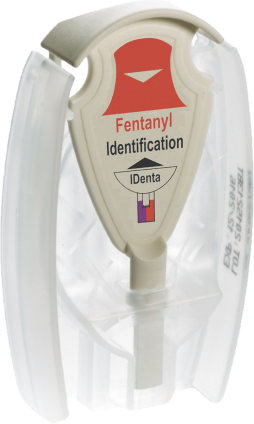
The same principle applies to drug detection tools. Field technology may help identify suspected substances, but it must fit into a larger system of PPE, evidence handling, confirmatory lab testing, and prosecution standards. A device cannot replace training, supervision, or careful documentation.
The legal and ethical balance is difficult
Fentanyl creates hard choices. If law enforcement moves too slowly in pursuit of a larger case, dangerous drugs may continue circulating. If officers move too quickly, they may arrest only the most visible low-level participants while missing the supplier network. Recent public reporting has highlighted controversy around investigative strategies that allow drugs to remain under observation in an effort to build larger cases, underscoring the need for strict oversight, clear rules, and public safety safeguards. (apnews.com)
Ethically, agencies must ask what action is most likely to reduce harm. Sometimes that means immediate seizure and arrest. Sometimes it means coordinated surveillance, controlled delivery under legal authority, or task force collaboration. Sometimes it means referral, treatment linkage, or problem-solving at a repeat overdose location. The answer depends on law, policy, risk, and the facts of the case.
Good leadership makes those tradeoffs explicit. Supervisors should document decision-making, consult prosecutors early, consider overdose risk, and avoid informal practices that expose the public or officers to unnecessary danger. The more lethal the supply, the less room there is for vague policy.
What should success look like?
Success should look like fewer fatal overdoses, fewer nonfatal overdoses, better disruption of high-harm supply networks, safer officers, faster intelligence, stronger treatment connections, and more community trust. Arrests, seizures, and prosecutions remain important, but they are measures of activity unless they connect to broader public safety outcomes.
A useful fentanyl strategy asks several questions after every major initiative:
- Did overdose calls decline in the targeted area?
- Did the agency identify and disrupt a supplier or distribution pattern?
- Did public health partners receive timely information?
- Did officers follow PPE and evidence protocols safely?
- Did people revived from overdose receive a real connection to support?
- Did community members feel safer reporting information or calling for help?
- Did prosecutors have stronger cases because reports, lab work, and digital evidence were handled well?
This kind of measurement is not about blaming officers for a crisis they did not create. It is about giving agencies a clearer view of what works. Fentanyl is too dangerous for symbolic activity. Communities need strategies that save lives and improve safety at the same time.
A practical path forward
The fentanyl epidemic places law enforcement in one of the most complicated public safety roles of the modern era. Officers are expected to interrupt trafficking, revive overdose victims, protect themselves from unknown substances, comfort families, gather intelligence, support prosecution, and collaborate with health systems that may be under strain. No single agency can solve that alone.
The most effective path is balanced and disciplined. Focus enforcement on the people and networks causing the greatest harm. Train officers with evidence-based safety practices. Treat overdose response as a core operational function. Share data quickly and responsibly. Build partnerships that give officers options beyond arrest when treatment or outreach is the better public safety tool.
The challenges of combatting the fentanyl epidemic for law enforcement are real, but they are not impossible to manage. With clear priorities, practical training, strong partnerships, and a commitment to both accountability and lifesaving response, agencies can play a vital role in reducing harm while protecting the communities they serve.