.png)
Blogs
The Cocaine Epidemic in Europe: Rising Use & Impact

The cocaine epidemic in Europe
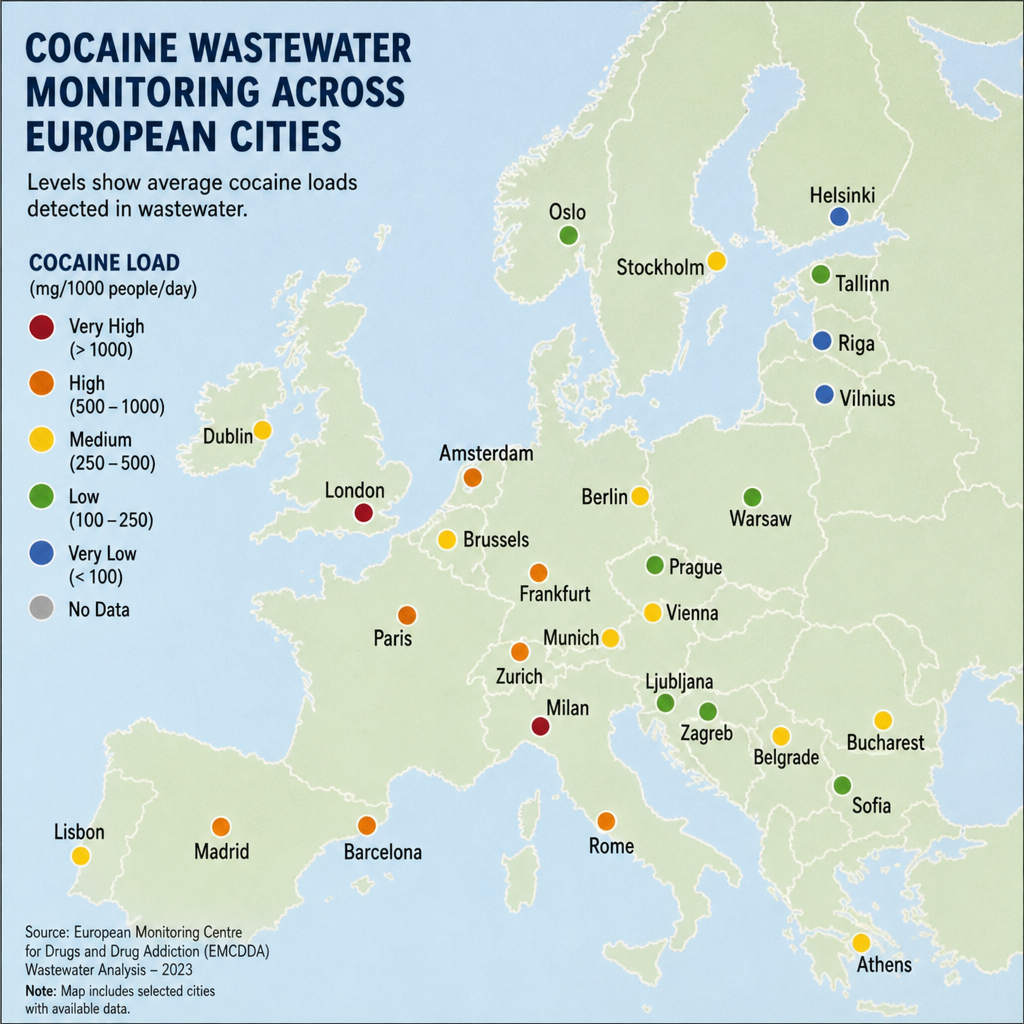
Europe’s cocaine market has become a central concern in the europe drug problem, with the EU’s latest drug report warning of high availability, wider geographic spread and rising health harms. The European Union Drugs Agency says around 4.3 million adults aged 15–64 used cocaine in the last year, while wastewater data point to growing cocaine use Europe-wide in many monitored cities. (euda.europa.eu)
Why is Europe facing a cocaine epidemic?
Europe is facing what many observers describe as a cocaine epidemic because supply, use and harm indicators are moving together. EUDA’s 2026 analysis says cocaine remains Europe’s second most commonly used illicit drug after cannabis, while municipal wastewater testing found that 48 of 85 cities with comparable 2024 and 2025 data recorded higher cocaine residues. (euda.europa.eu)
The picture is not uniform. Some countries and cities report heavier use than others, and general population surveys lag behind real-time market shifts. Still, the combination of higher purity, persistent trafficking pressure and more people seeking treatment has made cocaine one of the most urgent drug policy issues on the continent. (euda.europa.eu)
Seizures fall, but trafficking pressure remains high
EU Member States reported 97,000 cocaine seizures in 2024, amounting to 330 tonnes. That was down from 419 tonnes in 2023, but EUDA cautions that the fall in volume does not necessarily mean less cocaine is reaching Europe; the number of seizures rose, suggesting traffickers may be shifting routes, shipment sizes and concealment methods. (euda.europa.eu)
Spain reported 124 tonnes seized in 2024, while France reported 53.5 tonnes, its highest recorded amount. Belgium, Germany and the Netherlands saw large declines in seized quantities, a change EUDA links partly to stronger customs and law-enforcement activity at major ports. (euda.europa.eu)
Key developments reported by EUDA include:
- More fragmented consignments designed to reduce losses when shipments are intercepted.
- Continued use of seaports, alongside reports of smaller ports being exploited.
- More sophisticated concealment methods, including cocaine chemically hidden in other materials.
- Cocaine processing activity inside Europe, with at least 42 related sites dismantled across six EU Member States in 2024. (euda.europa.eu)
Health services see the impact
The cocaine epidemic in europe is increasingly visible in treatment and emergency settings. Cocaine was the second most common illicit drug among first-time entrants to specialised treatment in 2024, cited by an estimated 37,000 clients, up 39% since 2018. Overall, 74,000 people entering treatment named cocaine as their primary drug. (euda.europa.eu)
EUDA also reports that, among 20 countries with available 2024 data, cocaine was involved in 27% of drug-induced deaths. Most of those deaths involved polysubstance use, meaning cocaine appeared alongside other drugs or substances, which complicates emergency care and prevention messaging. (euda.europa.eu)
What happens next
European agencies are expected to keep pressure on ports, logistics networks and organised crime groups while expanding health responses for people who use cocaine, including those using crack cocaine. The central challenge is that enforcement alone has not removed availability, while treatment demand and emergency harms continue to rise.
For policymakers, the latest data point to a dual response: disrupt trafficking networks while improving early intervention, harm reduction and access to treatment. For the public, the message is more immediate: cocaine use in Europe is no longer a niche nightlife issue, but a widening health and security concern with consequences across communities.