.png)
Blogs
Chain of Custody Definition: Ensuring Evidence Integrity
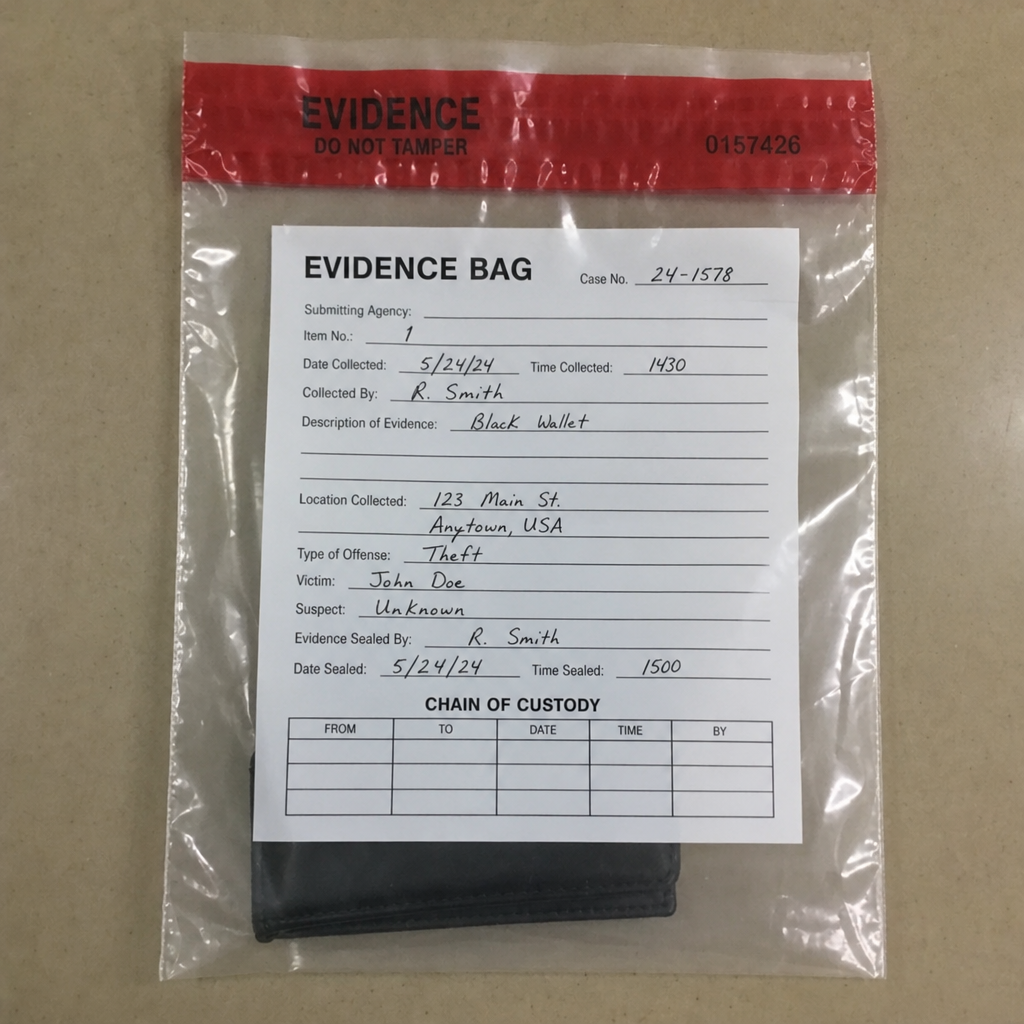
How Chain of Custody Ensures Evidence Integrity
Evidence is only as reliable as the process used to protect it. In legal, forensic, workplace, and investigative settings, chain of custody creates a documented trail showing where evidence came from, who handled it, how it was stored, and whether it remained intact. This article explains the chain of custody definition in plain English, why it matters, and how careful documentation helps preserve evidence integrity from collection to presentation.
What is the definition of chain of custody?
The definition of chain of custody is the chronological documentation of evidence possession, control, transfer, storage, and handling. In simple terms, it is the record that proves evidence has been protected from tampering, loss, contamination, or unauthorized access. A strong chain of custody shows that the item being reviewed today is the same item collected at the start of an investigation.
This concept is often discussed in criminal cases, but it is not limited to courtrooms. It can apply to physical evidence, digital files, laboratory samples, workplace investigation materials, surveillance footage, contracts, or any item that may later need to be verified. The key idea is accountability: every time evidence changes hands, the transfer should be recorded clearly.
A useful chain of custody record usually answers four basic questions:
- What is the evidence? A description, label, serial number, sample ID, file name, or other identifying detail.
- Who handled it? The name, role, and sometimes signature of each person who collected, moved, tested, stored, or reviewed it.
- When did each action happen? Dates and times of collection, transfer, analysis, storage, and release.
- How was it protected? Packaging, seals, storage conditions, access controls, and notes about condition.
Without these details, it becomes easier for someone to question whether the evidence is complete, authentic, or connected to the matter being investigated.
The forensic meaning is about proof, not paperwork
When people search for a chain of custody definition forensic or chain of custody definition forensics, they are usually asking how the term works in evidence testing and investigation. In forensic contexts, chain of custody is the documented process used to show that evidence was collected properly, preserved correctly, and analyzed without unauthorized interference.
Forensic evidence can be fragile. Biological samples may degrade, digital files can be altered, and physical items can pick up contamination if they are handled carelessly. Documentation alone does not make evidence valid, but it supports the credibility of the evidence by showing that proper procedures were followed.
For example, if a laboratory receives a sample, the chain of custody may show who collected it, when it was sealed, who transported it, when the lab received it, where it was stored, who tested it, and when it was released or archived. Each step helps connect the sample to the original source and reduces uncertainty.
The practical value is straightforward: forensic conclusions are stronger when the underlying evidence has a reliable, traceable history. If that history has unexplained gaps, the evidence may still exist, but its reliability may be challenged.
Why does chain of custody protect evidence integrity?
Chain of custody protects evidence integrity by creating a traceable record that discourages mishandling and helps reveal problems if they occur. It does not simply describe where evidence went; it shows whether the evidence was controlled consistently enough to be trusted.
Integrity depends on both the item and the process around it. A sealed package, for instance, is more credible when the seal number is recorded, the storage location is controlled, and access is limited to authorized personnel. A digital file is more defensible when it is copied using a documented method, stored securely, and tracked with identifying details such as timestamps or hash values when appropriate.
Good chain of custody practices also protect the people involved. Investigators, technicians, security teams, and legal professionals can point to the record instead of relying on memory. This matters because cases may unfold over weeks, months, or longer, and even careful professionals may forget small details without written documentation.
In legal settings, chain of custody can affect whether evidence is persuasive, admissible, or vulnerable to challenge. It is separate from legal custody, which usually refers to a person’s legal right or responsibility to care for a child or make decisions for someone. The shared word “custody” can cause confusion, but the custody definition in evidence handling is about possession, control, and accountability over an item.

Common weak points in the evidence trail
A chain of custody can break down when the evidence trail leaves room for doubt. Sometimes the issue is dramatic, such as a missing item. More often, the problem is ordinary: an unsigned form, a storage gap, an unclear label, or a transfer that was done correctly but not documented.
Common weak points include:
- Incomplete identification Evidence should be labeled in a way that distinguishes it from similar items. A vague description like “phone” or “sample” may not be enough if multiple items are involved.
- Unrecorded transfers Every handoff matters. If one person gives evidence to another without recording the date, time, and recipient, the trail becomes weaker.
- Poor storage controls Evidence stored in unsecured areas, shared spaces, or unsuitable conditions may be questioned, especially if access was not limited.
- Broken or undocumented seals If packaging is opened for testing or review, the reason should be recorded, and the item should be resealed using a documented process.
- Digital evidence handling errors Copying, moving, or opening files without a clear method may raise concerns about modification. Digital evidence often requires extra care because changes are not always visible.
These problems do not always destroy a case, but they create openings for doubt. The stronger the record, the easier it is to explain what happened and why the evidence should be trusted.
Practical steps for maintaining a reliable chain of custody
A reliable chain of custody is built through consistent habits. The goal is not to create unnecessary bureaucracy; it is to make the evidence history clear enough that another person can understand it later.
Use this checklist when handling evidence or sensitive materials:
- Document collection immediately. Record what was collected, where it was found, who collected it, and the date and time.
- Use unique identifiers. Assign labels, case numbers, barcodes, sample IDs, or file references that prevent confusion.
- Limit access. Only authorized people should handle, view, test, transport, or store the evidence.
- Record every transfer. Include the sender, receiver, purpose of transfer, date, time, and condition of the item.
- Protect the item physically or digitally. Use sealed packaging, secure storage, controlled environments, encrypted drives, access logs, or read-only copies as appropriate.
- Note condition changes. If packaging is opened, evidence is tested, or a sample is consumed, the record should explain what changed.
- Keep records organized. Forms, logs, photos, lab notes, and digital metadata should be stored in a way that supports review.
The best systems are simple enough to follow and detailed enough to defend. If the process is too complicated, people may skip steps. If it is too casual, the evidence may be challenged later.
Evidence integrity depends on consistency
Chain of custody is not a single form or signature. It is a continuous practice that connects evidence to its source and protects it throughout its lifecycle. Whether the matter involves forensic testing, internal review, litigation support, or regulated documentation, the same principle applies: evidence must be identifiable, controlled, and traceable.
A clear chain of custody helps investigators work carefully, helps decision-makers trust the record, and helps courts or reviewers evaluate the evidence fairly. When the process is strong, the evidence can speak for itself with fewer doubts about where it has been or who had access to it.
The main takeaway is simple: preserve the item, document the journey, and close every gap before it becomes a question. Evidence integrity begins at collection, but it is maintained every time someone handles the evidence with discipline and care.